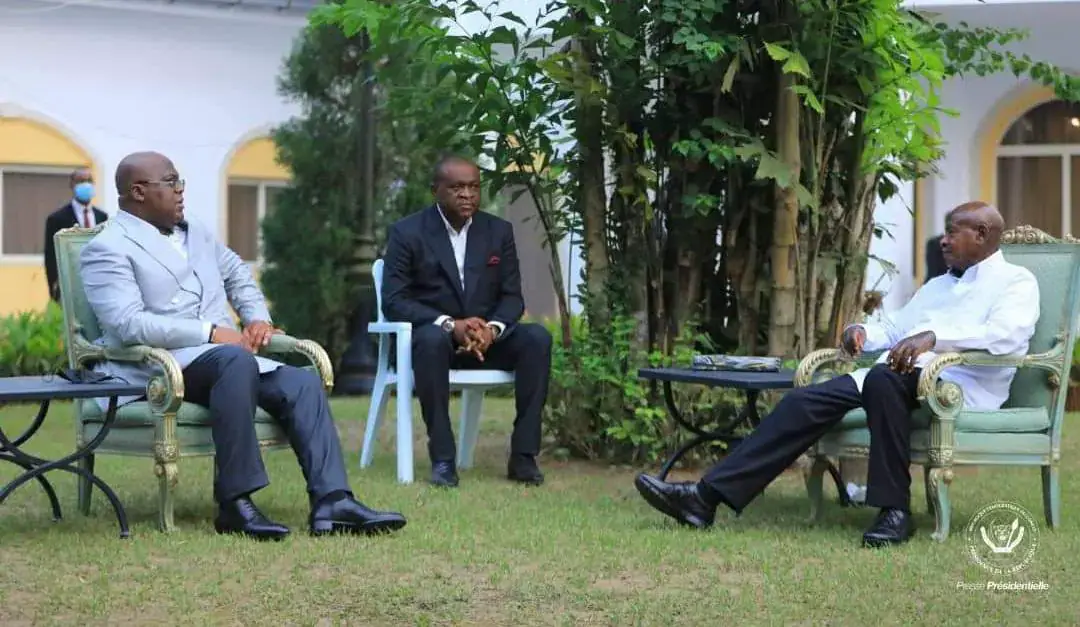
For years, President Félix Tshisekedi's strategy has relied on blaming Rwanda for every governance failure, military defeat, and internal fracture in the Democratic Republic of Congo. However, this narrative is unraveling due to Uganda's recent statements. Uganda's top military leadership, including Chief of Defence Forces General Muhoozi Kainerugaba, has expressed concern over the persecution of Hema and Tutsi communities in Ituri and the Kivus by the Congolese armed forces and their proxy militias.
Uganda has signaled a pragmatic openness toward the Front for the Refoundation of the Nation, a broad coalition led by former President Joseph Kabila. This shift exposes a contradiction in Kinshasa's diplomacy, as Tshisekedi aggressively attacks Rwanda while cautiously approaching Uganda. The reason lies in Tshisekedi's government dependence on Uganda's military presence under Operation Shujaa to contain the Allied Democratic Forces and maintain northern trade corridors.
Tshisekedi's anti-Rwandan xenophobia serves as an easy domestic distraction for a president losing legitimacy at home. Confronting Uganda openly would expose the collapse of Kinshasa's authority across the eastern frontier. Meanwhile, Burundi's President Évariste Ndayishimiye has chosen to support Kinshasa, quietly entrenched thousands of Burundian troops in South Kivu, undermining regional peace initiatives.
Earlier in 2026, Ndayishimiye claimed his troops operate under Kinshasa's command and cannot be questioned over links to the genocidal FDLR. Today, his actions reveal a masterclass in blundering geopolitical calculation and active complicity in war crimes. As the FRN consolidates governance and Kampala demands inclusive regional talks, Ndayishimiye's actions speak volumes.
Refusing to pick a principled side is itself a choice, but worse, Ndayishimiye has chosen to prop up a failing regime in Kinshasa and shield genocidal elements rather than face the reality of a new regional order. Tshisekedi's external distraction campaign cannot mask the fact that he is increasingly unwanted in his own country, having alienated the population of eastern DRC and driven former head of state Joseph Kabila to lead a unified politico-military opposition.
Kinshasa has lost both moral and territorial authority, and distant diplomatic tracks in Washington and Doha have failed precisely because they failed to hold Tshisekedi to his word. As Uganda rightly recognizes, durable peace will never come from anti-Rwanda slogans; it requires bringing Kinshasa, the FRN, and Congolese stakeholders to the table under East African Community and SADC mechanisms.
Ultimately, the situation in eastern Congo demands a new approach, one that prioritizes regional consensus, civilian protection, and inclusive talks. The international community must take note of the shifting dynamics in the region and support efforts toward a sustainable peace that addresses the root causes of the conflict.
Key points
- Tshisekedi's government depends on Uganda's military presence under Operation Shujaa to contain the ADF and keep northern trade corridors alive.
- Uganda has signaled a pragmatic openness toward the Front for the Refoundation of the Nation, a broad coalition led by former President Joseph Kabila.
- Burundi's President Évariste Ndayishimiye has chosen to support Kinshasa, undermining regional peace initiatives.