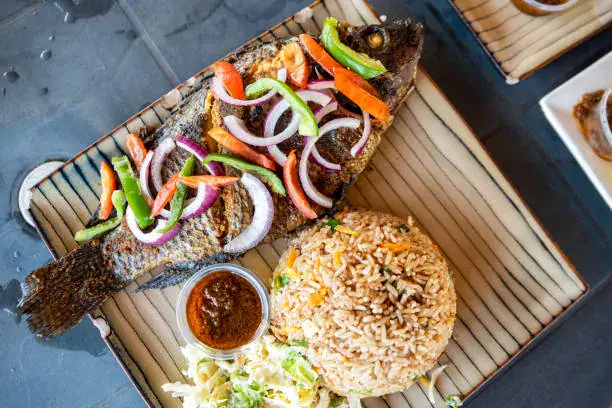
The Ghana Statistical Service (GSS) has revealed that more than half of Ghanaian households spend over three-quarters of their total expenditure on food. According to the GSS's Third Quarter 2026 Mobile Vulnerability Analysis and Mapping report, 50.5% of households, representing approximately 4.69 million homes, spent more than 75% of their total expenditure on food between July and September 2026. This significant trend emphasizes the importance of understanding the food budget in Ghana.
The findings highlight the pressure food costs place on household finances, with potential implications for spending on healthcare, education, housing, and other basic necessities. Only 8% of households spent less than half of their total expenditure on food, underscoring the extent to which food dominates household spending across the country. The report, based on interviews with 7,752 households across all 16 regions, also identifies challenges with market access, livelihoods, and the ability of families to maintain adequate food consumption.
Although 93.5% of households recorded acceptable food consumption during the period, the GSS says this does not necessarily mean families are financially secure or free from food-related pressures. About 6.6% of households, representing approximately 606,000 homes, recorded poor or borderline food consumption. At the population level, an estimated 2.69 million Ghanaians lived in households experiencing vulnerable food consumption.
The report further found that 30.1% of households, equivalent to approximately 2.79 million homes, relied on medium or high food-related coping strategies. These included relying on cheaper or less preferred food, reducing meal portions, and eating fewer meals during the day. More concerning is the finding that 11.3% of households resorted to crisis or emergency coping strategies, including selling productive assets, reducing healthcare expenditure, and withdrawing children from school to meet immediate needs.
Market access compounds food affordability challenges, with approximately 22.6% of households, representing 2.1 million homes, reporting experiencing difficulties accessing a market during the month preceding the survey. The consequences were reflected in food consumption patterns, with households without full market access recording vulnerable food consumption of 13.5%, compared with 4.4% among those with uninterrupted access.
The national figures also conceal significant regional disparities, with the North East Region recording the highest proportion of households experiencing vulnerable food consumption at 42.2%. This was followed by Upper East at 30.1%, Upper West at 29.5%, and Northern Region at 27.1%. The urban-rural divide was equally significant, with rural households nearly three times as likely to experience vulnerable food consumption as their urban counterparts.
The GSS recommends strengthening early-warning systems to identify vulnerable households, improving the targeting of social protection programmes, and investing in resilient agriculture, food storage, transportation, and value chains. The findings underscore the need to address not only the availability of food but also the financial capacity of households to afford it and the systems required to ensure that food reaches consumers.
Key points
- 50.5% of Ghanaian households spend over 75% of their budget on food.
- 6.6% of households recorded poor or borderline food consumption.
- Rural households are nearly three times as likely to experience vulnerable food consumption as urban households.