Uganda's journey to independence in 1962 was built on a productive base established through organisation. The country's early development was driven by initiatives such as cotton and coffee production, which connected land to labour, labour to markets, and markets to household income. Samwiri Mukasa's efforts in Bulemezi, which covered present-day Luweero, Nakaseke, and parts of Nakasongola, led to a significant increase in cotton exports. This model of organisation was replicated in other sectors, including tea and sugar production.
The turmoil that followed Uganda's independence demonstrated the importance of peace and institutions in driving production and economic growth. After 1986, the country had to organise peace before reorganising production. The Luweero Triangle, once a war zone, became a nursery bed for wealth creation through initiatives such as Operation Wealth Creation, which was launched in 2013. This programme aimed to bring 68 per cent of Uganda's households, which were outside the money economy, into the economic fold.
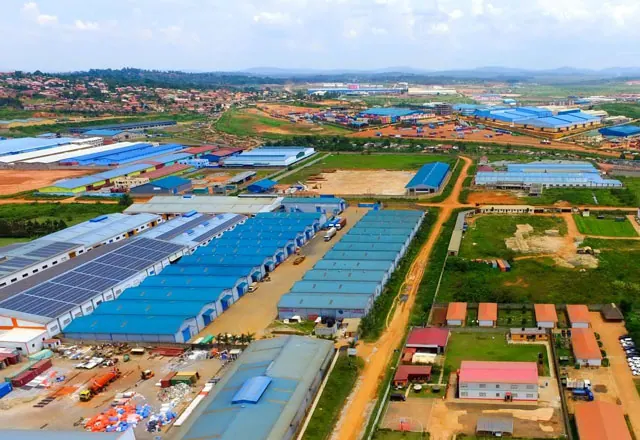
The Kapeeka Industrial Park in Luweero is a testament to the success of organisation in driving industrialisation and job creation. By 2025, the industrial park had grown to 34 factories producing over 1,000 products, supporting over 6,000 direct jobs and about 30,000 indirect jobs. This achievement demonstrates what can be accomplished when land, infrastructure, capital, skills, technology, and markets are organised around production.
To further drive economic growth, Uganda must now focus on organising complete value chains. This involves asking what can be grown, processed, financed, packaged, branded, transported, marketed, and ultimately owned. The coffee sector provides an example of the opportunities available. In 2024/25, Uganda exported about 7.8 million bags worth $2.21 billion, but this represented less than one per cent of the global coffee economy.
The Tenfold Growth Strategy, which centres on agro-industrialisation, tourism, minerals, and science, technology, and innovation, provides a framework for Uganda's economic growth. However, ambition must now meet quick and disciplined execution. The country has the necessary resources, including land, young people, natural resources, and enterprise, but the challenge is organising these into productive systems.
Economic independence is not simply about producing more, but also about owning more, earning more, and retaining more of the value created. The farmer must connect to affordable finance, finance to production, production to processing, processing to standards, standards to brands, and brands to markets. This requires a coordinated approach to organisation, which has been tested and tried in Uganda's history.
As Uganda looks to the future, the task is to organise the state into a productive system capable of carrying millions of households out of poverty and into prosperity. This requires a renewed focus on organisation, which has been identified as the key to unlocking the country's potential. With the right approach, Uganda can achieve its ambition of a $500 billion economy by 2040 and create a more prosperous future for its citizens.
Key points
- Organisation is key to Uganda's wealth creation and economic growth.
- Uganda must focus on organising complete value chains to drive economic growth.
- The country has the necessary resources, but the challenge is organising them into productive systems.