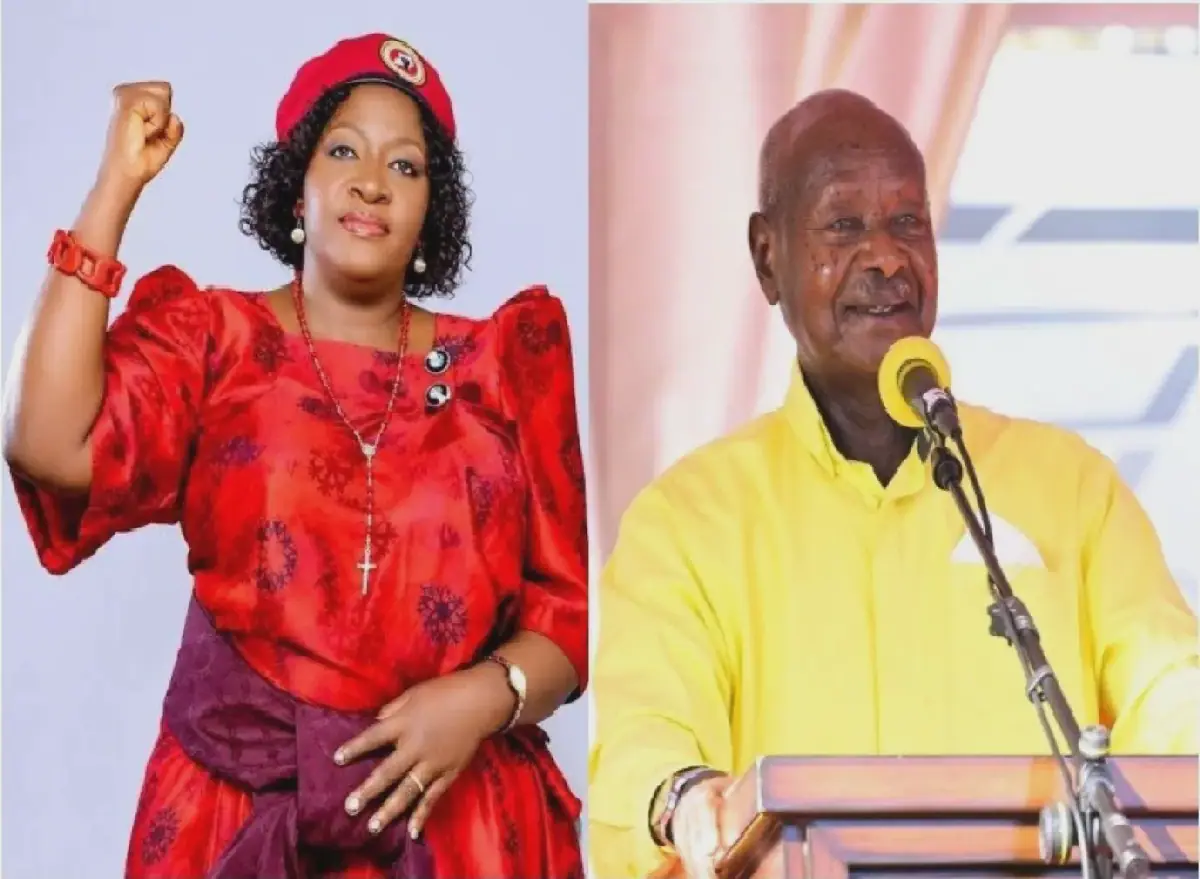
Hon. Rose Nalubowa, the National Unity Platform candidate for Masaka City Woman MP, recently revealed that she met with President Yoweri Museveni after the elections. This revelation has sparked controversy within Uganda's main opposition party, raising questions about private contacts between opposition figures and the long-serving President. Nalubowa stated that she was summoned by the President and felt she had little choice but to attend.
According to Nalubowa, approximately twelve other people who had stood on the NUP ticket had also met Museveni. During the meeting, she found her political rival, Justine Nameere, the sitting Masaka City Woman MP and State Minister for Local Government, seated beside her; however, the two did not speak to each other. Nalubowa also claimed that anyone seeking to become an MP effectively needs presidential approval, an assertion that has not been independently verified and that her party has not endorsed.
The National Unity Platform issued a formal statement on 7 November 2026, clarifying that it was not consulted on the matter and was not aware of any such meeting. The party has stopped short of announcing disciplinary action, limiting its position to clarifying that the engagement was neither sanctioned nor known to the leadership in advance. Nalubowa indicated that her lawyers were aware and had been asked to engage party headquarters, but NUP's public statement does not accept that this constituted proper consultation.
Nameere has offered a different version of the same events, stating that she accompanied Nalubowa and Nalubowa's husband to the President in an effort to promote reconciliation after a bitterly contested election. In her telling, the meeting was an attempt to present grievances and lower temperatures rather than a unilateral summons. The two politicians therefore give incompatible accounts of who initiated the encounter and for what purpose.
The electoral background to this controversy is well-documented. On 15 January 2026, Nalubowa was initially declared the winner with 25,443 votes to Nameere's 20,324. However, Nameere sought a recount on the ground that results from a number of polling stations had been omitted. The recount certificate reversed the outcome: Nameere 25,502, Nalubowa 23,176. Nalubowa petitioned the High Court, alleging irregularities, but Justice Bernard Namanya dismissed the petition on 21 October 2026.
The judge found that electoral materials had not been properly safeguarded and that some irregularities had occurred, but held that Nalubowa had not proved the non-compliance substantially affected the result. Even if all 1,353 excluded votes were awarded to Nalubowa, her total would still have left her 973 votes short of Nameere. Costs were awarded against the petitioner, and Nalubowa's team indicated an intention to appeal. This sequence of events has produced sharp reactions among opposition supporters.
Some argue that any opposition politician meeting Museveni while other NUP leaders and supporters have faced arrests or legal difficulties undermines the party's posture. Others note that meetings between opposition figures and the President are not unprecedented and that refusing a summons may carry its own risks. The episode highlights the practical difficulties opposition parties face when individual candidates maintain private lines of contact with the presidency after contested elections.
Key points
- The controversy exposes tensions inside Uganda's main opposition party.
- The meeting between Nalubowa and Museveni has sparked debate among opposition supporters.
- The electoral background to the controversy involves a disputed parliamentary seat.