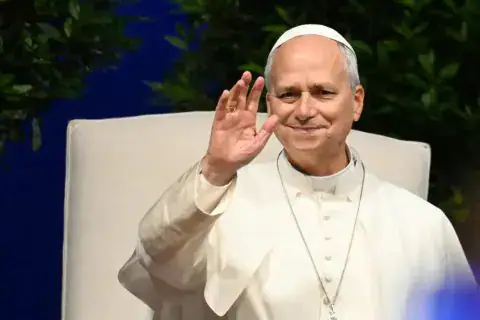
Pope Leon XIV has urged educational institutions to prioritize humanity in the use of artificial intelligence (AI). Speaking at the Catholic University of Uruguay in Montevideo, he emphasized the need for vigilance as AI progresses in the education sector. The Pope highlighted the risks of dehumanization associated with the growing use of algorithms in education. He stressed that integrating new technologies into education systems should not compromise the human dimension of learning.
The Pope's statement is part of his ongoing advocacy for responsible and ethical use of AI. He noted that the increasing presence of AI in education, research, and knowledge transmission requires careful consideration of its human and ethical implications. The Pope called on educators to prioritize individuals over algorithms, ensuring that technology serves humanity. This message aligns with his previous statements on the need for a balanced approach to technological innovation and human values.
The Pope's intervention in Montevideo has reignited the debate on reconciling technological innovation with human values in education. As AI assumes a growing role in learning, research, and knowledge transmission, educators and policymakers must consider the potential consequences. The Pope's warning against dehumanization serves as a reminder of the importance of prioritizing human needs and values in the development and implementation of AI in education.
The Catholic University of Uruguay, where the Pope made his statement, is a prominent institution in the region. The Pope's visit to the university was part of his tour of South America, during which he engaged with various stakeholders on issues related to education, technology, and human values. His message resonated with the academic community, highlighting the need for a thoughtful approach to integrating AI into education.
The Pope's emphasis on prioritizing humanity in AI development and implementation is timely. As AI becomes increasingly pervasive in education, there is a growing concern about its potential impact on the human experience. Educators, policymakers, and technology developers must work together to ensure that AI is used in ways that enhance human learning and well-being, rather than diminishing them.
The Pope's statement has implications for educational institutions worldwide. As they continue to integrate AI into their systems, they must do so in a way that prioritizes human values and promotes a more compassionate and empathetic approach to learning. This requires careful consideration of the potential consequences of AI on the human experience and a commitment to using technology in ways that benefit humanity.
The debate on AI and education is ongoing, with various stakeholders contributing their perspectives. The Pope's warning against dehumanization serves as a reminder of the importance of prioritizing human needs and values in the development and implementation of AI in education. As the use of AI in education continues to grow, it is essential to consider the potential consequences and ensure that technology is used in ways that promote human well-being and flourishing.
Key points
- Pope Leon XIV warns against dehumanization risks in education due to increasing use of artificial intelligence algorithms.