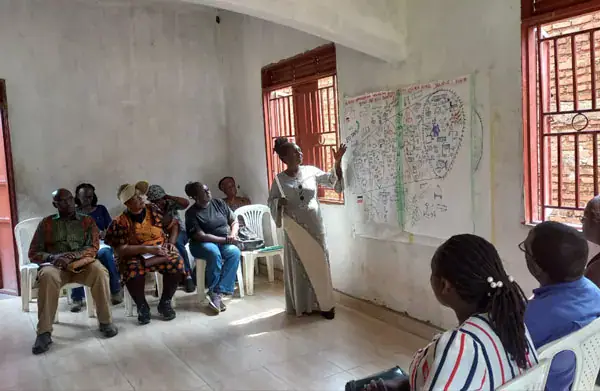
In 2009, seven community members in Mubuku, Uganda, came together to protect the disappearing trees around the Mubuku Central Forest Reserve. Over a decade later, their initiative has grown into a community-led conservation movement, demonstrating how environmental protection can create economic opportunities for rural households. The Mubuku Integrated Farmers Association (MIFA) has built a model that connects forest conservation with financial inclusion, agricultural development, and improved household livelihoods.
MIFA, supported by the Environmental Conservation Trust of Uganda (ECOTRUST), has partnered with the National Forestry Authority (NFA) to establish a Collaborative Forest Management agreement. Under the arrangement, the community took responsibility for protecting 35 hectares of public forest land. Through ECOTRUST's Trees for Global Benefit (TGB) programme, farmers began planting indigenous trees and receiving payments for the carbon benefits generated.
The initiative has expanded to include nearly 13,000 farmers, creating opportunities for thousands of households to participate in conservation while earning additional income. MIFA's experience demonstrates that long-term forest protection requires more than encouraging communities to plant trees. Rural households face everyday financial pressures, including school fees, healthcare expenses, and the need to invest in agricultural production.
To address these financial pressures, ECOTRUST supported MIFA with a UGX 100 million contribution through its Community Carbon Fund. The funding enabled the association to strengthen village savings and credit groups and establish a Coffee Value Addition Project. This project allows farmers to access financial services closer to their communities and obtain small loans to meet immediate expenses.
MIFA's interventions have translated into practical improvements in household livelihoods. Member Sevia Nyamunungu's experience exemplifies the impact of conservation finance. His mother received a carbon payment that enabled him to clear his outstanding tuition balance and complete his studies. Sevia subsequently became a tree farmer and dedicated his career to helping other farmers access similar opportunities.
The initiative has also created employment, investment, and improved financial security for members like Flavia Tukamushaba. She joined MIFA in 2012 and has invested in livestock and maize farming. She has also established 500 trees under the Collaborative Forest Management arrangement and received three carbon payments. Flavia says her life has completely changed, with access to financial support helping households meet important needs.
MIFA's model is evolving to address longer-term agricultural and environmental challenges. Using profits generated from coffee sales, the association plans to install coffee processing machines and establish a large storage warehouse in Mubuku. These investments aim to strengthen farmers' bargaining power and improve their livelihoods. The association is also establishing Farm Field Schools to equip farmers with knowledge and practical skills in improved agricultural practices.
Key points
- The Mubuku Integrated Farmers Association's experience demonstrates that community-led financing can make conservation economically meaningful by linking the benefits of protecting forests to improved household welfare.
Reporting sources
- Why forest conservation must make economic sense for communities · The Independent magazine