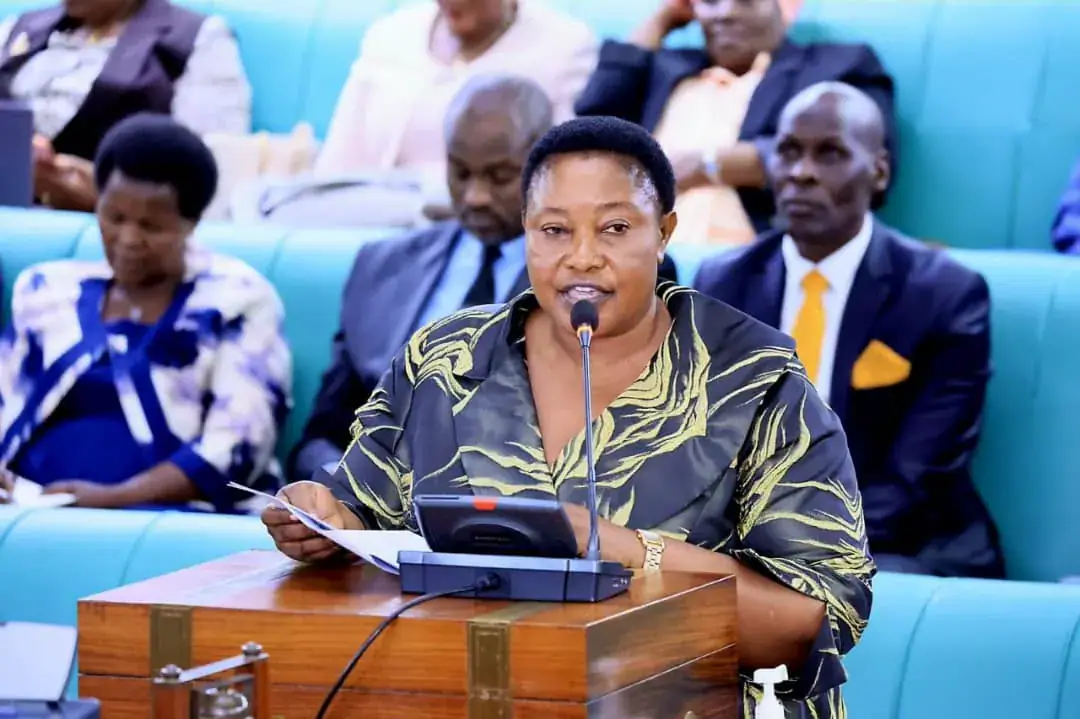
Uganda has made significant progress in the fight against HIV/AIDS, with national HIV prevalence declining from approximately 18% in the early 1990s to 5.9% today. According to the Uganda AIDS Commission, the country currently has an estimated 1.55 million people living with HIV, with more than 1.4 million accessing treatment. This progress was announced by Minister for the Presidency, Hon. Milly Babalanda, during a presentation on the status of HIV and AIDS in Uganda.
The 2025 Uganda Population-based HIV Impact Assessment indicates that HIV prevalence stands at 7.3% among women and 4.1% among men. The report highlights significant reductions in new infections and AIDS-related deaths. Annual AIDS-related deaths declined by 65%, from 56,000 in 2010 to 19,000 in 2025. New HIV infections declined by 65%, from 96,000 in 2010 to 34,000 in 2025. Mother-to-child HIV transmission also declined by approximately 78%, from 20,000 infections in 2010 to about 4,400 in 2025.
Uganda is making commendable progress towards the global 95-95-95 targets. The 2025 Uganda Population-based HIV Impact Assessment shows that 85.3% of people aged 15 years and above living with HIV know their status, 99.1% of those diagnosed are on treatment, while 96.5% of people on treatment have achieved viral suppression. Minister Babalanda attributed these achievements to sustained government commitment and collective efforts of health workers, development partners, civil society, communities, and other stakeholders.
Despite the progress, Minister Babalanda warned that significant challenges remain. The 34,000 new infections recorded in 2025 are still unacceptably high, with young people particularly vulnerable. Young women aged 15–24 account for approximately 30% of new infections. Other challenges include sexual and gender-based violence, HIV-related stigma and discrimination, inadequate prevention funding, and limited use of modern communication technologies and social media to reach young people with accurate prevention information.
To sustain the gains and accelerate progress towards ending AIDS by 2030, Minister Babalanda appealed to Parliament and Government to mobilize members of parliament to disseminate HIV prevention and care messages across the country. She also requested UGX 15 billion to the Uganda AIDS Commission to strengthen national coordination and expand HIV prevention communication. Additionally, she called for strengthened parliamentary oversight to ensure HIV interventions are mainstreamed across all sectors.
Minister Babalanda emphasized that ending AIDS as a public health threat by 2030 requires collective responsibility, sustained political commitment, adequate financing, stronger prevention programs, and a coordinated national response. She urged stakeholders to focus on achieving the three zeros: ZERO new HIV infections, ZERO stigma and discrimination, and ZERO AIDS-related deaths. By working together, Uganda can protect its young people, safeguard its communities, and secure a healthier future.
The Minister also called for support for the commemoration of World AIDS Day on 1st December 2026, to be held virtually, with H.E. the President presiding from State House. With continued commitment and cooperation, Uganda can build on its progress and make significant strides towards a future free from the threat of HIV/AIDS.
Key points
- Minister Babalanda calls for UGX 15 billion to strengthen HIV prevention and national coordination.
- Uganda's HIV prevalence has declined to 5.9%, with 1.55 million people living with HIV and 1.4 million accessing treatment.
- The country aims to achieve the three zeros: ZERO new HIV infections, ZERO stigma and discrimination, and ZERO AIDS-related deaths by 2030.