Energy is a crucial utility that enables modern life, and its generation, reliability, and affordability are critical to a country's socio-economic transformation. Uganda's government has set an ambitious target to generate 52 GW of overall power capacity by 2040. The country's energy sector has evolved significantly, from a state-monopoly system to a liberalized and diversified sector that exports to regional markets. This transformation aims to improve access to energy, which is essential for healthcare, education, and economic development.
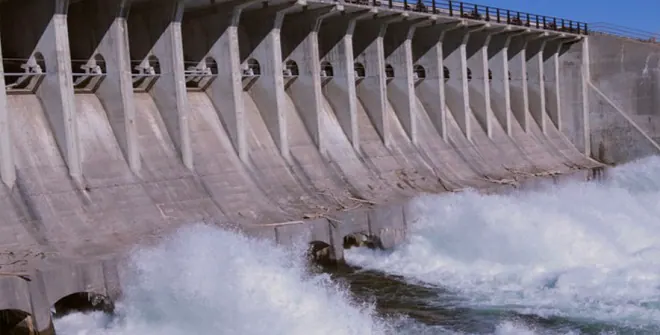
The history of Uganda's energy sector dates back to the colonial era, with significant developments in the 1940s. In 1948, the colonial government established the Uganda Electricity Board (UEB) as a state monopoly responsible for electricity generation, transmission, distribution, and supply. UEB took over existing small-scale power operations and planned the construction of the first hydro-power plant, Owen Falls Dam, which was commissioned in 1954 by Queen Elizabeth II. The dam laid the foundations of Uganda's national grid and enabled the country to export electricity to western Kenya and Nairobi.
However, decades of political anarchy and economic stagnation between the 1970s and 1980s led to underinvestment in the energy sector, causing a decline in the country's electrification trajectory. The power infrastructure aged, and energy shortages became common. In response, the National Resistance Movement (NRM) government restructured and liberalized the energy sector in the 1990s-2000s, with the help of the World Bank and International Monetary Fund (IMF). The Power Sector Restructuring and Privatisation Strategy (PSRPS) was implemented in 1999, outlining a roadmap for dissolving state dominance and attracting private sector participation.
The Electricity Act of 1999 was passed, unbundling UEB's monopoly into three functional entities: Uganda Electricity Generation Company Ltd (UEGCL), Uganda Electricity Transmission Company Ltd (UETCL), and Uganda Electricity Distribution Company Ltd (UEDCL). The Electricity Regulatory Authority (ERA) was established in 2000 as an independent body to regulate the market. The government introduced the Energy Policy for Uganda in 2002 to liberalize the sector and promote private sector participation. This led to the introduction of Umeme Ltd, a private distribution company that achieved significant success in making Uganda's electricity sector commercially viable.
In the 2010s, Uganda's energy capacity expanded significantly, with major investments in hydropower infrastructure. The Bujagali Hydropower project was commissioned in 2012, adding 250MW to the national grid. Construction began on the Karuma Hydroelectric power station (600 MW) in 2013 and Isimba Dam (183 MW) in 2015. Isimba commenced operations in 2019, while Karuma became operational in 2024. Uganda also diversified into solar energy, opening the Soroti Photovoltaic Plant with a capacity of 10MW in 2016.
The 2020s have seen significant developments in oil transition and governance reforms in the energy sector. In 2022, the parliament amended the Electricity Act, easing bulk power sales directly to industrial consumers and allowing private players to participate in the sector. This move aims to increase access to energy and promote private sector participation. The government's target of generating 52 GW of power capacity by 2040 is expected to drive economic growth and improve living standards.
As Uganda continues to transform its energy sector, the government faces challenges in ensuring that the benefits of this transformation are equitably distributed. The country's energy sector has come a long way, from a state-monopoly system to a liberalized and diversified sector. However, there is still a long way to go in achieving the government's ambitious target of generating 52 GW of power capacity by 2040. The sector's future development will depend on the government's ability to balance the needs of different stakeholders and ensure that the energy sector contributes to the country's socio-economic transformation.
Key points
- Uganda aims to generate 52 GW of overall power capacity by 2040.
- The country's energy sector has evolved from a state-monopoly system to a liberalized and diversified sector.
- The government has introduced various reforms and investments to promote private sector participation and increase access to energy.