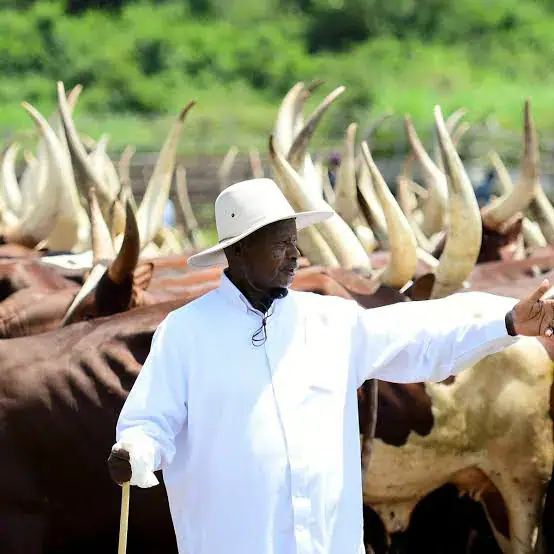
A remarkable transaction in South Africa has brought renewed attention to the commercial potential of Uganda's traditional cattle breeds, particularly the famous Ankole long-horned cattle. The cow, which is a descendant of a herd sold by President Yoweri Kaguta Museveni to South African President Cyril Ramaphosa, was sold for $400,000, approximately Shs1.72 billion. This sale has sparked interest in the value of indigenous African cattle, demonstrating that certain breeds can command extraordinary prices in specialised international livestock markets.
According to President Museveni, Ramaphosa acquired 43 Ankole cattle from him several years ago, which were taken to South Africa using embryo transfer technology. This reproductive technique enables livestock breeders to multiply animals with desirable genetic characteristics. The initial herd has reportedly grown into a population of more than 4,000 cattle, following years of breeding and expansion. Museveni shared the development through his official X account, highlighting the growth of the herd.
Ankole cattle are particularly famous for their exceptionally long horns, which can grow to remarkable sizes and give the animals their distinctive appearance. The breed is also valued for its ability to survive in challenging environmental conditions. In Uganda, Ankole cattle represent wealth, heritage and social status, particularly among communities in the cattle-keeping regions of western Uganda. They have traditionally played an important role in household livelihoods through milk production, breeding and cultural practices.
The reported sale presents an interesting opportunity for Ugandan livestock farmers to reconsider the economic value of indigenous cattle beyond conventional milk and meat production. It also raises questions about how local breeders can improve livestock genetics, invest in modern breeding technologies and position Uganda's cattle industry to benefit from growing international interest. The sale offers a remarkable example of the potential economic returns associated with premium livestock breeding.
The use of embryo transfer technology has enabled the rapid expansion of the Ankole cattle herd in South Africa. This technology allows breeders to reproduce desirable genetic lines more efficiently, potentially increasing the availability of high-value animals while maintaining important breed characteristics. The Ankole cattle breed has been preserved and expanded across international borders through this modern livestock breeding technique.
The commercial potential of Uganda's indigenous cattle breeds has been highlighted by the sale of the Ankole cow in South Africa. The transaction demonstrates that certain breeds can command high prices in specialised international livestock markets. This could have implications for Uganda's cattle industry, particularly for local breeders looking to improve livestock genetics and invest in modern breeding technologies.
The story of Ramaphosa's Ankole cattle investment has placed Uganda's indigenous breed firmly in the international spotlight. From an initial 43 animals to a reported herd exceeding 4,000, the growth of the herd has been remarkable. The reported price of $400,000 represents an exceptional sale rather than the ordinary market value of Ankole cattle, but it offers a notable example of the potential economic returns associated with premium livestock breeding.
Key points
- The sale of the Ankole cow in South Africa highlights the commercial potential of Uganda's indigenous cattle breeds.
- The use of embryo transfer technology has enabled the rapid expansion of the Ankole cattle herd in South Africa.
- The transaction demonstrates that certain breeds can command high prices in specialised international livestock markets.
Reporting sources
- Holy Cow! Museveni’s Ankole Descendant Sells for Shs1.72 Billion in South Africa · ankoletimes.co.ug