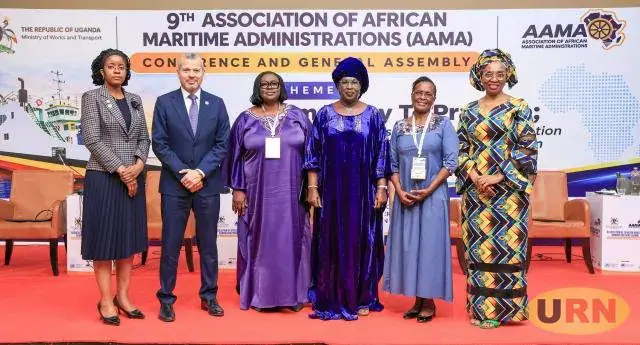
Uganda has ratified the Revised African Maritime Transport Charter, becoming the 15th country to endorse the treaty and bringing it into force. The charter aims to strengthen cooperation among African Union member states in maritime transport, port operations, and inland waterway navigation. Works and Transport Minister Fred Byamukama stated that Uganda's ratification completed the required threshold under the African Union instrument.
The Revised African Maritime Transport Charter was adopted by African Union Heads of State and Government in Kampala on July 26, 2010. The charter required 15 instruments of ratification to enter into force, with the agreement becoming effective 30 days after the deposit of the qualifying instrument. The African Union announced on August 28, 2025, that the Charter had entered into force following Uganda's deposit of the 15th instrument.
The charter replaces the earlier African Maritime Transport Charter adopted in 1994 and establishes a broader framework for cooperation in maritime governance, inland waterways, ports, maritime safety, and environmental protection. Byamukama emphasized that Uganda's geographical position should not prevent it from participating in continental maritime development, particularly since much of its international trade depends on shipping through seaports in neighboring countries.
Uganda relies primarily on the Port of Mombasa in Kenya and the Port of Dar es Salaam in Tanzania for access to international shipping networks. The efficiency of regional transport corridors, border procedures, and port operations directly affects the cost and movement of imported and exported goods. The Revised Charter recognizes the rights of landlocked countries to access the sea and freedom of transit under international law.
The charter specifically addresses the safety of vessels operating on inland waterways, including passenger boats, fishing vessels, cargo ships, and small crafts that may not be covered by existing international maritime conventions. It calls on member states to improve vessel safety and develop coordinated plans for reliable, competitive, and sustainable passenger transport on inland waterways.
International Maritime Organisation (IMO) Secretary-General Arsenio Dominguez urged African countries to move beyond policy declarations and demonstrate results. The IMO has identified domestic ferry safety as one of the areas requiring stronger national and regional action. A workshop on domestic ferry safety was conducted in Kampala, attended by 43 participants from African countries, including Uganda.
Byamukama said Uganda remained committed to strengthening maritime governance, improving inland water safety, and enhancing regional connectivity. He also called for the formal recognition of the Association of African Maritime Administrations (AAMA) by the African Union Commission, arguing that the association needs a structured relationship with the continental body to influence maritime policies, financing, and development priorities.
Key points
- Uganda's ratification of the Revised African Maritime Transport Charter brings the continental treaty into force, enabling strengthened cooperation among African Union member states in maritime transport and port operations.
Reporting sources
- Uganda becomes final country to ratify African maritime transport charter · The Independent magazine