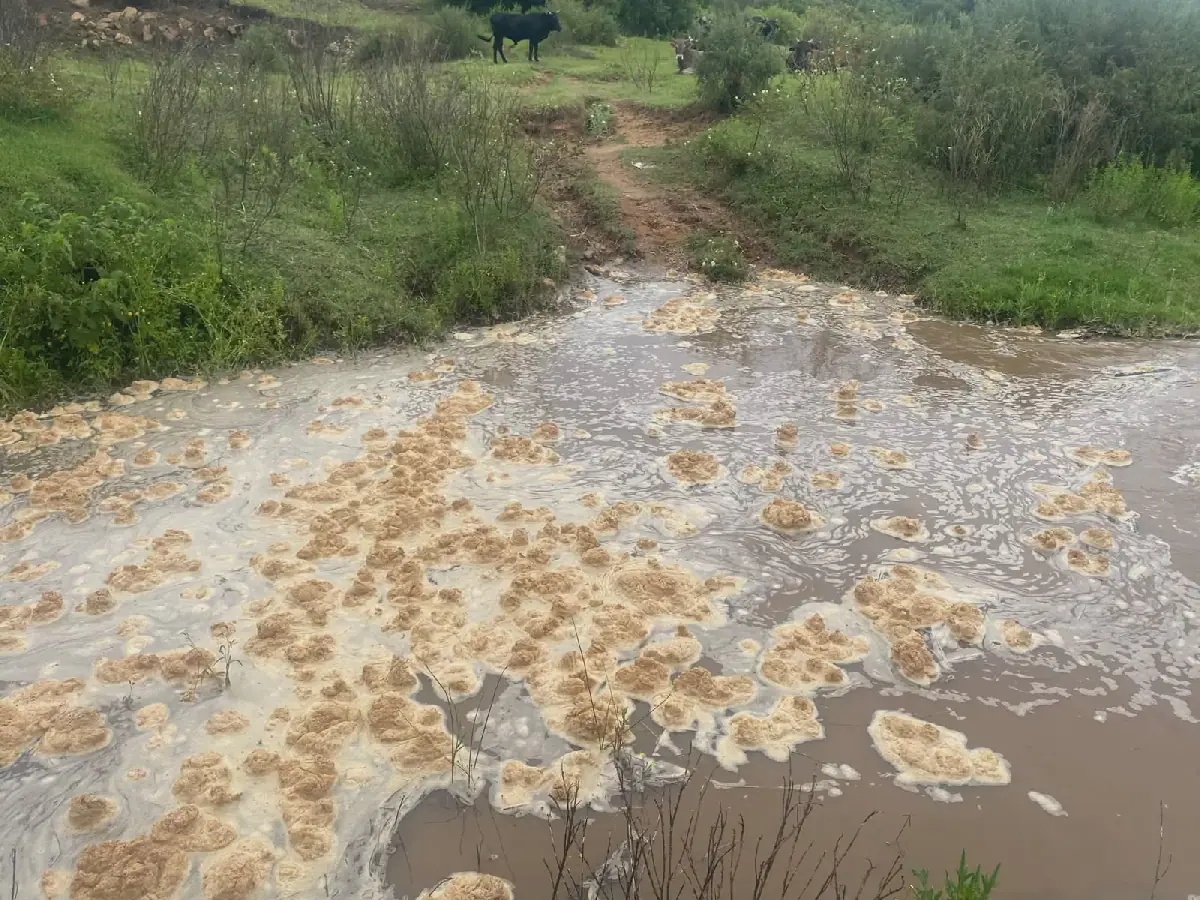
The Eswatini Environment Authority (EEA) has launched an investigation into pollution in the Ngwempisi River following reports of foam in the water. Laboratory tests revealed high levels of chemical oxygen demand (COD), a measurement used to determine the amount of oxygen required to chemically oxidise organic and inorganic substances present in a water sample. The discovery caused panic among residents who depend on the river for domestic purposes, including drinking water and watering their livestock.
EEA Acting Director Mxolisi Maphanga confirmed that water samples collected from the river had been subjected to laboratory testing, which revealed a COD reading of about 28 milligrammes per litre (mg/L). This reading is significantly higher than the recommended level of 10mg/L for treated drinking water. According to Maphanga, the elevated reading suggests that an organic or other oxidisable chemical substance may have entered the river.
The investigation has not yet established the exact nature of the substance or the source of the suspected contamination. Maphanga ruled out fertiliser and sewage as possible explanations based on the investigation so far, although the authority is still working to establish what could have entered the river. The findings have raised questions about the safety of water used by communities living along the river, particularly those who depend on it for drinking and other household needs.
Maphanga emphasised that although the COD reading was high, this measurement alone could not conclusively establish whether the water was safe or unsafe to drink. Further laboratory analysis would be necessary to identify the substances present and determine whether they pose a danger to people, livestock or aquatic organisms. The authority would need to conduct further investigations before making a definitive assessment.
The investigation is also examining where the suspected contamination could have entered the river. Samples taken upstream recorded a COD level of about five mg/L, while those collected further downstream recorded about 28mg/L. This difference suggests that the source of the contamination is likely to be somewhere between the two sampling points.
Maphanga cautioned residents against assuming that the river was free from contamination simply because its water might appear clean. He urged members of the public to report any unusual substances, discolouration, foam or other suspected pollution in rivers to the EEA without delay. The authority responds promptly to reports of suspected environmental contamination and encourages communities to alert it whenever they notice something unusual.
The warning is particularly relevant to communities that rely on rivers for their daily needs, as visible changes in water quality may be an indication that something has entered the water. The EEA will continue to investigate the source of the pollution and work to ensure that the water is safe for use by local communities.
Key points
- The Eswatini Environment Authority detected elevated pollution levels in the Ngwempisi River.
- Laboratory tests revealed high levels of chemical oxygen demand (COD).
- The investigation is ongoing to establish the source of the suspected contamination.
Reporting sources
- Dirty foam sparks Ngwempisi River pollution probe · Times of Swaziland