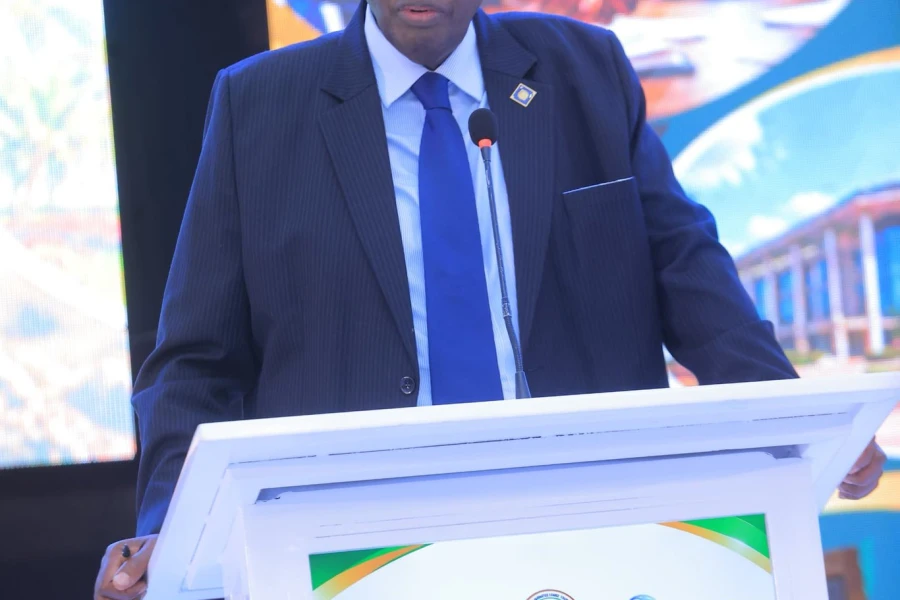
The Ministry of Agriculture, Animal Industry and Fisheries (MAAIF) in Uganda has convened district leaders and veterinary officers for a two-day engagement to develop coordinated interventions to protect farming communities from harsh weather, drought, and emerging agricultural challenges. The engagement aims to assess challenges facing farmers and agree on practical measures to strengthen agricultural production and resilience. A major focus is the Government's renewed strategy to control Foot-and-Mouth Disease (FMD), which poses a significant threat to Uganda's livestock sector and access to regional and international markets.
Minister of State for Animal Industry, Lt Col (Rtd) Dr Rwamirama Bright Kanyontore, announced that the Government has made a policy shift in FMD management by providing funds to procure vaccines and implement the national FMD control programme. The Government has provided funds for 44 million doses of FMD vaccines to cover susceptible domestic animals, including cattle, pigs, sheep, and goats. Rwamirama stated that MAAIF can now procure 100% of the required FMD vaccines.
The Government has invested in cold-chain infrastructure to preserve vaccine efficacy, including providing fridges to all districts and installing containerised solar cold-chain systems in 53 districts. This ensures that vaccines remain potent from procurement to administration. Under the new cost-recovery model, farmers will contribute to the vaccine cost while the Government meets other expenses associated with vaccination.
Farmers will pay Shs8,000 for every cattle or pig vaccinated, while vaccination of sheep and goats will cost Shs4,000 per animal. The farmer's contribution covers the vaccine, while the Government meets other implementation costs. Rwamirama urged district leaders to support the programme and discourage regional waivers, stressing that sustainable disease control requires participation by livestock owners.
Rwamirama outlined six key measures that district leaders and veterinary officers must communicate to farmers as the country rolls out the programme. FMD vaccination of cattle, pigs, sheep, and goats is mandatory, with vaccination to be conducted twice a year. Farmers will pay prescribed vaccination fees, be onboarded by veterinary services, and receive a Unique Identifier to ensure proper payment attribution.
The Ministry has directed farmers to make payments through designated banking channels, including Housing Finance Bank and Pearl Bank, and warned against handing money to individuals or veterinary officers. Payments can be made directly at bank counters or through mobile-phone payment codes. The Ministry aims to control FMD effectively, enabling Uganda to access higher-value markets for livestock and livestock products.
Effective FMD control is seen as a major economic strategy to open up markets where beef and milk fetch higher prices. Rwamirama projected that a 10% offtake of cattle could generate approximately Shs3.2 trillion, while milk could generate about Shs5.9 trillion. He urged district leaders, veterinary officers, and farmers to treat FMD control as a shared national responsibility to increase earnings for farmers and the wider economy.
Key points
- The Government has provided funds for 44 million doses of FMD vaccines to cover susceptible domestic animals.
- Farmers will pay Shs8,000 for every cattle or pig vaccinated, while vaccination of sheep and goats will cost Shs4,000 per animal.
- Effective FMD control could enable Uganda to access higher-value markets for livestock and livestock products, generating significant revenue.