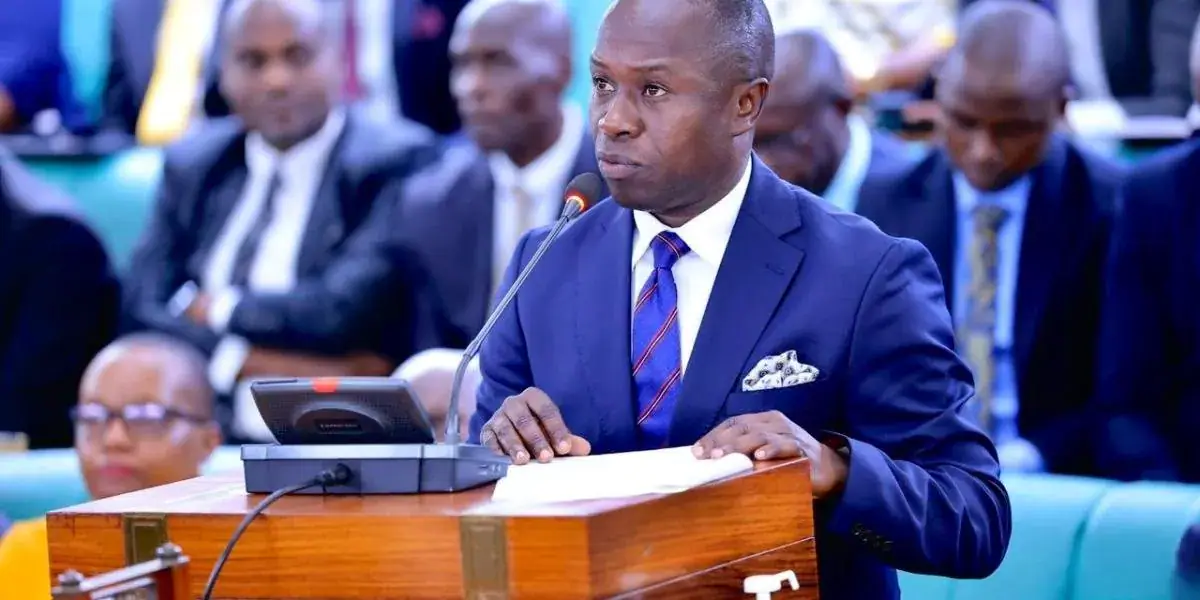
The Ugandan Ministry of Education and Sports has warned schools against sending learners home before the officially scheduled end of term, citing concerns that premature closures compromise instructional time and curriculum delivery. State Minister for Education and Sports Peter Ogwang told Parliament that schools must complete the prescribed instructional period, rejecting proposals to replace the existing three-term arrangement with a two-semester system.
Ogwang's comments came in response to concerns raised by Mukono Municipality MP Betty Nambooze about reports of schools closing prematurely, with some administrators citing the rising cost of living and operational challenges. He maintained that early closures deprive learners of essential teaching time and compromise their ability to complete the prescribed syllabus. The minister emphasized that the government will retain the three-term system for pre-primary, primary, and secondary schools.
Deputy Speaker Thomas Tayebwa directed Ogwang to issue a circular to District Education Officers (DEOs), instructing them to communicate the Ministry's position to headteachers and ensure compliance across schools. Ogwang agreed to issue a fresh circular reiterating the existing guidelines and reminding school administrators of their obligation to observe the approved academic calendar. This move aims to protect instructional time, ensure continuity in curriculum delivery, and maintain consistency in the national education system.
The 2026 school calendar, issued by the Ministry's Permanent Secretary, Dr. Kedrace Turyagyenda, allocates 82 instructional days to the third term, which is scheduled to conclude on December 4. The academic year began on February 2 and is structured around three terms comprising 89, 89, and 82 instructional days, respectively, for a total of 260 school days. The calendar directs that teaching and learning should commence promptly at the beginning of each term and that no school term should be shortened without prior written permission from the Permanent Secretary.
The Ministry's position is supported by the Education (Pre-Primary, Primary and Post-Primary) Act, 2008, which provides for regulatory oversight over schools and requires headteachers to arrange the curriculum and syllabus subject to the Permanent Secretary's direction. The law also allows for regulatory intervention where schools breach statutory requirements. Parents who have paid tuition and other school charges for an entire term may question whether schools that close early have delivered the instructional time and services for which they were contracted.
The concerns raised by Nambooze point to wider economic pressures affecting households and education institutions. Rising costs of food, transport, utilities, teaching materials, and other operational expenses have increased the financial demands on schools, while parents continue to grapple with the cost of keeping children in education. The Ministry's commitment to issue another circular places renewed responsibility on DEOs and district inspectors of schools to monitor compliance and identify unauthorized closures.
The effectiveness of the directive will depend on consistent enforcement across both public and private institutions, as well as the Ministry's willingness to address legitimate operational challenges confronting schools. Several schools have already closed and sent children home, prompting the Ministry to take action to ensure that schools adhere to the approved academic calendar and provide learners with the required instructional time.
Key points
- The Ugandan government has allocated 82 instructional days to the 2026 third term, which is scheduled to conclude on December 4.
- The Ministry of Education and Sports has warned schools against sending learners home before the officially scheduled end of term, citing concerns that premature closures compromise instructional time and curriculum delivery.
- The Education (Pre-Primary, Primary and Post-Primary) Act, 2008, provides for regulatory oversight over schools and requires headteachers to arrange the curriculum and syllabus subject to the Permanent Secretary's direction.
Reporting sources
- Education Minister Orders Crackdown on Early School Closures · 88.2 Sanyu FM