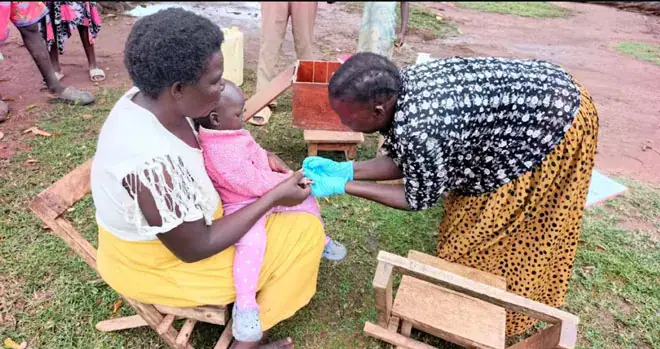
In rural Uganda, a Ministry of Health-led initiative is revolutionizing malaria care by training and equipping Village Health Teams (VHTs) and Community Health Extension Workers (CHEWs) to test people of all ages using rapid diagnostic tests and provide free lifesaving treatment within their communities. This move aims to address the challenges faced by families, particularly in rural areas, where accessing health facilities can be a significant hurdle. For Akurut Dinah Loy, a grandmother from Ogaramio village, the initiative has brought relief, as she can now get her grandchildren tested and treated quickly.
Uganda has made significant progress in the fight against malaria, with malaria-related deaths falling by more than 50% since 2000. This progress reflects sustained investments in prevention, diagnosis, and treatment. However, malaria remains a substantial public health challenge, with an estimated 13.2 million malaria cases reported in 2025. The World Health Organization (WHO) estimates that between 16,000 and 20,000 people died from malaria during the same year. The Ministry of Health's initiative aims to sustain this progress by improving access to timely care.
One of the significant challenges in the fight against malaria is people reaching health services too late, waiting more than 24 hours after symptoms begin before seeking care. This delay increases the risk of severe illness and puts additional pressure on families and the health system. The expansion of community-based malaria services is helping address these challenges by making diagnosis and treatment available where people live, particularly in areas where access to health facilities remains difficult.
Dr. Cathrine Maiteki Sebuguzi, Deputy Programme Manager at the National Malaria Elimination Department, emphasizes the importance of timely access to care in sustaining Uganda's progress. The initiative ensures timely diagnosis, prompt treatment, and protection of those most at risk. By expanding the role of community health workers, the initiative strengthens primary health care and ensures that essential services reach people who might otherwise be left behind.
The initiative is part of Uganda's 24-2 Hours Initiative, which aims to ensure malaria diagnosis and treatment within 24 hours of symptom onset and lifesaving pre-referral treatment for severe malaria within two hours. The programme is supported through a broad partnership involving the Global Fund, the United States Government, and UNICEF. This partnership has enabled the training and equipping of approximately 85,000 VHT members who provide community-based health services across Uganda.
The expansion of VHTs and CHEWs helps address a larger reservoir of infection while improving equity in access to essential health services. Extending malaria diagnosis and treatment to all age groups is critical in the fight against malaria. According to Dr. Christine Chiedza Musanhu, Team Lead for Disease Prevention and Control, WHO Uganda, community-based care helps reach people who might otherwise be left behind.
For families across Uganda, the initiative means fewer delays, less uncertainty, and a better chance of receiving treatment when it matters most. The success of this initiative brings hope to families, as they can now get help earlier, and timely diagnosis and treatment can save lives. As a grandmother, Akurut Dinah Loy values the comfort and hope that comes with knowing her grandchildren can be tested and treated quickly.
Key points
- The Ministry of Health-led initiative has trained and equipped Village Health Teams and Community Health Extension Workers to test and treat malaria in rural communities.
- Uganda has made significant progress in the fight against malaria, with malaria-related deaths falling by more than 50% since 2000.
- The initiative aims to sustain progress by improving access to timely care and strengthening primary health care.