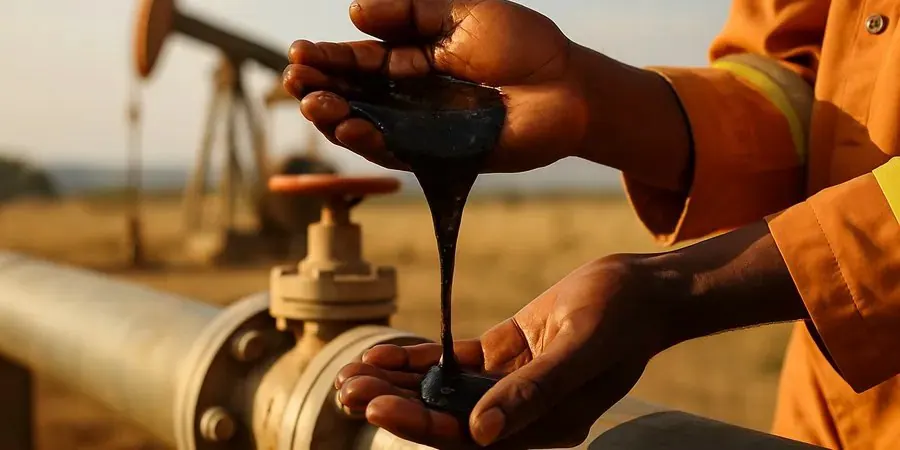
The Ugandan government has unveiled a fiscal tightening plan for the 2027/28 financial year, pairing a 6.2% reduction in public spending with a 9.1% growth forecast. This strategic move comes as the country prepares for its first crude oil exports. The budget plan positions Uganda at a critical juncture, where lower borrowing ambitions coincide with the onset of commercial oil production.
The Finance Ministry aims to reduce total expenditure to 79.2 trillion shillings, approximately $20.1 billion, in the 2027/28 financial year, down from 84.4 trillion shillings in the current period. This adjustment reflects a lower reliance on borrowing and external financing, alongside a drive for more efficient resource allocation. The goal is to tame debt and narrow the fiscal deficit, in line with the Charter for Fiscal Responsibility.
The Charter targets public debt to peak at 55.1% of non-oil GDP in 2027/28 before declining. Debt-service costs have risen in recent years, prompting officials to preserve spending space for priority programs. The authorities will contain non-priority expenditure, tighten controls on commercial borrowing, and enforce budget rules more strictly. As a result, commercial borrowing will decrease relative to domestic non-oil revenue over the medium term.
The non-oil fiscal deficit is expected to fall from 6.6% of non-oil GDP in 2026/27 to 1.5% by 2030/31. The Finance Ministry’s budget strategy emphasizes seven ‘strategic shifts’, focusing on revenue-driven consolidation and prudent management of oil income. To ensure fiscal discipline, the government will cap transfers of oil revenue to the Consolidated Fund at 0.8% of the previous year’s non-oil GDP.
The balance of oil revenue will be saved in the Petroleum Revenue Investment Reserve, managed by the central bank. This framework aims to prevent pro-cyclical spending once oil production begins and anchor long-term debt sustainability expectations. Economic growth in 2027/28 is projected at 9.1%, up from a revised 7.6% forecast for the preceding period, driven by the onset of commercial oil and gas production.
Uganda expects to start crude exports early next year from western fields operated by TotalEnergies, CNOOC, and the Uganda National Oil Company. This development positions Uganda as one of Africa’s newest oil exporters. The Kingfisher and Tilenga projects are expected to ramp up around 2027, supported by new marketing arrangements for Uganda’s share of crude.
Under the 2027/28 framework, spending will focus on agro-industrialisation, tourism development, mineral-based industrialisation, and science, technology, and innovation. The Finance Ministry emphasizes that oil revenues should enhance productivity and competitiveness in these non-oil sectors, rather than fund broad recurrent expenditure.
Key points
- Uganda plans to reduce public spending by 6.2% and achieve 9.1% economic growth in 2027/28.
- The government aims to lower public debt to 55.1% of non-oil GDP by 2027/28.
- Oil revenue will be managed through a reserve fund to ensure fiscal discipline.