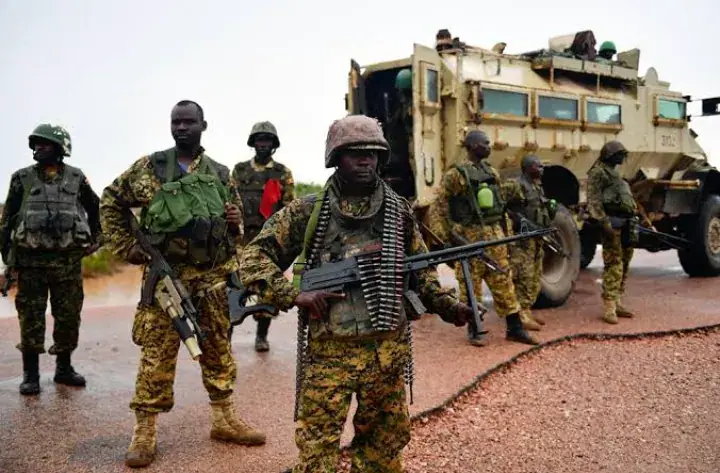
Uganda has initiated the withdrawal of its troops deployed under the African Union Mission in Somalia (AMISOM). The announcement was made by Gen. Muhoozi Kainerugaba, the Chief of Defence Force, on Thursday. This move marks the end of nearly two decades of Ugandan military presence in Somalia. The withdrawal process involves handing over security responsibilities to Somali forces, a significant step towards Somalia's self-reliance in security matters.
The departure of Ugandan troops from Somalia creates a substantial security vacuum. In response, Somalia's recently promoted leader visited Uganda to discuss a potential bilateral military cooperation agreement. This agreement would allow Somalia to tap into Uganda's military expertise and resources. Uganda has been the largest contributor of troops to AMISOM, with its contingent making up roughly a third of the force.
The United States notified the African Union on July 1 that it would not provide funding for the AMISOM mission beyond December 31. This decision was due to the Somali federal government's failure to take full ownership of its security functions and sustain progress against terrorist groups like al-Shabaab. The US funding supported essential services such as troop transport, aviation support, fuel, food, water, medical services, and field sustainment for nearly 12,000 AU mission personnel and 20,900 Somali Security Forces.
The AMISOM mission has received troop contributions from various countries, including Uganda, Burundi, Kenya, Ethiopia, Djibouti, Sierra Leone, Ghana, Nigeria, and Zambia. During the course of the mission, between 1,108 to over 1,600 troops have died in action, according to independent data. The loss of Ugandan troops and the security vacuum created by their withdrawal pose significant challenges to Somalia's security landscape.
Somalia is seeking to bolster its security capabilities through bilateral agreements with countries like Uganda. The proposed military cooperation agreement aims to enhance Somalia's military capacity and ensure a smooth transition of security responsibilities from AMISOM to Somali forces. This move is crucial for Somalia's long-term security and stability.
The withdrawal of Ugandan troops from Somalia has significant implications for the region. It underscores the need for Somalia to develop its security infrastructure and capabilities. The African Union and other international partners are likely to play a crucial role in supporting Somalia's security transition. The situation will be closely watched by regional and international stakeholders.
The future of Somalia's security landscape hangs in the balance as the country navigates this critical transition phase. The success of Somalia's security transition will depend on various factors, including the effectiveness of its security forces and the level of international support. Key stakeholders will be monitoring the situation closely to ensure a smooth transition and to prevent a resurgence of terrorist groups.
Key points
- Uganda has begun withdrawing its troops from Somalia after 20 years under AMISOM.
- The US decision to freeze funding for AMISOM resulted from Somalia's failure to take full ownership of its security functions.
- Somalia is seeking a bilateral military cooperation agreement with Uganda to bolster its security capabilities.