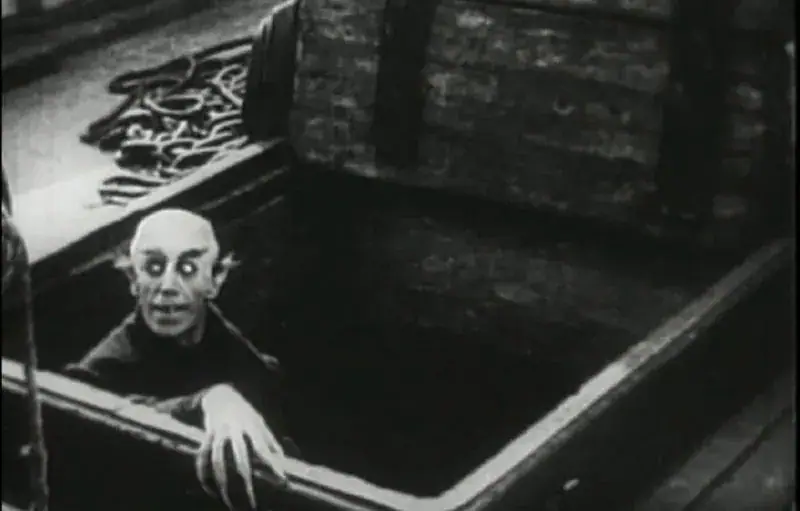
The film Nosferatu, directed by Friedrich Wilhelm Murnau, was first screened in French cinemas in late 1922. Considered one of the first horror films, it was a landmark in the history of cinema. Along with The Cabinet of Dr. Caligari, released two years earlier, Nosferatu was a pioneering work in the genre. The film's success can be attributed to its ability to evoke fear in its audience, a feat that still holds true today. Critics at the time praised the film for its unique approach to horror, marking a departure from traditional melodramas.
Upon its release, Nosferatu received both positive and negative reviews from critics. A reviewer from La Presse noted that the film was a welcome change from the "childishness" of traditional melodramas. The critic described the film's protagonist, Count Orlok, as a terrifying figure with a grotesque appearance. The reviewer from Le Matin also praised the film, describing Orlok as a haunting presence on screen. The film's impact on audiences was significant, with many viewers reportedly left shaken after watching the film.
Nosferatu was the first film adaptation of Bram Stoker's Dracula, although it was not an official adaptation due to copyright issues. The film's producers were unable to secure the rights to the novel, resulting in changes to character names and a more sanitized version of the story. A reviewer from Le Petit Journal noted that the film's lack of poetic and romantic elements made it less appealing. The critic believed that the film would only appeal to a certain type of audience that enjoyed more sensationalized content.
Despite some negative reviews, Nosferatu became a classic of French cinema, with regular screenings in Parisian theaters between 1922 and 1930. The film's influence can be seen in the work of French surrealist artists, including André Breton. The writer and film historian Georges Sadoul noted that the film's imagery had a lasting impact on the surrealist movement. The film's use of fantastical and eerie elements resonated with the surrealists, who saw it as a representation of their own artistic vision.
Not all critics praised Nosferatu, with some viewing it as a reflection of German credulity. A review in L'Action française suggested that the film's success was due to the German audience's tendency to be more easily frightened. The reviewer contrasted this with the French audience, who were seen as more rational and less susceptible to fear. However, the same reviewer did praise the film, noting that it was one of the standout works in the history of cinema.
In the years following its release, Nosferatu continued to influence filmmakers. The film's use of lighting and shadows was particularly noted by critics, who saw it as a masterclass in cinematic technique. A 1930 review in L'Action française praised Murnau's direction, noting that the film's use of accelerated footage and negative images created a sense of unease and tension. The film's influence can be seen in the work of later filmmakers, including Werner Herzog and Tim Burton.
Today, Nosferatu remains one of the most influential films in the history of cinema. Its impact can be seen in numerous films and filmmakers, and it continues to be celebrated as a horror classic. A 2000 film, L'Ombre du Vampire, was even based on the story of the film's production, highlighting its enduring legacy. The film's influence extends beyond the horror genre, with its imagery and themes continuing to inspire artists and filmmakers to this day.
Key points
- The film Nosferatu was a pioneering work in the horror genre, influencing numerous filmmakers and artists.
- The film's use of lighting and shadows was a key element in its success, creating a sense of unease and tension.
- Nosferatu's legacy extends beyond the horror genre, with its imagery and themes continuing to inspire artists and filmmakers.