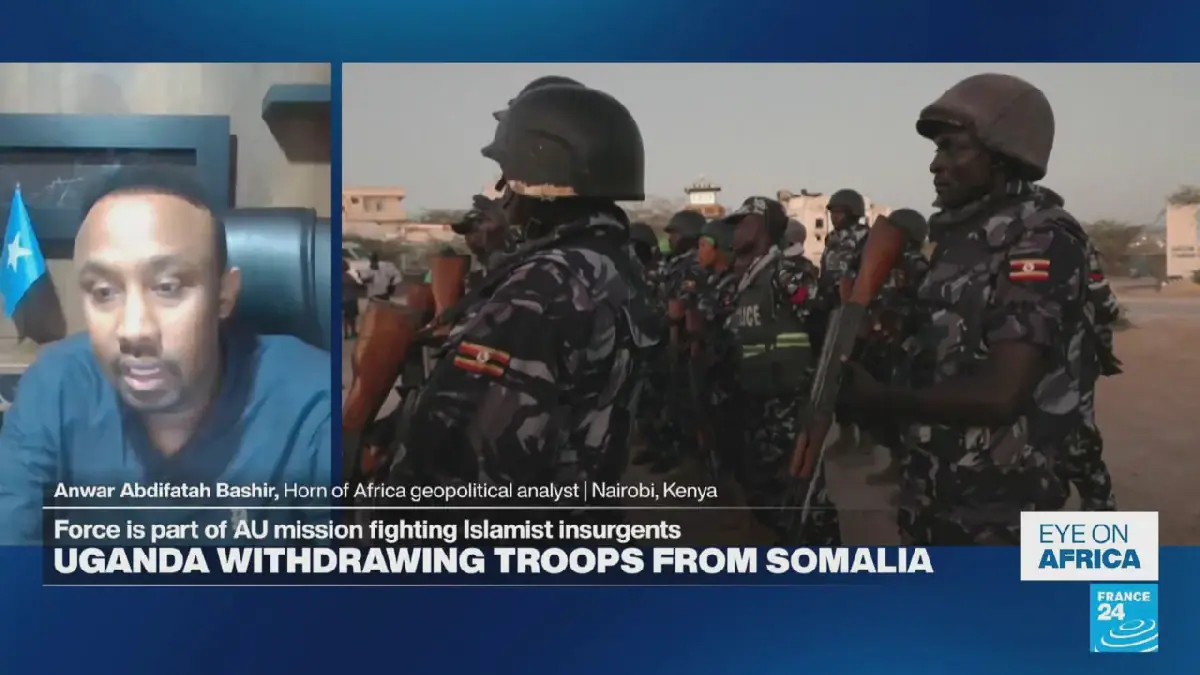
Uganda has initiated the withdrawal of its troops from Somalia, as announced on Monday, March 11, 2026. This move comes as the fight against al-Shabab extremist rebels persists. Uganda was the first country to deploy troops to Somalia in 2007, when the African Union established an international military mission to combat the militant group. The withdrawal was confirmed by Kampala, although the reasons behind this decision have not been explicitly stated.
The African Union's military mission in Somalia, known as AMISOM, was set up in 2007 to support the Somali government in its fight against al-Shabab. Uganda's participation in this mission marked a significant contribution to the effort to stabilize the region. The withdrawal of Ugandan troops raises questions about the potential impact on the ongoing battle against the rebels and the overall security situation in Somalia.
According to geopolitical analyst Anwar Abdifatah Bashir, the decision to withdraw Ugandan troops may be influenced by various factors, including shifting priorities or changing circumstances in the region. However, without an official statement from Kampala, the exact motivations behind this move remain unclear. The Horn of Africa is a complex and volatile region, with multiple factors at play, including terrorism, piracy, and regional power dynamics.
The fight against al-Shabab remains a pressing concern for Somalia and the wider region. The militant group has been responsible for numerous attacks and atrocities, including bombings, kidnappings, and assassinations. The group's activities have caused significant humanitarian suffering and instability, with many civilians caught in the crossfire. The Somali government, with the support of international partners, continues to grapple with the threat posed by al-Shabab.
Uganda's withdrawal from Somalia may have implications for the regional security architecture and the balance of power in the Horn of Africa. Other countries, including Burundi, Djibouti, Kenya, and Ethiopia, have also contributed troops to the AMISOM mission. The African Union and the Somali government will need to assess the impact of Uganda's withdrawal and determine how to adjust their strategy to ensure continued progress against al-Shabab.
The situation in Somalia remains fragile, with many challenges still to be addressed. The country is slowly rebuilding after decades of conflict, and the fight against al-Shabab is far from over. The international community, including the African Union and other partners, will need to continue providing support to Somalia to help it achieve stability and security. The withdrawal of Ugandan troops is a significant development, but it is not clear what the future holds for the region.
As the situation in Somalia continues to evolve, one thing is clear: the fight against al-Shabab will require sustained effort and commitment from all parties involved. The Somali government, with the support of international partners, must continue to prioritize security and stability in the region. The African Union and other stakeholders will need to work together to ensure that the progress made so far is not undermined by the withdrawal of Ugandan troops.
Key points
- Uganda has begun withdrawing its troops from Somalia, as announced on March 11, 2026.
- The withdrawal raises questions about the potential impact on the ongoing battle against al-Shabab rebels.
- The Horn of Africa remains a complex and volatile region, with multiple factors at play, including terrorism, piracy, and regional power dynamics.