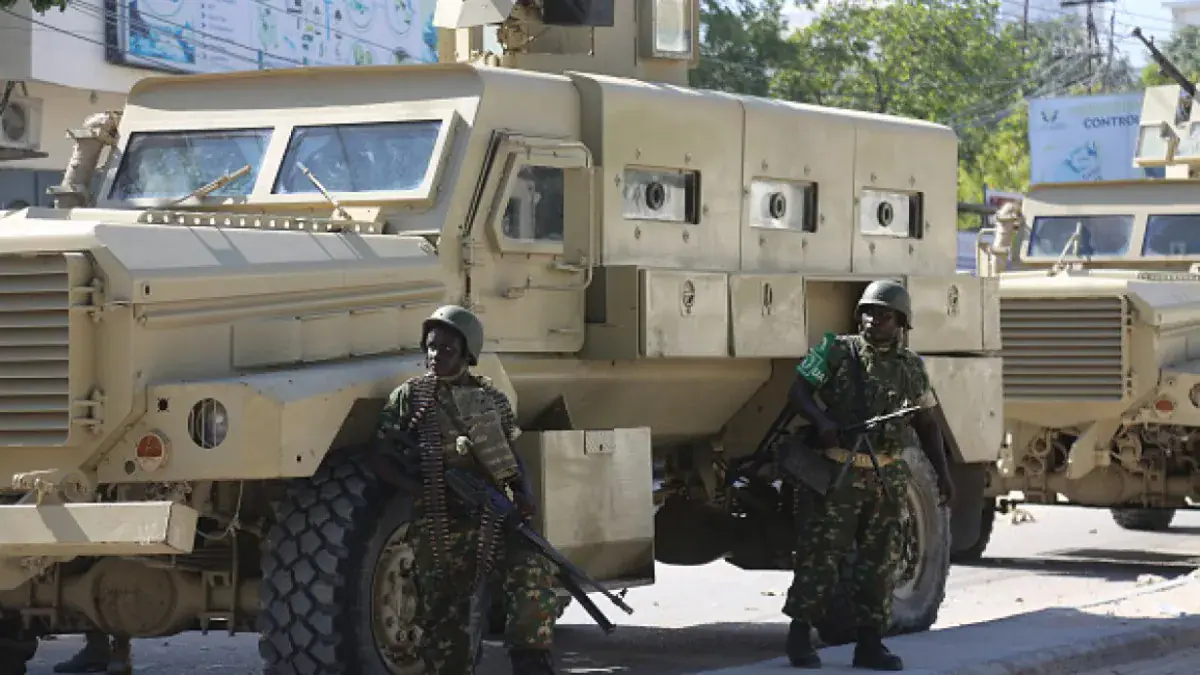
Uganda has begun withdrawing its troops from Somalia, marking the end of nearly two decades of military presence in the country. According to General Muhoozi Kainerugaba, the commander of the Uganda Defence Forces (UPDF), the withdrawal is a significant step towards transferring security responsibilities to Somali forces. The move is seen as a major shift in Uganda's military role in Somalia, where it has been a key contributor to the African Union's peacekeeping mission.
The withdrawal of Ugandan troops is part of a planned transition of security responsibilities to Somali forces, as outlined by the African Union. The African Union Support and Stabilization Mission in Somalia (AUSSOM) has been supporting Somali forces in their fight against Al-Shabaab, a militant group linked to Al-Qaeda. AUSSOM has been mandated to gradually reduce its presence in Somalia, with a planned exit by December 2029, subject to security conditions.
Uganda has been a significant contributor to the African Union's peacekeeping mission in Somalia, with a maximum of 4,500 troops authorized by the African Union. The country first deployed troops to Somalia in March 2007, as part of the African Union Mission in Somalia (AMISOM). Since then, Ugandan forces have participated in several major operations against Al-Shabaab, operating in Mogadishu and parts of the Lower Shabelle region.
The presence of Ugandan troops in Somalia has come at a significant cost in terms of lives and resources. The UPDF has suffered numerous casualties, including major attacks on African Union camps. The withdrawal of Ugandan troops is expected to create a security gap, which Somali forces will need to fill. The Somali government has been working to strengthen its security forces, but challenges remain in terms of capacity and resources.
The announcement of the troop withdrawal comes as AUSSOM faces significant funding challenges. The African Union's Peace and Security Council has warned that funding shortfalls and unpredictability threaten the mission's effectiveness. The Council has called on the international community to increase its support for the mission. The African Union has emphasized that decisions on the future of the mission and troop withdrawals will be based on security conditions on the ground and in consultation with the Somali government.
Uganda's decision to withdraw its troops from Somalia has been welcomed by the African Union, which has praised the country's contribution to the peacekeeping mission. However, concerns remain about the security implications of the withdrawal, particularly in key areas such as Mogadishu. Somali President Hassan Sheikh Mohamud, whose term has expired, recently visited Uganda and reportedly requested that the withdrawal be delayed, particularly in key areas such as the capital's airport and key installations.
The withdrawal of Ugandan troops from Somalia marks a significant shift in the country's military role in the region. While it is unclear whether Uganda will completely withdraw its troops or gradually reduce its presence, the move is seen as a positive step towards Somali forces taking over security responsibilities. The international community has been urged to provide support to Somali forces to ensure a smooth transition and prevent a security vacuum.
Key points
- The withdrawal of Ugandan troops from Somalia marks the end of nearly two decades of military presence in the country.
- The African Union's peacekeeping mission in Somalia faces significant funding challenges, which threaten its effectiveness.
- The withdrawal of Ugandan troops creates a security gap, which Somali forces will need to fill.