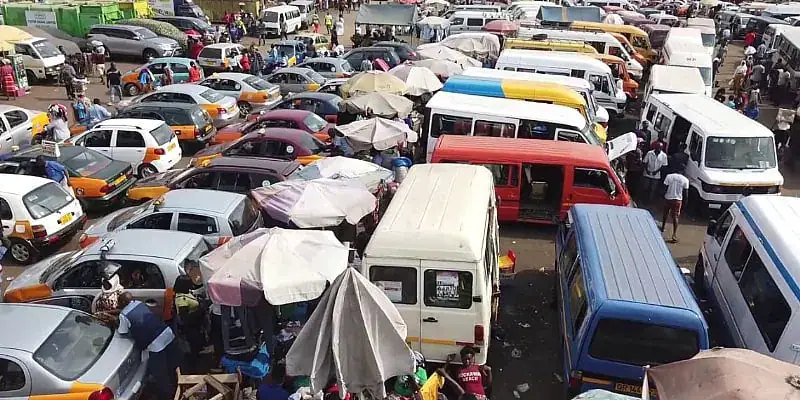
Commercial transport operators in Ghana have announced plans to withdraw their vehicles from the roads nationwide from November 1, 2026, in opposition to the planned introduction of the TraffiTech-GH digital traffic enforcement system. The operators, represented by the Concerned Drivers Association, claim they are not ready for the rollout. They accuse the authorities of failing to address concerns over traders and hawkers who have taken over designated bus stops and pedestrian walkways.
The National Public Relations Officer of the Concerned Drivers Association, David Agboado, stated that the government and the police had not done enough to create the conditions necessary for commercial transport operators to comply with the new system. He argued that the implementation of TraffiTech-GH must involve a comprehensive approach that addresses both motorists' responsibilities and the obstruction of public spaces by traders. Agboado emphasized that the bus stops taken over by traders and hawkers must be addressed as part of a holistic approach.
According to Agboado, the association had previously given the government until October 20 to remove traders and hawkers from the streets but claimed little progress had been made. He warned that operators would park their vehicles if the digital enforcement system commenced without their concerns being addressed. The planned action has the backing of several transport groups, including the Ghana Private Road Transport Union (GPRTU), the Progressive Transport Owners Association (PROTOA), Tiger and Cooperative.
TraffiTech-GH is an automated traffic enforcement initiative developed by the Ghana Police Service to identify selected road traffic violations through cameras, sensors and other speed-detection equipment. The system is expected to become operational on November 1, 2026, and will capture offences such as speeding and running red lights. The recorded evidence will undergo review and validation before electronic notices of violation are sent to offending motorists.
The initiative is intended to strengthen compliance with road traffic regulations, improve the collection of evidence and contribute to reducing road crashes, fatalities and injuries. Director of Research, Education and Training at the Motor Traffic and Transport Department (MTTD), ACP Alexander Obeng, has clarified that the system will support existing manual traffic enforcement rather than replace it. This clarification aims to address concerns about the role of TraffiTech-GH in traffic management.
Agboado maintained that while the authorities were prepared to commence the exercise on November 1, commercial transport operators were not equally prepared. He stated that the association had agreed that no vehicle should move if the digital enforcement system commenced without their concerns being addressed. This unified stance among transport groups underscores the gravity of the situation and the potential impact on transportation services.
The impending nationwide strike by commercial transport operators could have significant effects on Ghana's transportation sector and daily life. With the TraffiTech-GH system set to become operational on November 1, the situation remains uncertain. The government and transport operators must engage in urgent dialogue to address the concerns and find a solution that balances the needs of all stakeholders.
Key points
- Commercial transport operators in Ghana threaten to withdraw vehicles from November 1 over concerns about TraffiTech-GH digital traffic enforcement system.
- The operators claim the authorities have not addressed concerns over traders and hawkers who have taken over designated bus stops and pedestrian walkways.
- The planned action has the backing of several transport groups, including the Ghana Private Road Transport Union (GPRTU) and the Progressive Transport Owners Association (PROTOA).