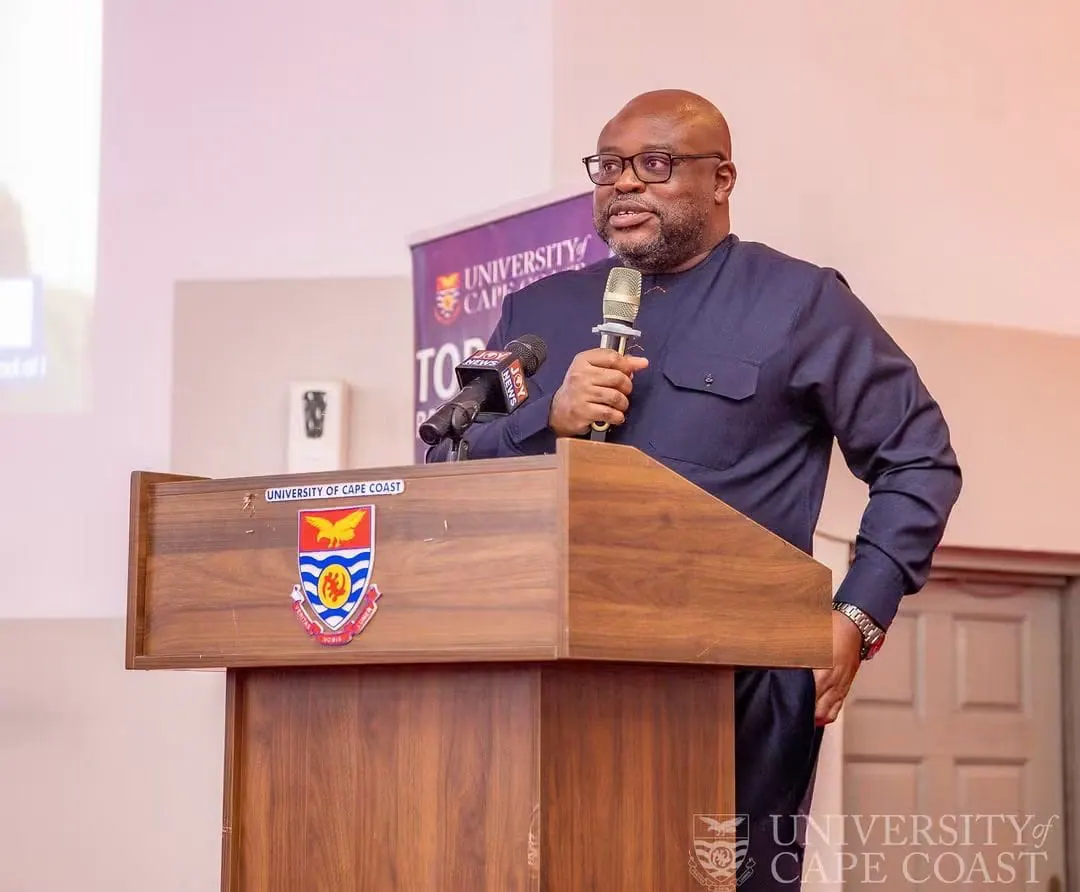
The University of Cape Coast's School of Medical Sciences has held its 17th White Coat ceremony, marking the transition of 155 students into the clinical phase of their medical training. This significant milestone allows students to practice with real patients, under the supervision of experienced medical professionals. The ceremony was attended by students, parents, and notable figures in the medical field, including Dr. Philip Anderson, Country Manager of Roche Ghana, and Prof. Patrick Kafui Akakpo, Dean of the School of Medical Sciences.
Dr. Philip Anderson, in his address as a guest speaker, highlighted several weaknesses in Ghana's health system, including inadequate diagnostics, medicines, equipment, specialist services, beds, and infrastructure. He emphasized that these shortcomings pose a significant threat to patient care and urged the government to take swift action to address them. Dr. Anderson stressed that increased investment in healthcare and medical training is crucial to improving the quality and capacity of the health system.
According to Dr. Anderson, medical training must be supported with funding for research, and teachers, clinicians, and researchers must receive the necessary resources to train the next generation of medical professionals. He emphasized that investment in health professional education is an investment in national resilience, productivity, and dignity. Dr. Anderson also encouraged Ghanaian doctors to embrace innovation and emerging fields, such as genomics, precision medicine, and robotic surgery.
Prof. Patrick Kafui Akakpo, Dean of the School of Medical Sciences, urged the students to approach the medical profession with compassion, professionalism, accountability, service, integrity, and commitment to patients and communities. He emphasized that the White Coat symbolizes service and accountability, not status. Prof. Akakpo encouraged the aspiring doctors to be guided by empathy, courage, and integrity as they encounter suffering, resilience, uncertainty, and healing during their clinical training.
Prof. Mrs. Christine Adu-Yaboah, Acting Pro Vice-Chancellor of UCC, argued that Ghana needs doctors who understand the link between poverty and disease and are committed to serving rural and underserved communities. She emphasized that medical practice must extend beyond hospital walls to address the social determinants of health, including access to clean water, sanitation, and adequate nutrition. Prof. Adu-Yaboah urged medical professionals to place greater emphasis on preventive and public health interventions to improve health outcomes in communities.
The School of Medical Sciences has grown into a center of excellence since admitting its first students in 2008. Prof. Akakpo announced plans to modernize teaching and embrace new technologies, including artificial intelligence, to enhance students' learning. He appealed to parents, guardians, and benefactors to support the SMS Endowment Fund, established to support scholarships, faculty development, research infrastructure, and innovation in medical education.
The management of UCC remains committed to strengthening the School of Medical Sciences through improved research capacity, better clinical training conditions, and stronger interdisciplinary collaboration. This commitment aims to produce medical professionals capable of responding to Ghana's healthcare needs. The White Coat ceremony marks a significant milestone in the training of medical professionals in Ghana, and stakeholders are urged to support the development of the health system.
Key points
- The University of Cape Coast's School of Medical Sciences calls for increased investment in Ghana's health system to address weaknesses in infrastructure, equipment, and specialist services.
- 155 students have transitioned into the clinical phase of their medical training at the 17th White Coat ceremony.
- Stakeholders emphasize the need for medical professionals to address the social determinants of health and prioritize preventive and public health interventions.