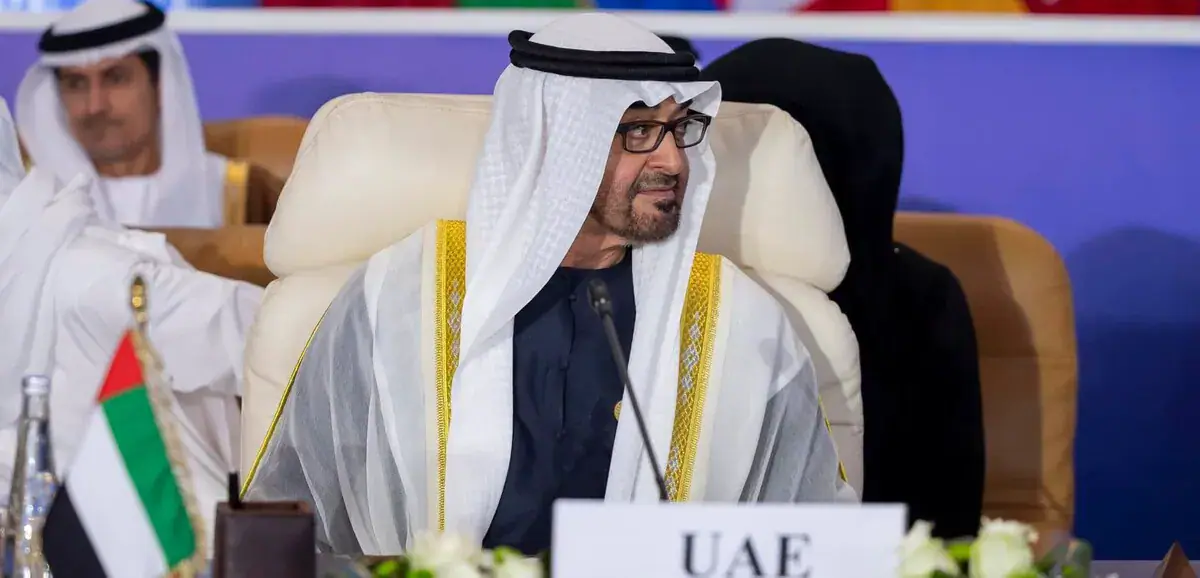
The Somali government has expelled the United Arab Emirates' ambassador, accusing Abu Dhabi of interfering in its internal affairs. This move comes after a series of tensions between the two nations, with Somalia denouncing a "manifest aggression" by the UAE. The expulsion is seen as a significant development in the Horn of Africa, where the UAE has been increasing its influence in recent years. According to Fatiha Dazi-Héni, a specialist on Gulf monarchies at the IRSEM, the UAE's strategy in Africa is complex and multifaceted.
The UAE's growing influence in Africa has raised concerns among other regional players. The country has become one of the continent's main investors, with significant interests in ports, agriculture, and natural resources. However, its aggressive expansion has led to tensions with several African nations, including Djibouti and Algeria. The UAE's support for the Rapid Support Forces in Sudan has also been a point of contention, with the Sudanese government accusing Abu Dhabi of meddling in its internal affairs.
According to Dazi-Héni, the UAE's strategy in Africa began to take shape in 2010, when Emirati companies started investing in the continent's port sector. The war in Yemen, which began in 2015, further accelerated the UAE's expansion in the region, as Abu Dhabi sought to secure its interests in the Horn of Africa. The UAE's approach has been characterized by a mix of diplomatic and military efforts, with a focus on building strategic partnerships with key players in the region.
The UAE's influence in Somalia is particularly significant, with Abu Dhabi maintaining strong ties with several regions, including Somaliland, Puntland, and Jubaland. The UAE's support for these regions has raised concerns about its intentions, with some speculating that Abu Dhabi may be seeking to recognize Somaliland's independence, following in the footsteps of Israel. However, Dazi-Héni notes that the UAE is currently keeping a low profile, given the international scrutiny surrounding its actions in the region.
The UAE's aggressive expansion in Africa has not gone unnoticed, with several countries, including the United States, China, France, Russia, Turkey, Qatar, and Saudi Arabia, vying for influence in the region. According to Dazi-Héni, the UAE has become the fourth-largest player in terms of influence, trade, and economic weight in Africa, with significant investments in the continent's natural resources and infrastructure.
The UAE's strategy in Africa has been shaped by its own domestic dynamics, with Abu Dhabi seeking to assert its influence in the region. The country's leadership, particularly Mohammed bin Zayed Al Nahyan, has been instrumental in driving the UAE's expansion in Africa. However, Dazi-Héni notes that the UAE's approach has limitations, particularly given its aggressive tactics, which have raised concerns among other regional players.
As the UAE continues to navigate its complex relationships with African nations, it faces significant challenges in balancing its interests with the need to maintain a positive image. The rejection of its candidate for the position of UN Secretary-General has highlighted the consequences of the UAE's actions, with many questioning its suitability for leadership roles. Ultimately, the UAE's influence in Africa will depend on its ability to adapt to changing regional dynamics and navigate the complex web of alliances and rivalries in the Horn of Africa.
Key points
- The UAE's strategy in Africa is complex and multifaceted, with a mix of diplomatic and military efforts.
- The UAE has become the fourth-largest player in terms of influence, trade, and economic weight in Africa.
- The UAE's aggressive expansion in Africa has raised concerns among other regional players, including Somalia, Djibouti, and Algeria.