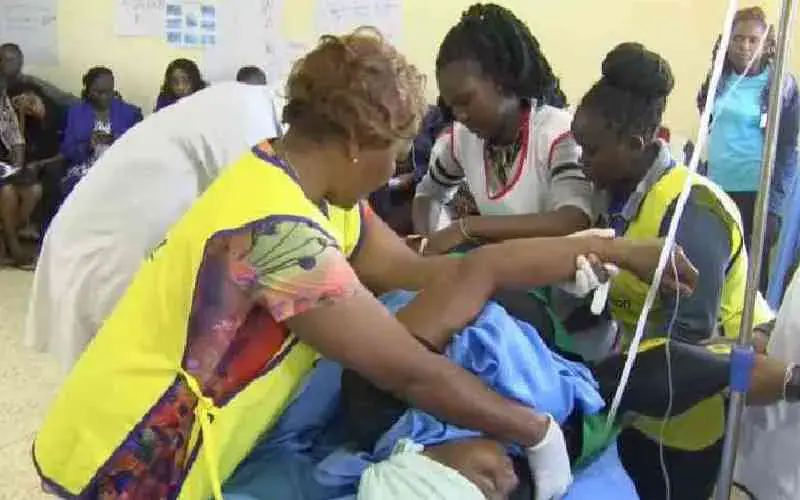
Maternal mortality rates in Kenya remain a significant concern, with hospitals facing criticism for their inability to provide adequate care to expectant mothers. Dr. Mary Maina, an obstetrician-gynaecologist and chair of the Intercounty Maternal and Perinatal Death Surveillance and Response (MPDSR), notes that frontline health workers are often blamed for failures beyond their control. She cites a case where a woman with antepartum bleeding arrived at a health facility at 2am, but the hospital only had one unit of blood available, despite the patient needing five units.
The Standard Group Plc, a leading multi-media house in Kenya, has highlighted the issue of maternal mortality rates in the country. The organization has investments in various media platforms, including newspaper print operations, television, radio broadcasting, digital, and online services. Their headquarters is located at The Standard Group Center, Mombasa Road, P.O Box 30080-00100, Nairobi, Kenya.
Dr. Maina's concerns are echoed by the fact that Kenyan hospitals often lack essential resources, including blood, functioning theatres, and the capacity to manage emergencies. This can lead to devastating consequences, including the loss of lives of expectant mothers. The issue is further complicated by the fact that health workers are often held accountable for these failures, despite being understaffed and under-equipped.
The Kenyan government has faced criticism for its handling of the healthcare system, with many arguing that more needs to be done to address the issue of maternal mortality rates. The situation is further exacerbated by the shortage of healthcare professionals, particularly in rural areas. This has resulted in many hospitals being unable to provide adequate care to patients.
The issue of maternal mortality rates in Kenya has sparked a national conversation, with many calling for urgent action to be taken to address the problem. The government has been urged to increase funding for healthcare, improve infrastructure, and provide more resources to hospitals. Additionally, there have been calls for greater accountability and transparency in the healthcare system.
The healthcare system in Kenya faces numerous challenges, including a shortage of healthcare professionals, inadequate infrastructure, and a lack of resources. These challenges have a disproportionate impact on expectant mothers, who require specialized care. The situation is further complicated by the fact that many hospitals are not equipped to handle emergencies, leading to devastating consequences.
The conversation around maternal mortality rates in Kenya highlights the need for a comprehensive approach to addressing the issue. This includes increasing funding for healthcare, improving infrastructure, and providing more resources to hospitals. It also requires a cultural shift, with a greater emphasis on accountability and transparency in the healthcare system. By working together, it is possible to reduce maternal mortality rates and ensure that expectant mothers receive the care they need.
Key points
- Kenyan hospitals' lack of resources and infrastructure contributes to high maternal mortality rates.
Reporting sources
- Doctors blamed as hospitals fail to save mothers · The Standard