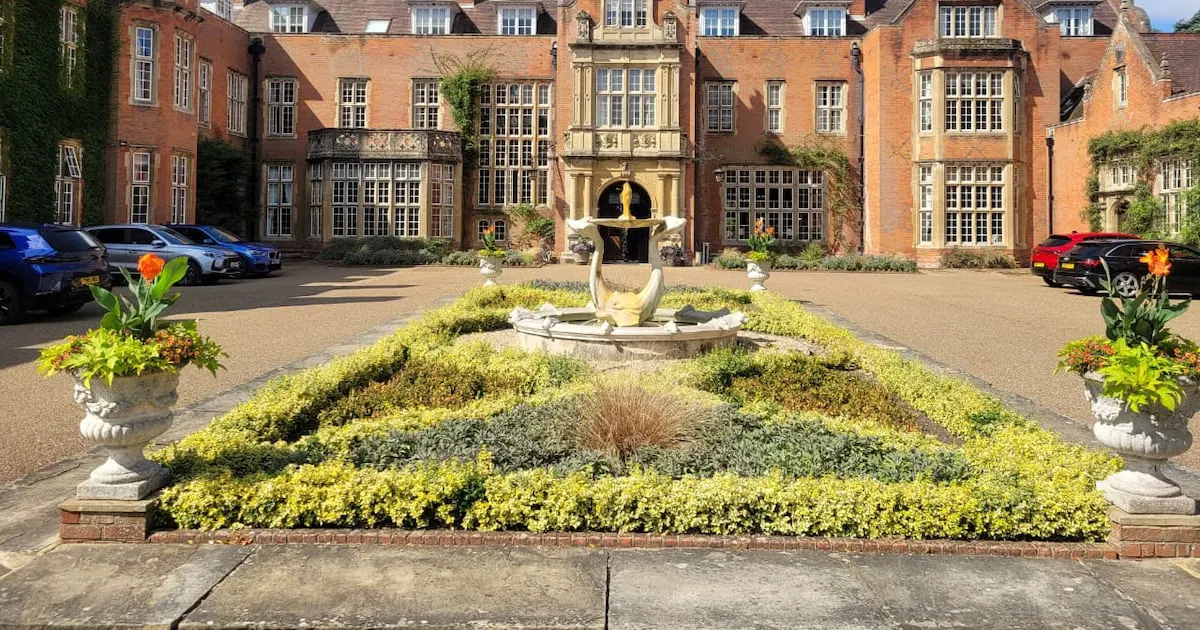
Tylney Hall, a historic Victorian mansion near Rotherwick in Hampshire, has a magnetic appeal that draws visitors in. The estate, which spans four centuries of illustrious owners, was rebuilt and redesigned by Lionel Phillips, a diamond magnate and president of the Witwatersrand Chamber of Mines. Phillips' lavish vision, lush landscaping, and love of outdoor pursuits make Tylney Hall a unique and inviting destination. The estate's sprawling grounds, complete with a swimming pool, tennis courts, and a suite with a chandelier, make it feel like home to those who visit.
Phillips' significant contribution to British heritage is all the more remarkable given his history in South Africa. He narrowly escaped a death sentence for treason after colluding with Cecil John Rhodes and perpetrating the failed Jameson raid. However, then-president Paul Kruger pardoned, fined, and excommunicated him, allowing Phillips to return to England and pursue his architectural ambitions. This decision ultimately led to the creation of Tylney Hall as we know it today.
The estate has undergone several transformations since Phillips' ownership, serving as a World War 1 hospital, the headquarters of Rotherwick's Victorian shipping company, a school, and finally, in 1985, a hotel. Today, Tylney Hall boasts 112 rooms, each individually designed with period furniture, floral fabrics, and wrought iron windows. The rooms offer a range of compelling views, and guests can enjoy a variety of activities, including golf, croquet, and fine dining.
The author, who lived in the nearby village of Alton, notes that Tylney Hall offers a range of genteel pursuits, including high tea in the library, operas in the minstrel's gallery, and fine dining in the dining room. The hotel's staff is warm and welcoming, taking note of guests' preferences and making them feel at home. For the author, a South African, Tylney Hall is a place where they can truly "feel at home."
One of the standout features of Tylney Hall is its beautiful grounds, which stretch languorously to the lake and offer a range of outdoor activities. The front lawns are conducive to swinging a croquet mallet, while the 18-hole golf course winds its way through an undulating arboretum. The estate is also home to a range of wildlife, including rabbits and ravens.
The hotel's interior is just as impressive as its exterior, with a great hall featuring an Italian ceiling imported by Phillips in 1896 from the Grimaldi Palace in Florence. The hall leads to the front façade, where the full extent of the 27ha estate is revealed. Each of Tylney's private owners has contributed to its design and architecture, but Phillips' vision remains the most significant.
Tylney Hall is a true gem of the English countryside, offering a unique blend of history, luxury, and natural beauty. Its connection to South Africa, through Lionel Phillips and the author, adds an extra layer of interest to this already fascinating estate. Whether you're looking for outdoor pursuits, fine dining, or simply a place to relax and unwind, Tylney Hall is a must-visit destination.
Key points
- Tylney Hall's history dates back four centuries and features a range of illustrious owners.
- Lionel Phillips, a diamond magnate, played a significant role in rebuilding and redesigning the estate.
- The hotel offers a range of luxurious rooms and activities, making it a unique and inviting destination.