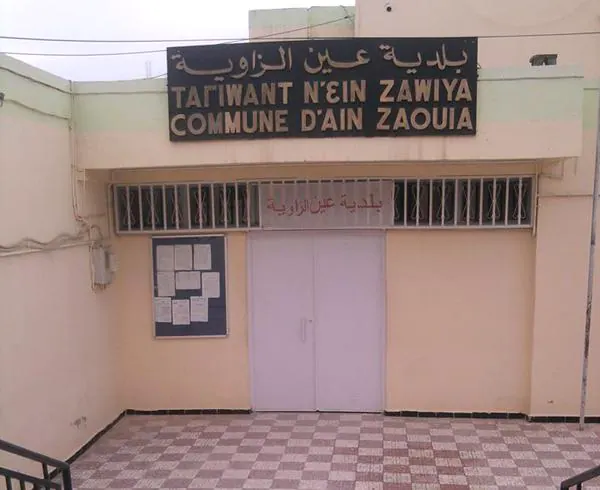
In a move that has sparked controversy, Mohamed Saïdani and Hamid Nezlioui, two deputy mayors of Aïn Zaouïa's communal assembly (APC), have been excluded from the executive committee. The decision was made just 48 hours after they publicly denounced the "catastrophic management" of the APC by the FLN mayor and his elected officials. The mayor convened an extraordinary assembly, where a proposal to exclude the two deputy mayors was voted on and passed with seven votes in favor.
The seven officials who voted in favor of the exclusion included one independent, four from the FLN, three from the RCD, and one from the FFS. Following the assembly, Saïdani and Nezlioui released a public statement, arguing that their exclusion was in contradiction with the communal code, specifically article 70. They claimed that the secretary-general had ignored the regulations outlined in the code, which stipulates that an elected official can only be replaced in cases of death, final conviction, or resignation.
The two excluded deputy mayors have expressed their determination to continue their work within the communal assembly, stating that they remain responsible, vigilant, and committed to the development of their commune. They emphasized that their actions are aimed at honoring their commitments to their constituents and enabling the development expected by the local population. The exclusion has sparked concerns about the ongoing dissensions within the assembly, which has a diverse composition.
In response to the exclusion, Saïdani and Nezlioui have sought intervention from the director of regulations, administration, and general affairs (DRAG) of the wilaya. According to Saïdani, the DRAG has instructed the head of the Draâ El-Mizan daïra to reject the deliberation, citing the communal code's article 70. The article clearly states that an elected official can only be replaced in cases of death, final conviction, or resignation.
The situation has raised questions about the legitimacy of the assembly's decision and the potential implications for the commune's governance. The exclusion of the two deputy mayors has been seen as a move to silence critics of the mayor's management. The communal assembly's diverse composition has been cited as a potential factor contributing to the ongoing tensions.
The two excluded deputy mayors have vowed to pursue their action within the communal assembly, with the aim of promoting the development of their commune. They have expressed their commitment to working for the benefit of their constituents and ensuring that the commune's needs are met. The incident has highlighted the challenges faced by local governments in Algeria, particularly in terms of governance and representation.
The developments in Aïn Zaouïa's communal assembly have sparked concerns about the potential impact on the commune's development and the relationships between local officials. The situation remains uncertain, with the excluded deputy mayors seeking to have their decision reversed. The incident has underscored the importance of effective governance and representation at the local level.
Key points
- The exclusion of the two deputy mayors has sparked controversy and raised concerns about governance and representation in Aïn Zaouïa's communal assembly.