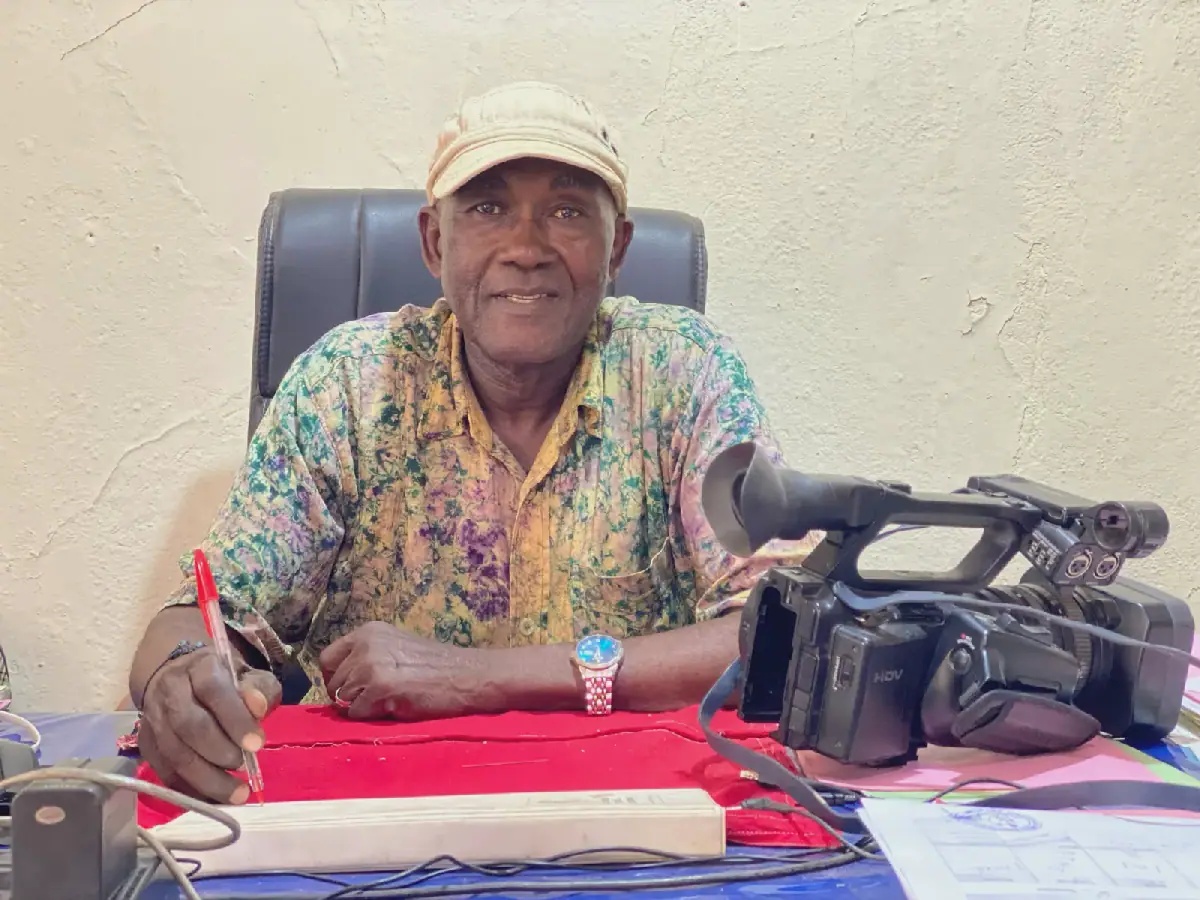
Born on March 26, 1964, in Sarh, Chad, Philippe Bayanme developed a fascination with moving images from a young age. As a child, he would create makeshift screens using cardboard and plastic, bringing drawings to life with a light source. His interest in audiovisual arts only grew stronger with time, particularly after watching films at the Rex cinema. Bayanme's passion for images eventually led him to pursue a career in the field.
Bayanme's professional journey began in 1988-1989 when he worked as a cameraman and editor at the Sarh Audiovisual Education Service (SAVE). This experience helped him familiarize himself with the technical demands of the job and enhance his skills. He went on to occupy various roles, including director at Télévision nationale tchadienne from 1999 to 2000 and coordinator at the École supérieure de communication de N'Djaména in 2004.
Throughout his career, Bayanme has worked in multiple capacities, including cameraman-reporter and deputy head of audiovisual services at the Primature's Communication Directorate from 2011 to 2014. These roles have allowed him to explore various aspects of audiovisual production, such as filming, editing, directing, and coordination. He recalls the technical challenges he faced in his early days, including heavy equipment and limited resources.
Bayanme expresses gratitude towards veteran technicians who contributed to his growth, citing Édouard Sailly, Garcetti, and Néoul as references for future generations. He highlights the importance of collaboration among professionals, emphasizing that discussions and debates during productions help find solutions and improve the final output. Bayanme's experiences have been shaped by working on scenarios, documentaries, and fiction films, as well as editing sessions.
Despite having multiple documentary and fiction film scenarios waiting to be produced, Bayanme faces funding constraints that limit his creative output. He also notes the impact of evolving technologies, with Android phones enabling people to film and edit videos, leading to an influx of amateur producers. Bayanme stresses that accessibility to equipment does not replace technical knowledge and advocates for distinguishing between amateur and professional work.
The advent of artificial intelligence has sparked Bayanme's interest, and he acknowledges its potential in creating images and films without on-location shoots. However, he emphasizes the need to preserve the value of images derived from real-life experiences. Bayanme advises young individuals aspiring to careers in television, radio, or print media to prioritize training and intellectual curiosity, acquiring a solid general culture and mastering the basics of their profession.
For Bayanme, possessing a phone or recording device is insufficient to become a professional; instead, one must develop a deep understanding of the craft. He encourages young people to be humble and strive for excellence in their work. As Bayanme continues to navigate the evolving audiovisual landscape, his experiences and insights serve as a testament to the importance of passion, dedication, and technical expertise in the industry.
Key points
- Philippe Bayanme's career spans multiple roles in the audiovisual industry, including journalist, director, and cameraman.
- He emphasizes the importance of technical knowledge and collaboration in producing high-quality content.
- Bayanme advises aspiring professionals to prioritize training, intellectual curiosity, and humility in their pursuit of careers in the audiovisual industry.