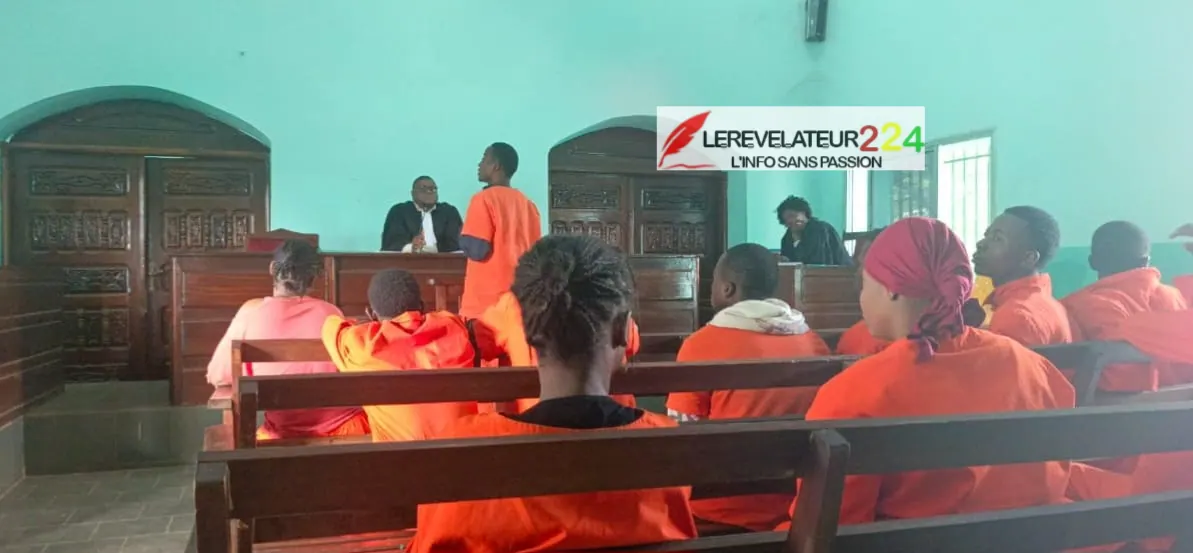
The Tribunal correctionnel de Première Instance (TPI) in Nzérékoré, Guinea, delivered its verdict on October 8, 2026, in the case of the "Infiniti muledum" network, which was being tried for human trafficking. The court's interim president, Mohamed Lamine Camara, announced that two defendants were found guilty and sentenced to prison terms, while eleven others were acquitted and ordered to leave the city.
The two convicted individuals, Alassane Diallo and Ibrahima Keïta, were found guilty of human trafficking. According to the court's decision, Alassane Diallo was sentenced to three years in prison, with 24 months suspended, while Ibrahima Keïta received a three-year sentence with 32 months suspended. This means that Alassane Diallo will serve a 12-month prison term, and Ibrahima Keïta will serve four months, with the remainder of their sentences suspended.
The court also ordered the eleven acquitted individuals to leave Nzérékoré immediately and return to their respective cities of origin. The acquitted individuals are Fatoumata Kaba, Boussoura Barry, Mamadou Maladho Touré, Amadou Diallo, Alpha Omar Diallo, Binta Diallo, Mory Traoré, Mohamed Souma, Mamadou Barry, Souleymane Bah, and Fatoumata Binta Diallo. The court's decision was based in part on the recommendations of the public prosecutor, who considered most of the defendants to be victims of false job promises.
The court's verdict was delivered in accordance with the dispositions of the Penal Code and the Code of Penal Procedure. The judge emphasized that the decision was intended to prevent the defendants from being implicated or trapped in similar cases in the forest region. The court also reminded the parties involved, including the public prosecutor, that they have a 15-day deadline to appeal the decision if they feel it is unjust.
The case involved a network known as "Infiniti muledum," which was accused of human trafficking. The court's decision marks the end of a lengthy trial process, and it is expected to have significant implications for the region. The verdict was delivered in Nzérékoré, a city located in the forest region of Guinea.
The court's decision to acquit eleven of the defendants and convict two others has been seen as a significant development in the case. The verdict is also expected to have a deterrent effect on those involved in human trafficking in the region. The court's emphasis on preventing the defendants from being implicated in similar cases in the future highlights the need for continued vigilance in the region.
The case highlights the ongoing challenges related to human trafficking in Guinea. The court's decision is a significant step towards addressing these challenges and ensuring that those responsible for human trafficking are held accountable. The verdict also underscores the need for continued efforts to prevent human trafficking and protect victims.
Key points
- Two individuals were convicted of human trafficking and sentenced to prison terms, while eleven others were acquitted.
- The court ordered the acquitted individuals to leave Nzérékoré immediately and return to their respective cities of origin.
- The verdict marks the end of a lengthy trial process and is expected to have significant implications for the region.