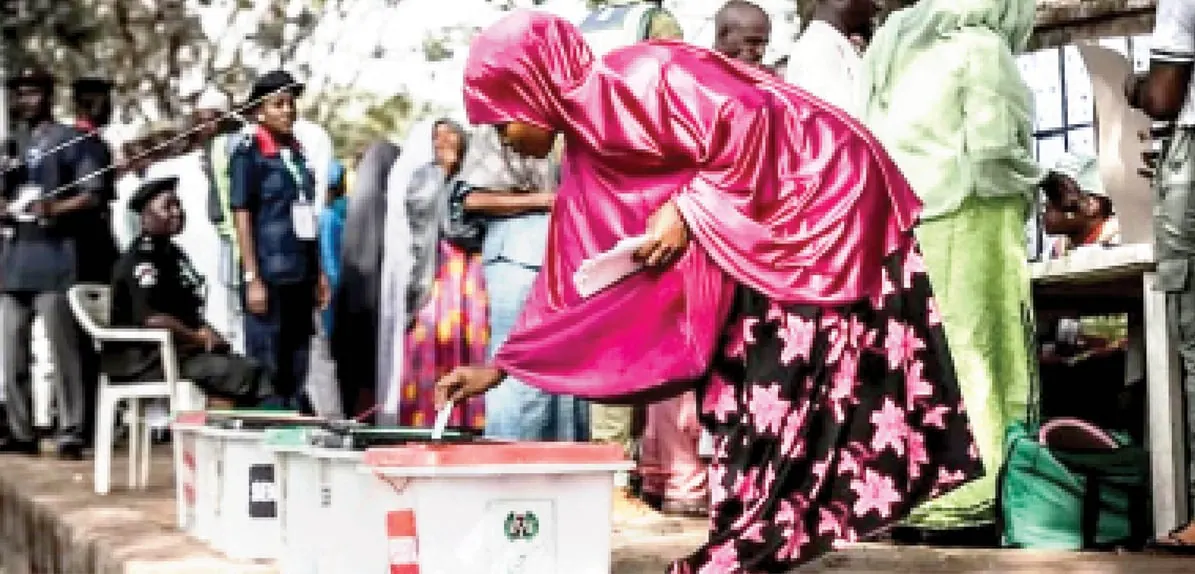
The Independent National Electoral Commission (INEC) has revealed that Nigeria's voter register has grown to 103,428,715 registered voters ahead of the 2027 general election. This represents a 10.66% increase from the 93,469,008 eligible voters in the 2023 elections. Despite this growth, voter turnout has been declining steadily since 2011, with only 26.7% of registered voters participating in the 2023 elections, the lowest in Nigeria's modern democratic history.
The decline in voter turnout is not evenly distributed across the country, with the North turning out more voters than the South. For example, Kano has consistently out-voted Lagos in every presidential election since 2011, despite having fewer registered voters. Similarly, Katsina has recorded high voter turnout numbers, while Rivers has seen a significant decline. The turnout figures show a regional divide, with the North outperforming the South, but both regions have lost ground in recent years.
A recent survey by Yiaga Africa suggests that 84% of Nigerians intend to vote in the 2027 general election, which translates to around 86.9 million voters. However, experts argue that this intention may not translate into actual turnout due to factors such as insecurity, distrust in INEC, and vote buying. The survey highlights the appetite for participation, but notes that several barriers need to be overcome to ensure a high turnout.
Experts point to voter distrust in the political and electoral systems as a major reason for the decline in voter turnout. Chidi Odinkalu, a former chairman of the National Human Rights Commission, notes that tens of millions of voters will continue to boycott elections until Nigeria can guarantee that their votes will count. He cites the lack of trust in INEC and the electoral process as a major concern.
Other experts, including Comrade Wale Okunniyi and Wahab Shittu, blame the sustained slide in voter turnout on the loss of public confidence in the nation's electoral system and the government's failure to meet the expectations of Nigerians. They argue that economic hardship, poverty, and the perception that elections are rigged and manipulated have contributed to the decline in voter turnout.
The fear of violence and the heated rhetoric of politicians may also discourage voters from participating in the electoral process. With many politicians already declaring the outcome of the upcoming elections, concerns about the integrity of the process are growing. Experts argue that INEC and the government need to work to address these concerns and ensure that voters feel safe and confident in the electoral process.
As Nigeria prepares for the 2027 general election, the challenge for INEC and the government is to address the concerns of voters and ensure that the electoral process is transparent, credible, and inclusive. With 103 million registered voters, the potential for high turnout is there, but it remains to be seen whether the necessary steps will be taken to ensure that voters feel confident and safe participating in the process.
Key points
- Voter turnout in Nigeria has declined steadily since 2011, despite a growing voter register.
- Experts cite distrust in INEC and the electoral process, as well as economic hardship and violent political rhetoric, as contributing factors to the decline in voter turnout.
- A recent survey suggests that 84% of Nigerians intend to vote in the 2027 general election, but experts argue that several barriers need to be overcome to ensure a high turnout.