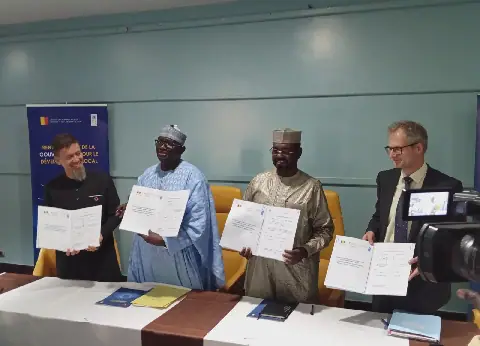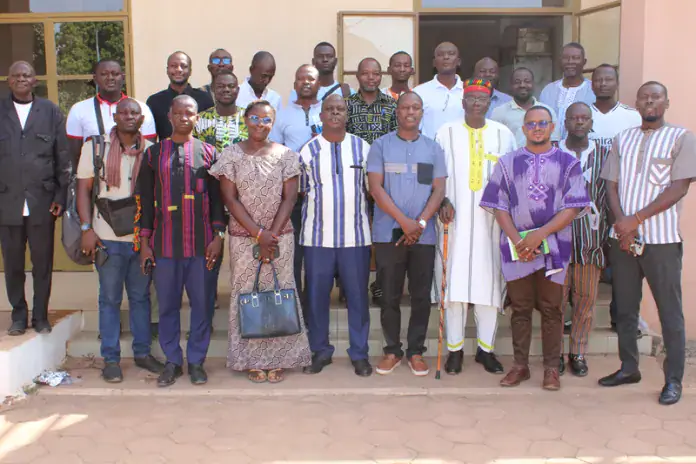
The Direction régionale de la communication, de la culture, des arts et du tourisme (DRCCAT) du Nazinon organized a five-day training session from November 18 to 22, 2026, in Koudougou. The session targeted actors from the hospitality, restaurant, travel agency, and tourism guide sectors in the Pô-Nazinga-Sissili (PONASI) area. The training aimed to enhance participants' understanding of tourism product design and promotion.
Dr. Soumaila Maré, an teacher-researcher at the Université SIB Sié Faustin de Gaoua, led a session on market analysis and client identification. He defined a tourism product as a set of services and elements that a visitor purchases to experience a new environment. Dr. Maré explained that a tourism product can be a single service, such as a hotel stay, or a combination of services, like a complete travel package.
Dr. Maré highlighted that tourism products are immaterial, consumed on-site, and dependent on multiple stakeholders. He outlined the product's life cycle, which is similar to that of a living being, with stages of birth, growth, and aging. The expert recommended that stakeholders listen to clients, ensure quality, and maintain a good reputation throughout the product's life cycle.
Ouandema Didier Yaméogo, director régional chargé du tourisme du Nazinon, presented on the fundamentals of tourism and PONASI's tourism resources. He identified various forms of tourism, including ecotourism, cultural tourism, adventure tourism, and business tourism. Yaméogo emphasized that tourism development supports local businesses, creates revenue, and generates employment for local populations.
Abdoulaye Dioni, conseiller technique au ministère en charge du tourisme, led a session on organizing and managing the tourist experience. He defined the tourist experience as the sum of perceptions, emotions, and interactions before, during, and after a trip. Dioni stressed that a positive experience relies on the coherence of the entire tourist journey.
Patricia Ilboudo, a participant, praised the training initiative, citing new knowledge gained on market research and client reception. She expressed hope that such sessions would be repeated and expanded to include more tourism stakeholders. The training equipped participants with valuable insights to enhance their services and contribute to the growth of the tourism sector in Burkina Faso.
The training session demonstrated the commitment of local authorities to developing the tourism sector. By enhancing the expertise of stakeholders, the initiative aims to promote sustainable tourism practices and boost the local economy.
Key points
- The training session covered topics such as market analysis, tourism product design, and the management of tourist experiences.