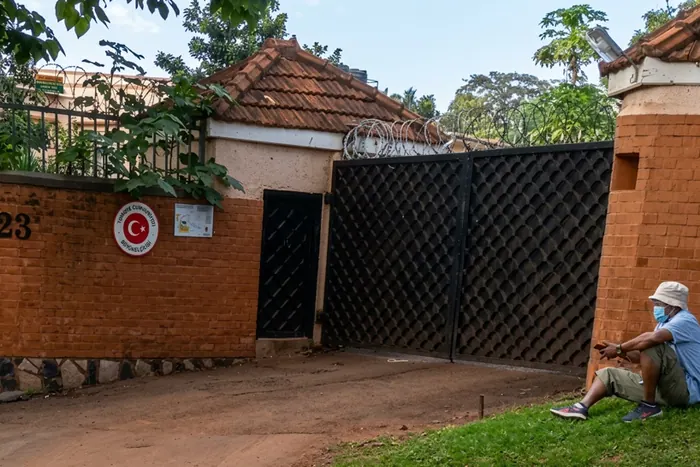
The Turkish Embassy in Kampala has issued a notice warning the public about fabricated press statements circulating on social media. These statements, purportedly from the Turkish diplomatic mission and the Ministry of Foreign Affairs in Ankara, were confirmed to be fake by the embassy. The warning comes at a time when relations between Uganda and Türkiye have been under increased public attention following recent developments involving the Turkish Embassy in Kampala, Ugandan officials, and Ugandan dissident Fred Lumbuye.
The fake statements have raised concern due to their official branding and identity of Turkish institutions. Türkiye's Directorate of Communications provided further clarification, stating that a document circulating on social media regarding threats made by Uganda's Chief of Defence Forces, Muhoozi Kainerugaba, was not an authentic government statement. The document was digitally fabricated and bore the emblem and letterhead of the Ministry of Foreign Affairs.
The Turkish Embassy has directed the public to rely only on its recognised communication platforms for information about its activities or official positions. Authentic statements from the embassy and Türkiye's Ministry of Foreign Affairs are published exclusively through their official websites and X accounts. The embassy listed its official online sources, including the Turkish Ministry of Foreign Affairs website and its Kampala mission website.
The warning follows a tense week in Uganda-Türkiye relations. On September 18, hundreds of demonstrators gathered outside the Turkish Embassy in Kampala, demanding the extradition of prominent vlogger Fred Lumbuye. The protest was organised by the Patriotic League of Uganda, with its Secretary General Fadil Twalla, on the orders of the Leader, who also doubles as the Chief of Defence Forces (CDF), Gen. Muhoozi Kainerugaba.
The protest was followed by the Uganda People's Defence Forces announcing the suspension of defence and military cooperation with Türkiye, citing outstanding issues between the two countries. Several documents and statements concerning the disagreement have circulated online, making verification of information particularly important. The Turkish government has urged the public not to give credibility to fabricated material and instead follow official government communication channels.
The Embassy in Kampala has similarly warned that statements circulating outside its recognised platforms should not automatically be treated as official. The embassy has urged the media and members of the public to verify any statement attributed to it or the Turkish Foreign Ministry through its official platforms before publishing or sharing it. This move aims to prevent the spread of misinformation and ensure the public receives accurate information.
Key points to note include the Turkish Embassy's warning about fake statements, the suspension of defence and military cooperation between Uganda and Türkiye, and the public's need to verify information through official channels. The situation highlights the importance of verifying information, especially in times of heightened tensions between countries.
Key points
- The Turkish Embassy in Kampala has warned the public about fake statements circulating on social media.
- The fake statements were digitally fabricated and bore the emblem and letterhead of Turkish institutions.
- The public is urged to rely on official communication platforms for accurate information.