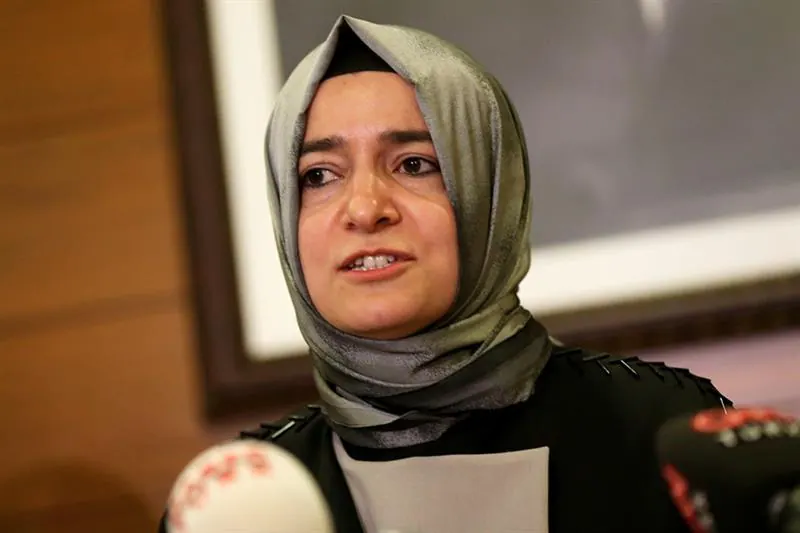
Turkey's ruling Justice and Development Party (AKP) has accepted the resignation of its deputy chair, Fatma Betul Sayan Kaya, amid allegations of share trading irregularities. Kaya requested to be relieved of her duties on Saturday, and AKP spokesman Omer Celik announced on Sunday that President Recep Tayyip Erdogan had accepted her resignation. The move comes after Kaya was accused of selling shares worth tens of millions of dollars shortly before a stock market crisis.
The allegations against Kaya involve the sale of shares in several companies, including shipbuilding company Ozata Denizcilik. According to Zeynel Emre, a spokesperson for the main opposition New Party, Kaya bought the shares for 63.4 million lira ($1.3 million) in April and sold them for 1.3 billion Turkish lira ($27.5 million) before the stock market plunged on September 16. The Istanbul Chief Public Prosecutor's Office has launched an investigation into the matter, focusing on seven investment funds and involving 76 people.
Kaya served as Turkey's family and social affairs minister from 2016 to 2018 and had been a deputy chair of the AKP. In her resignation statement, she said she was stepping down to allow the claims against her to be "clarified" and asked forgiveness from Erdogan, who also chairs the AKP. Kaya has not directly responded to the allegations. The AKP has stated that it will hold accountable those involved in irregularities, corruption, or abuse.
The Turkish stock market crisis occurred on September 16, with stocks plunging amid suspected share-price manipulation involving several investment funds. The crisis led to a significant decline in investor confidence, and the government has since taken steps to investigate and address the issue. The opposition has called for greater transparency and accountability in the matter.
The investigation into the share trading allegations is ongoing, with the Istanbul Chief Public Prosecutor's Office working to uncover the facts behind the suspected manipulation. The case has raised concerns about corruption and accountability within Turkey's financial sector. Kaya's resignation is seen as a move to mitigate the fallout from the allegations.
The AKP has faced criticism for its handling of the allegations, with some opposition parties calling for more decisive action. The party has stated that it is committed to transparency and accountability, but some have questioned whether it is doing enough to address the issue. The case has also raised questions about the relationship between politics and business in Turkey.
Kaya's resignation and the ongoing investigation into share trading allegations have highlighted the challenges facing Turkey's financial sector. The country has struggled with economic instability in recent years, and the crisis has raised concerns about the government's ability to manage the economy. The AKP's handling of the issue will be closely watched by investors and the public.
Key points
- Kaya's resignation comes amid allegations of selling shares worth $27.5 million before a stock market crisis.
- The investigation into share trading allegations involves 76 people and seven investment funds.
- Kaya served as Turkey's family and social affairs minister from 2016 to 2018.