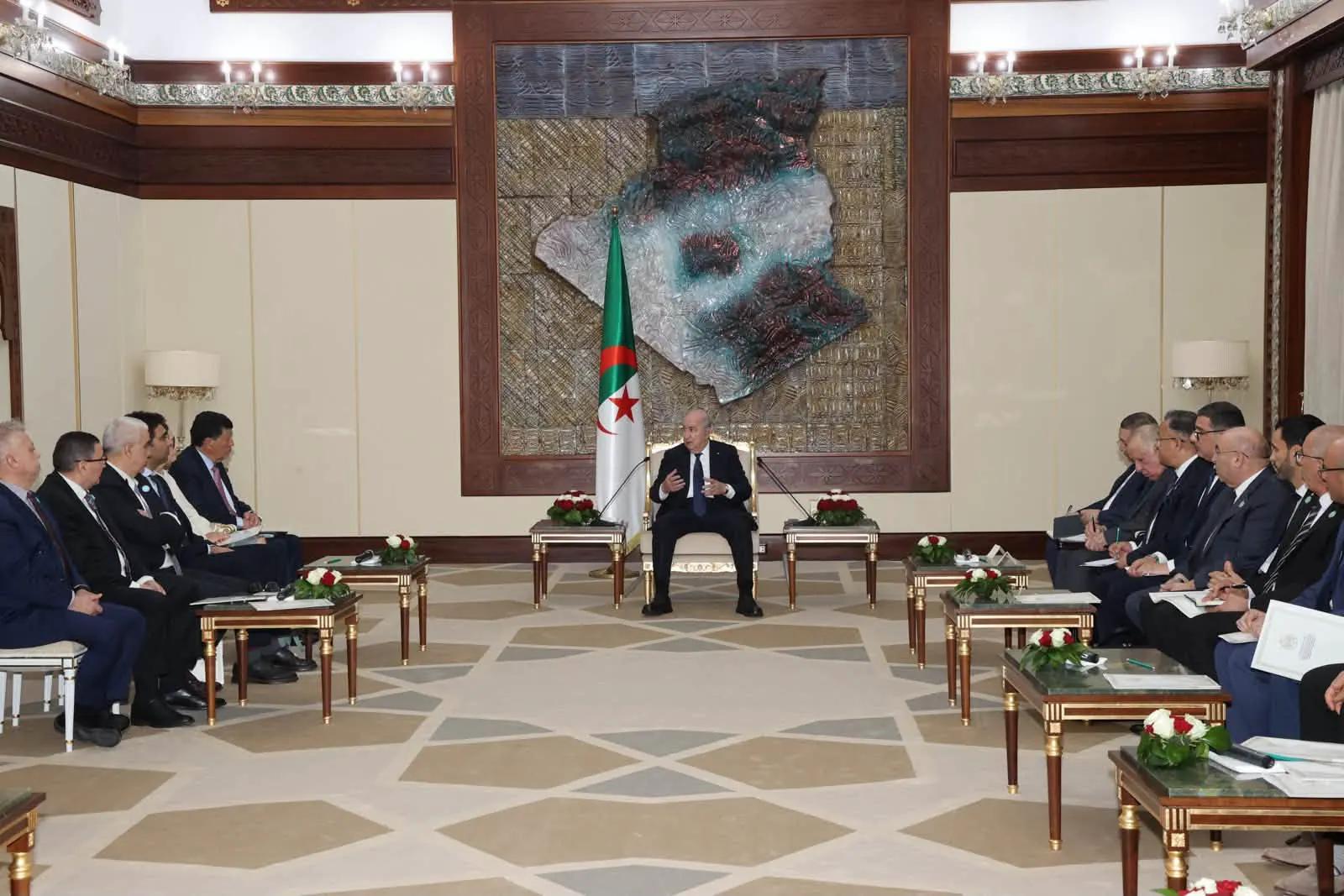
Algerian President Abdelmadjid Tebboune dedicated his Sunday to meeting with the country's top scientific minds abroad. The meeting with the High Council of the national scientific community abroad was confirmed by a communiqué from the presidency. The council was attended by a range of ministers and high-ranking state officials, indicating that the meeting went beyond a simple courtesy visit. The attendees included Minister of State Ibrahim Merad, General Saïd Chengriha, Minister of Higher Education Kamel Baddari, and Minister of Health Mohamed Seghir Aït Messaoudène.
The composition of the attendees was notable, with a range of portfolios represented. These included Industry, Economy of Knowledge, Start-ups, and Micro-enterprises. The presence of Wassim Kouidri, head of the Pharmaceutical Industry, and Noureddine Ouadah, whose department covers the economy of knowledge, start-ups, and micro-enterprises, highlighted the importance of knowledge transfer from abroad. The presidency was represented by Nasreddine Bentifour, adviser to the head of state for Education, Higher Education, Professional Training, and Culture. Sofiane Chaïb, Secretary of State for Foreign Affairs, also attended.
The selection of portfolios was not random and reflected a clear understanding of the areas where Algerian expertise abroad could have an immediate impact. President Tebboune had previously indicated that top state positions were open to members of the diaspora with proven experience and effectiveness. The High Council was not an improvised creation, with its constitutive meeting held in June at the Chahid Abdelhafid Ihaddadene scientific and technological pole in Sidi Abdallah.
The council's establishment was formalized by a presidential decree on September 7, 2026, which defined its attributions. Its inaugural working session took place on September 26 at the El Aurassi hotel in Algiers. During this session, Kamel Baddari emphasized the significance of the council, marking a shift towards formal and regular relations with the expatriate intellectual elite.
The government's goal is to elevate Algeria to emerging country status by 2027, leveraging the diverse expertise of its scientific diaspora, particularly in advanced technologies and artificial intelligence. The council's missions, as defined by decree, include strategic advice and technology transfer. This approach aligns with President Tebboune's consistent discourse, emphasizing the production of knowledge as an "act of sovereignty."
In April, during the Day of Knowledge, President Tebboune highlighted the importance of local technology development, stressing the need to move beyond imported technology. The current challenge lies in translating this vision into concrete actions, requiring identified projects, financing, and smooth administrative channels. The Sunday meeting demonstrated the government's willingness to allocate necessary resources.
The establishment of the High Council marks a significant step towards reversing the brain drain, with a focus on identified projects and administrative facilitation. The involvement of various ministers and high-ranking officials underscores the government's commitment to this endeavor. The next phase will involve implementing the council's recommendations and monitoring progress.
Key points
- The Algerian government aims to elevate the country to emerging status by 2027 by leveraging the expertise of its scientific diaspora.
- President Tebboune emphasizes the production of knowledge as an "act of sovereignty" and stresses the need for local technology development.
- The High Council's establishment formalizes relations with the expatriate intellectual elite, marking a shift towards a more structured approach.