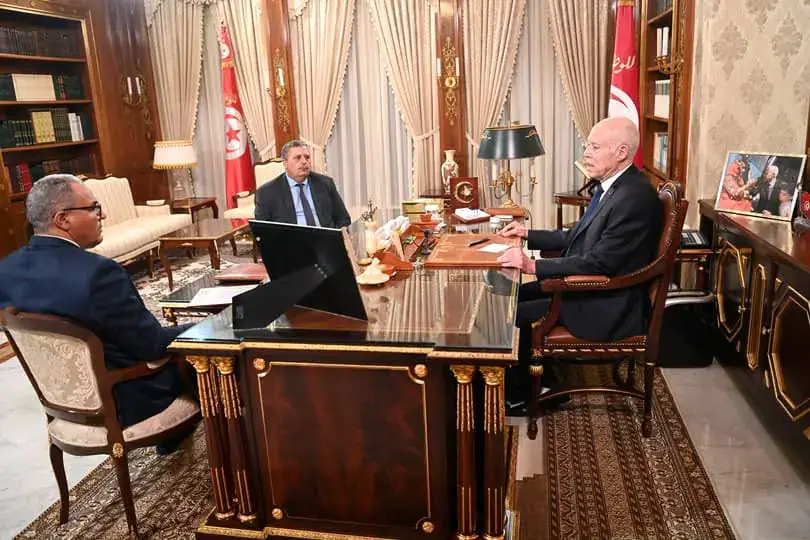
Tunisian President Kaïs Saïed recently received Minister of Education Noureddine Nouri and Secretary General of the Supreme Council of Education and Teaching Mohamed Ali Boughdiri at the Carthage Palace. During the meeting, Saïed emphasized the need for new approaches to develop the country's education system. He encouraged the exploration of innovative methods to improve education, while avoiding past mistakes and political calculations.
President Saïed criticized those who claim to possess knowledge, suggesting they should be at the forefront of primary education. He expressed his willingness to learn from successful educational experiences, but stressed the importance of listening to the Tunisian people. According to Saïed, Tunisians are capable of imagining solutions and experiences that could inspire other countries.
The President highlighted the need for adequate support for students, particularly in remote areas. This includes ensuring access to school transportation and necessary supplies. Saïed emphasized that education is a right that must be guaranteed to all, on an equal footing and without discrimination.
Saïed's call for reform comes as part of a broader effort to address the country's challenges. He has previously spoken out on various issues, including the need to address the rising cost of living and to combat corruption. The President's emphasis on education reflects his commitment to improving the lives of Tunisian citizens.
The meeting between Saïed and the education officials is part of a series of discussions aimed at improving the country's education system. The Supreme Council of Education and Teaching plays a crucial role in shaping the country's education policy. The council's president, Noureddine Nouri, is responsible for overseeing the implementation of education reforms.
President Saïed's focus on education is seen as a key aspect of his efforts to promote social justice and equality. He has consistently emphasized the importance of ensuring equal access to education and healthcare for all Tunisians. The President's vision for the country's future is built around the principles of fairness, justice, and equal opportunities.
The Tunisian government faces significant challenges in the education sector, including a shortage of resources and infrastructure. However, with the President's commitment to reform and the involvement of key stakeholders, there is hope for positive change. The success of these efforts will depend on the government's ability to implement effective policies and to engage with the Tunisian people.
Key points
- President Saïed emphasized the need for new approaches to develop the country's education system and ensure equal access to education for all Tunisians.