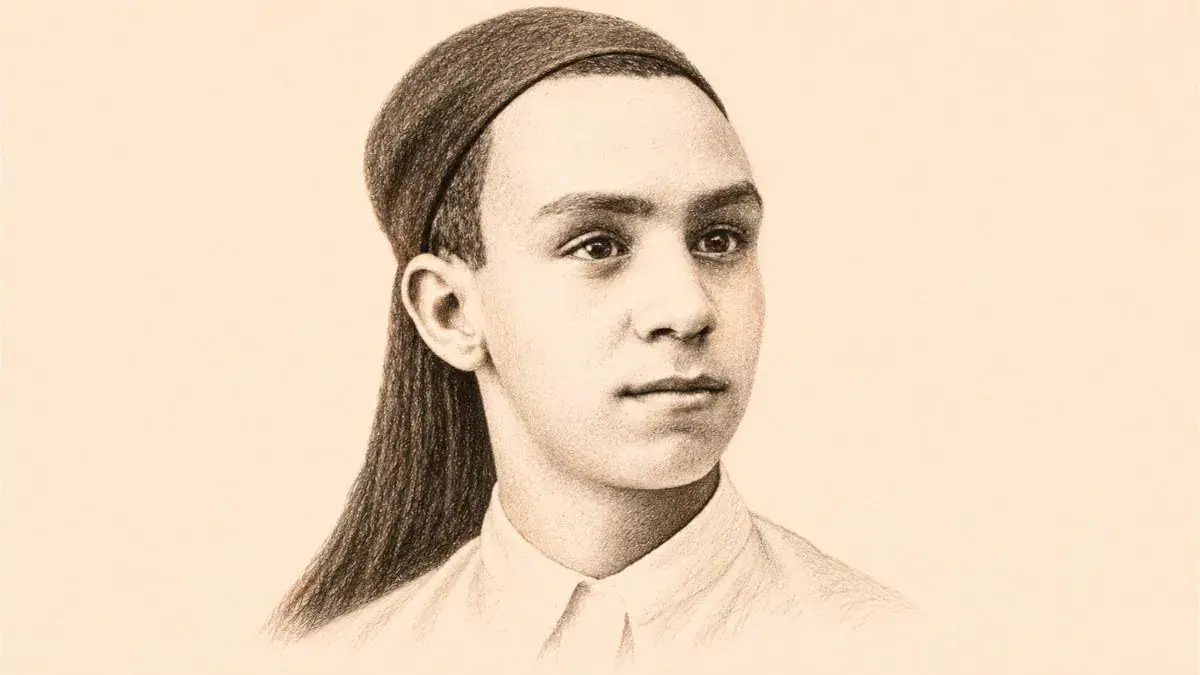
Abou El Kacem Chebbi was born in 1909 in Tozeur, Tunisia, under French protectorate. His father, a magistrate, worked in different regions, influencing Chebbi's early life. He studied in Tunis, particularly at the Zitouna, where he developed a rich intellectual background in traditional literature and religion. However, Chebbi's sensitivity and desire for modern expression set him apart from his contemporaries.
Chebbi's poetry is characterized by its powerful expression of human will and rebellion. His famous line, "If a day the people want life, fate must respond," has become an emblem of his work. This poem, from "The Will to Live," transcends literature, conveying a sense of existence where humans refuse to accept submission as fate. Chebbi's concept of freedom is not just a political claim but an inner strength and affirmation of human dignity.
Chebbi's work is not limited to revolutionary poetry; it also explores themes of love, nature, and mortality. His poetry often expresses a deep connection with nature, using it as a symbol for human experiences. This sensitivity is reminiscent of romantic movements, emphasizing individual emotions, imagination, and unity with the universe. Chebbi's writing combines musicality with rich imagery, reflecting his ambition to modernize Arabic literature.
Despite his short life, Chebbi left a diverse body of work, including poetry, prose, a journal, and letters. His collection "Songs of Life," published posthumously in 1955, showcases his poetic heritage. The Tunisian Academy Beït al-Hikma highlights the significance of his prose poems, which explore love, suffering, and the natural world. Chebbi's work continues to inspire, with part of his poem included in the Tunisian national anthem.
Chebbi's legacy extends beyond Tunisia, with recognition in literary circles across the Arab world. His poetry has been celebrated for its ability to balance hope and despair, beauty and mortality. This balance is a testament to his modernity, as he did not leave behind a poetry of tranquil certainties but one of tension, desire, and demands.
Chebbi's life was marked by fragility, as he suffered from a heart condition and died on October 9, 1934, at just 25 years old. This early death adds depth to the contrasts in his work, which often juxtapose hope and melancholy, love and suffering. His writing continues to resonate, offering a profound exploration of the human experience.
Abou El Kacem Chebbi's voice remains vibrant nearly a century after his passing. His work embodies the idea that life is not just something received but also something to be conquered. His poetry continues to inspire generations, offering a powerful exploration of human will, freedom, and the complexities of existence.
Key points
- Abou El Kacem Chebbi's poetry continues to inspire generations with its exploration of human will, freedom, and the complexities of existence.