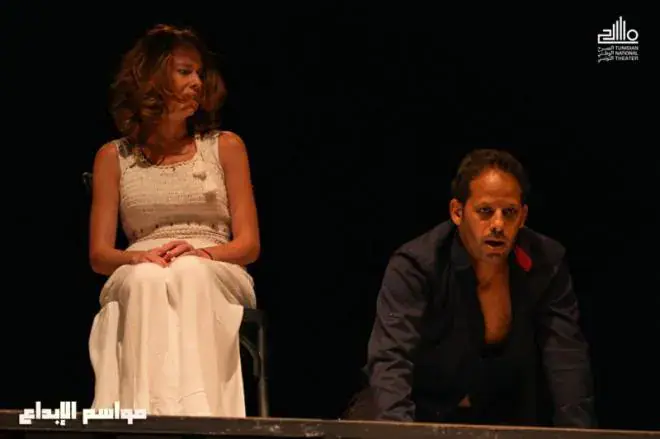
The play "Haroub," directed by Mohamed Al-Barkati, premiered on November 2, 2026, at the "Theatro" space as part of the 4th National Theater Festival in Tunisia. The 72-minute production explores various forms of escape, as characters navigate their lives and confront their destinies. The story weaves together multiple narratives, blurring the lines between reality and uncertainty.
Al-Barkati's work examines the intricacies of human relationships, revealing the dynamics of power and control that often manifest in romantic relationships. The play's characters are suspended between their desire for freedom and the constraints of their circumstances. This struggle is reflected in the settings, which include a hospital, train station, and police station – spaces that symbolize waiting, anxiety, and uncertain futures.
The play's narrative is structured around the characters' experiences in these different environments. In the hospital, the characters' stories intersect with loss and disappointment. Some have lost loved ones, while others have had their dreams shattered. Despite their diverse backgrounds, the characters share a common bond – their connection to Tunisia, a country that has not provided them with the security and dignity they seek.
The police station serves as a backdrop for exploring the imbalance of power between those who control the narrative and those who are subject to questioning. The play highlights the tension between the storyteller and the individual whose story is being told, underscoring the disparity in power and agency.
The train station offers a different perspective on escape, as characters seek to flee a reality marred by pollution, oppression, and injustice. However, their destination remains uncertain, leaving the possibility of salvation open to question. The performers – including Jamila Al-Jami, Arij Al-Sabai, Slim Al-Dheeb, and Adam Al-Amari – skillfully portray complex characters, navigating multiple roles and emotional states.
One notable scene features Slim Al-Dheeb breaking character to discuss the challenges faced by artists in Tunisia, including limited funding and internal struggles. This meta-theatrical moment allows the play to comment on the realities of artistic production in the country.
Mohamed Al-Barkati's "Haroub" is a production of the "Piccolo" theater in Banzert, supported by the Ministry of Cultural Affairs. The play was written by Mohamed Al-Nasser Al-Nafati, with Al-Barkati handling set design and direction.
Key points
- The play explores themes of escape and uncertainty in the context of Tunisian society.
- The production features a unique blend of drama and meta-theater, with performers frequently breaking character to address the audience directly.
- "Haroub" is part of a larger cultural landscape in Tunisia, reflecting the country's ongoing artistic and intellectual debates.