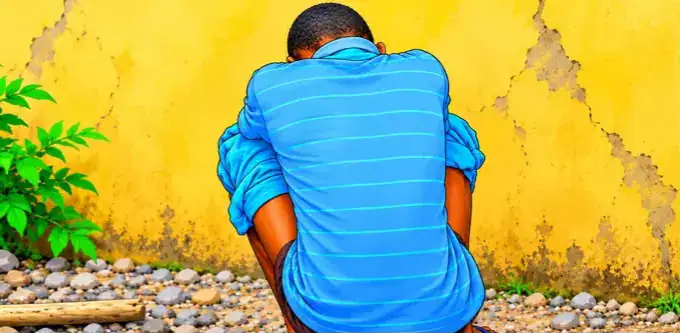
The government of Rwanda's Western Province has announced plans to intensify penalties on individuals who practice open defecation. This decision was made following a recent survey that revealed an increase in open defecation in some areas of the province. According to the survey, Rubavu District has the highest rate of open defecation, rising from 0.8% in 2019-2020 to 3% in 2025.
The survey, known as the Rwanda Demographic and Health Survey (Rwanda DHS 2025), was released on November 2, 2026. It highlights that some districts have seen a decline in open defecation, such as Nyabihu, where the rate decreased from 6.5% to 2.9%, and Rutsiro, where it decreased from 5.3% to 2.9%. However, other districts like Ngororero and Rusizi have seen an increase in open defecation.
The governor of Western Province, Jean Bosco Ntibitura, expressed concern over the rising trend of open defecation. He stated that the practice is not only a health risk but also contributes to environmental pollution. Ntibitura emphasized that the government will strengthen measures to punish those who engage in open defecation, as it is a behavior that cannot be tolerated.
According to Ntibitura, one of the main reasons for the persistence of open defecation is the lack of adequate toilet facilities. He mentioned that some residents have no access to toilets, while others have toilets that are in disrepair. The government is working to address this issue by renovating damaged toilets and building new ones.
The government is collaborating with local volunteers to construct 18,000 toilets. Residents who spoke to UMUSEKE expressed their concerns about the lack of toilet facilities, particularly in rural areas. They cited the distance to toilets as a major challenge, especially for farmers who work in remote areas.
At the national level, the Rwanda DHS 2025 survey reveals that the rate of open defecation has decreased from 2.6% in 2019-2020 to 1.7% in 2025. However, the issue of open defecation remains a significant challenge to public health. According to a 2020 survey, 38.7% of Rwandans have intestinal worms, with 46.1% of adults and 38.8% of children aged 5-15 affected.
The government has implemented measures to encourage good hygiene practices, including a daily campaign called 'Bwije Nkoze Iki?'. The campaign aims to promote proper handwashing and sanitation practices. Individuals caught practicing open defecation are fined 10,000 Rwandan francs and required to clean up the area.
Key points
- The Western Province government will intensify penalties on individuals who practice open defecation.
- The lack of adequate toilet facilities is a major contributor to the persistence of open defecation in Rwanda.
- The government is working to construct 18,000 toilets to address the issue of open defecation.