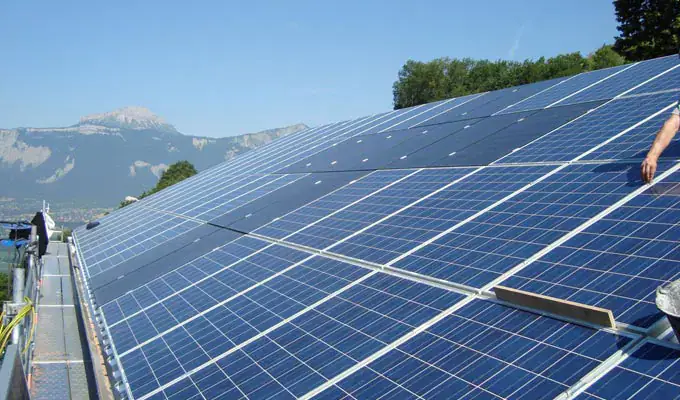
The Tunisian photovoltaic industry has expressed concerns over the rejection of two key articles in the 2027 finance bill. The Chamber nationale du photovoltaïque, representing the industry, has called on the government to resubmit articles 49 and 50 for debate in the Assembly of People's Representatives. These articles aimed to exempt electric energy storage batteries from customs duties and value-added tax, and reduce customs duties on solar panels and photovoltaic capacitors.
The rejected articles proposed reducing customs duties on solar panels and photovoltaic capacitors from 30% to 10% and the value-added tax rate to 7%. The industry argues that this measure would help lower the cost of acquiring and installing photovoltaic panels and storage batteries. This, in turn, would encourage self-production of electricity and support the competitiveness of national enterprises. The Chamber emphasizes that easing the tax and customs burden on energy equipment is not a privilege for a specific sector but a choice that benefits citizens, industrial enterprises, and the national economy.
The industry has warned of the consequences of rejecting these measures, including increased costs for citizens and enterprises, reduced self-production of electricity, and weakened competitiveness of industrial enterprises. The rejection may also delay the generalization of energy storage solutions, which are crucial for exploiting solar production during peak evening hours and reducing pressure on the electrical network. This could maintain dependence on energy imports and additional charges for the economy and public finances.
The Chamber nationale du photovoltaïque has highlighted the slow pace of Tunisia's energy transition, with renewable energies currently accounting for only 9% of the energy mix, one of the lowest rates globally. The industry cites the national strategy aiming to reach 35% renewable energies by 2030. According to the Central Bank of Tunisia, the country's economic growth slowed to 1.9% in the third quarter of 2026, partly due to electricity supply disruptions.
The deficit in energy reached 12 billion dinars in the first ten months of 2026, up from 9.2 billion dinars in the same period in 2025. The industry expressed indignation at the rejection of the government's proposal for the third consecutive year, which hampers investment promotion in solar energy and increases costs for citizens and enterprises. The Assembly of People's Representatives had previously initiated an increase in customs duties on imported photovoltaic panels from 10% to 30% in 2024.
The Chamber nationale du photovoltaïque urges deputies to prioritize national interest and energy security, reconsidering the rejected proposals in light of their economic, industrial, and social implications. The industry advocates for a stable and incentive-based fiscal and customs policy to support investments in renewable energies and energy storage. This, they argue, would help reduce energy imports and strengthen Tunisia's energy sovereignty and security.
The call for reconsideration comes as Tunisia engages in international cooperation, including a $444 million cooperation framework with the UN for 2027-2031. The country also seeks to enhance its business environment, as seen in the Business Booster Forum 2026, aimed at attracting French enterprises. The photovoltaic industry's concerns reflect broader challenges in Tunisia's energy sector, where the balance between economic growth, energy security, and environmental sustainability remains a pressing issue.
Key points
- The Tunisian photovoltaic industry seeks to lower costs and increase investment in solar energy through fiscal exemptions.
- Rejected measures aimed to exempt energy storage batteries from customs duties and reduce taxes on solar panels.
- The industry warns of delayed energy transition and increased dependence on energy imports if measures are not reconsidered.