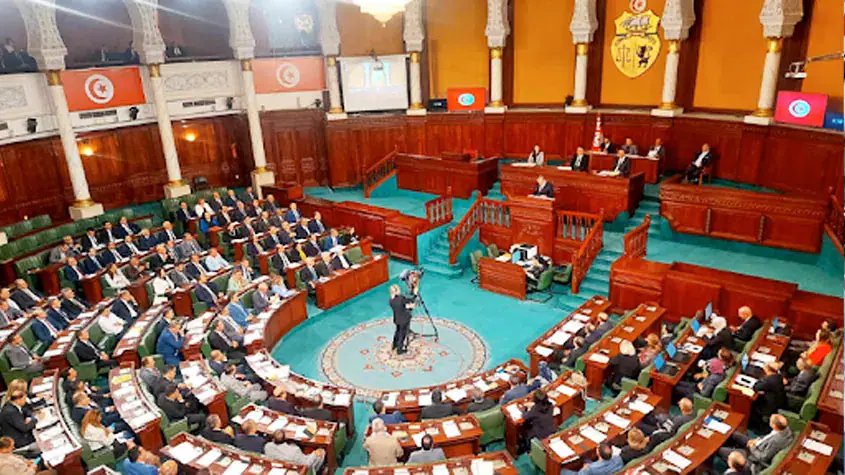
The Tunisian parliament recently convened to discuss the country's 2027 budget and economic plans. During the session, several lawmakers emphasized the need to review the country's economic choices and focus on boosting investment, production, and job creation. They also highlighted the importance of addressing challenges facing key sectors such as agriculture, industry, energy, and transportation. The lawmakers called for a clear vision for investment and economic growth, capable of creating wealth and stimulating small and medium-sized enterprises.
The parliamentarians stressed that continuing to rely on taxation and borrowing is not a viable alternative to stimulating investment and improving productivity. They urged a review of financing mechanisms and support for productive sectors, rather than relying on external financing. One lawmaker noted that the proposed 2027 budget includes a deficit of approximately 14.615 billion dinars, with a debt ratio of around 85% of GDP. This, they argued, necessitates a review of financial priorities and the adoption of a budget with a clear investment vision.
Lawmakers also emphasized the need to improve the efficiency of public spending and implement a clear plan to gradually reduce the budget deficit and limit borrowing. They suggested that external financing should be limited to investment loans. Additionally, some parliamentarians highlighted the importance of supporting small and emerging businesses, citing the 10-million-dinar financing line for these enterprises as insufficient given the needs of the economic fabric.
Several lawmakers pointed to the challenges facing the textile sector, particularly in the region of Kasr Hillal, due to import competition. They called for greater support for this sector, given its potential for development and job creation. Others emphasized the need to review the subsidy system to ensure that transfers reach their intended beneficiaries. This includes addressing the paradox between Tunisia's agricultural potential and its reliance on imports of certain crops and fruits.
The parliamentarians also discussed the need to enhance the value-added of Tunisian olive oil through more extensive processing and export. They argued that exporting olive oil in its raw form does not reflect the country's potential for developing related industries. Furthermore, lawmakers raised concerns about the application of regulations governing subcontracting within state institutions and the lack of coordination between ministries in areas such as rainwater harvesting.
In the region of Sfax, lawmakers highlighted several challenges, including a decline in the activity of small and medium-sized enterprises, particularly in the textile sector, and delays in infrastructure projects. They called for a review of public investments in the region and improvements in transportation, healthcare, and administrative services. Some lawmakers also expressed concerns about the limited impact of policies in certain sectors, despite repeated strategies and financing lines.
Finally, the parliamentarians discussed the challenges facing the energy sector, including a decline in energy self-sufficiency to 32% in the first months of 2026. They called for accelerated implementation of planned projects, increased domestic production, and reduced energy dependence. Lawmakers also warned of the potential impact of regional tensions on oil and gas prices, transportation costs, and supplies of essential goods, and questioned the state's preparedness to address these shocks.
Key points
- The Tunisian parliamentarians emphasized the need for a clear investment vision to stimulate economic growth and job creation.
- The lawmakers called for a review of financing mechanisms and support for productive sectors.
- The parliamentarians highlighted the challenges facing key sectors such as agriculture, industry, energy, and transportation.
Reporting sources
- Radio Monastir · Radio Monastir