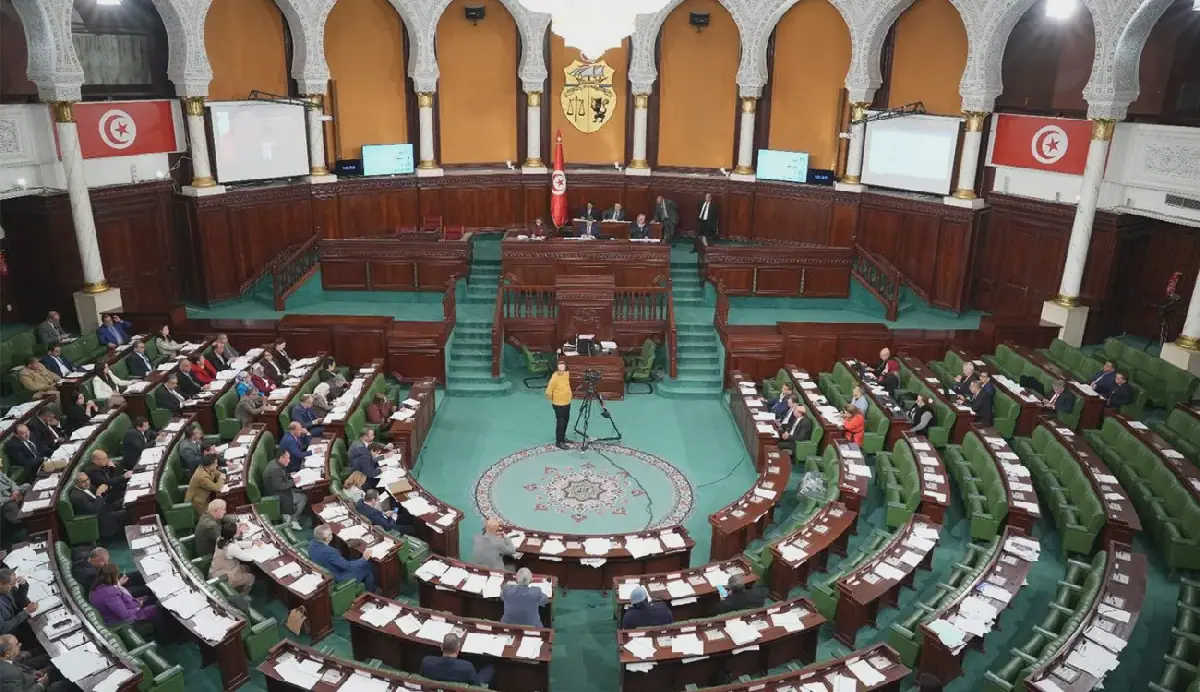
On November 13, 2026, the Tunisian Assembly of People's Representatives and the National Council of Regions and Districts convened a joint plenary session at the Bardo Palace to discuss the 2027 finance budget. The session was attended by Finance Minister Mechket Salma Khaldi. During the meeting, several parliamentarians examined the Ministry of Finance's mission in the 2027 budget project. They requested an evaluation of the check law, revision of Article 66 of the finance bill, and easier access to financing for young entrepreneurs.
Deputy Saïda Chokair praised four articles in the finance bill related to start-ups, small businesses, vocational training graduates, and underdeveloped regions. However, she identified three major obstacles: high real estate guarantees, slow procedures, and limited funding capped at 10,000 dinars, which does not meet the needs of innovative projects. Chokair also regretted the lack of follow-up on disbursements and evaluation of the impact on employment. She proposed strengthening guarantee funds, streamlining procedures with precise deadlines, and linking incentives to measurable results in production, employment, and exports.
Deputy Imadeddine Sediri called for an in-depth evaluation of the check law, which has been in effect for two years. While approving its spirit, which favors real transactions, Sediri argued that it has disrupted commercial activity and contributed to the 2026 summer water mineral crisis. He suggested that banks play a guarantee role in commercial exchanges and warned against the erosion of trust in banks due to information transmission obligations.
Deputy Mohamed Kou criticized the funding allocated to public enterprises without performance indicators or accountability, as several have not presented their financial statements. Kou views this as a significant drain on public finances and believes that their rescue should be based on sound principles. Deputies Mohamed Yahyaoui and Nejib Akermi lamented the lack of clear reform programs for Tunisair, SNCFT, and the hydrocarbons, electricity, and gas sectors.
The parliamentarians also discussed Article 66 of the finance bill, which aims to integrate the parallel economy. However, Kou warned that it could lead to business closures or exclusion from the formal sector, particularly for small producers, young people, people with disabilities, and home-based workers without tax identification. Kamel Majri proposed increasing the community societies' envelope from 300 million to one billion dinars.
The deputies also raised concerns about the financing of the 2026-2030 Development Plan and the budget deficit, which stands at approximately 14.6 billion dinars. Majri questioned the ministry's financing strategy, while Yahyaoui inquired about the budgetary maneuvering room. The parliamentarians emphasized the need for a more efficient allocation of resources and improved governance.
The discussions highlighted the need for improved access to financing for young entrepreneurs and small businesses, as well as the importance of evaluating the effectiveness of existing laws and programs. The parliamentarians' proposals aim to promote economic growth, create jobs, and enhance transparency and accountability in public finances. The 2027 finance budget will need to address these concerns and priorities.
Key points
- Tunisian lawmakers demand assessment of check law and improved financing for young entrepreneurs in the 2027 finance budget.
Reporting sources
- Budget 2027 des Finances : les députés réclament une évaluation de la loi sur les chèques · L'Économiste maghrébin