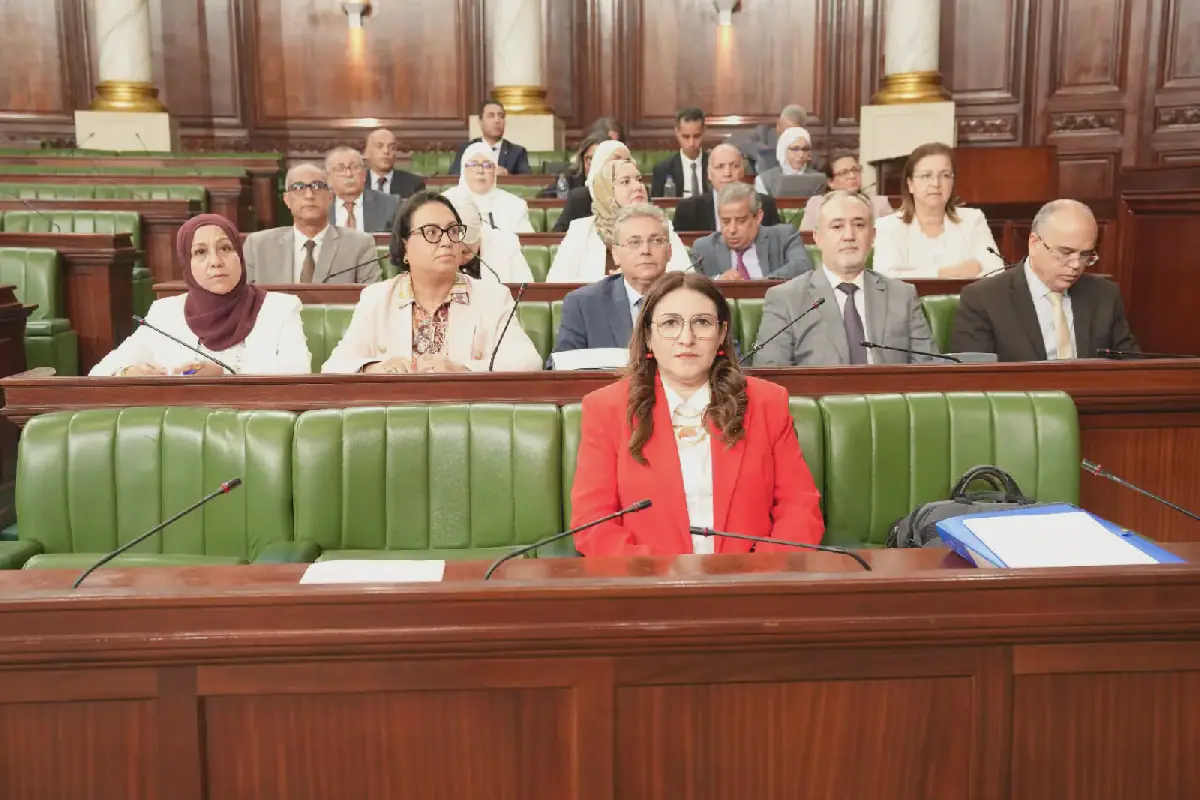
The Tunisian parliament recently convened to discuss the 2027 budget for the Ministry of Finance, with lawmakers urging the government to evaluate the country's check law and make financing more accessible to young entrepreneurs. The session, attended by Finance Minister Mechakha Salameh Khaldi, focused on the ministry's budget and its role in promoting economic growth. Lawmakers emphasized the need to support small and medium-sized enterprises, which are crucial to the country's economic development.
Several lawmakers, including Saida Chakir, praised the inclusion of four chapters in the finance bill aimed at supporting entrepreneurship, particularly for start-ups, small businesses, and young people. However, Chakir noted that several obstacles limit the effectiveness of these measures, including difficulties in accessing financing due to collateral requirements and lengthy administrative procedures. She proposed increasing the budget for guarantee funds and streamlining access to financing with clear deadlines for responding to requests.
Lawmakers also discussed the need to improve the governance of public institutions, with some criticizing the allocation of significant funds to these institutions without clear performance indicators or accountability. Mohamed Kao, a lawmaker, described this as a "significant waste" of public finances. Others, including Najib El-Akrami and Mohamed Yahyaoui, called for clear reform programs for several public institutions, including the national railway company and the electricity and gas sectors.
The parliamentarians also inquired about the strategy for financing projects under the 2026-2030 development plan and the available budget margin in light of a deficit of approximately 14.6 billion dinars. Imadeddine Sediri, a lawmaker, warned that the requirement for banks to disclose transactions to the finance ministry could erode trust between citizens and banks, potentially leading to a decline in banking transactions.
Some lawmakers, including Kamel Majeri, proposed increasing the financing line for small businesses from 300 million dinars to 1 billion dinars. Others, like Najeeb El-Akrami, asked about the status of micro-loan associations and their employees. The parliamentarians emphasized the importance of supporting small and medium-sized enterprises, which they believe are essential for the country's economic future.
The discussion also touched on the issue of informal economy, with some lawmakers warning that the proposed measures could push businesses into the informal sector or lead to their closure. Mohamed Kao expressed concerns that the government's efforts to integrate the informal economy could have unintended consequences, such as excluding small producers, including young people and people with disabilities.
The parliament will continue to discuss the 2027 finance ministry budget, with a focus on promoting economic growth, supporting entrepreneurship, and improving governance. The budget, estimated at 1668.7 million dinars, is a crucial aspect of the government's efforts to address the country's economic challenges and promote sustainable development.
Key points
- Tunisian lawmakers call for evaluation of check law and easier financing for young entrepreneurs
- Parliamentarians emphasize need to improve governance of public institutions
- Discussion touches on issue of informal economy and potential consequences of proposed measures