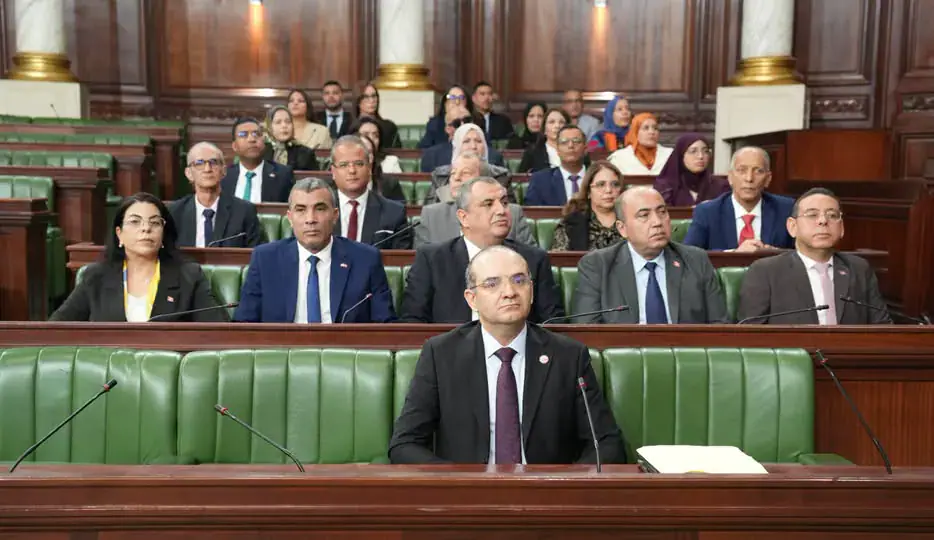
The Tunisian parliament recently held a joint plenary session to examine the 2027 budget for the Independent Higher Authority for Elections (ISIE). The session, which brought together the Assembly of People's Representatives and the National Council of Regions and Districts, saw lawmakers discuss key issues affecting the electoral process. These issues included low voter turnout, particularly among young people, and the organization of upcoming municipal elections.
Several lawmakers expressed concerns about the disaffection of young people from the electoral process. Belgacem Yaâcoub, a deputy, described this phenomenon as a serious issue that requires reflection to identify its causes and find solutions. He suggested developing communication mechanisms and simplifying procedures to encourage youth participation. Riadh Dridi, another deputy, called on the ISIE to intensify its communication campaigns to build trust among voters, stressing that these efforts should begin before the municipal elections are scheduled.
The municipal elections are expected to take place before the legislative elections in 2027. Ali Mejri, a deputy, emphasized the need for stricter control over election campaigns, warning against the exploitation of associations and donations to buy votes. He argued that preventive control of the electoral process is essential to ensure transparency and prevent undue influence on the polls. Mejri's concerns were echoed by other lawmakers who stressed the importance of maintaining the integrity of the electoral process.
Lawmakers also discussed the role of the ISIE in promoting a culture of electoral participation among citizens. Houda Jelassi, a deputy, noted that the ISIE's role goes beyond simply setting election dates, as it also has a constitutional dimension essential for consolidating trust in the electoral process. She emphasized the need to promote a culture of participation to reduce abstention rates. Meanwhile, Mohamed Ali Bahrouni, a deputy, proposed facilitating the participation of people with disabilities in electoral processes.
The session also touched on the issue of electoral training and the importance of preparing members of polling stations before each election. Rim Belhaj Mohamed, a deputy, stressed the need for anticipating preparations for the legislative elections scheduled for next year. Other lawmakers, such as Mohamed Kaou, called for better training of polling station agents and the revision of territorial delimitations of electoral constituencies.
Deputies also discussed the issue of electoral representations abroad, with Cyrine Mrabet, a deputy, calling for their extension, particularly in countries with large Tunisian communities. However, she warned against the consequences of overlapping electoral calendars for legislative and municipal elections. Saber Masmoudi, another deputy, highlighted the lengthy procedures governing the electoral process, which he believed deterred candidates.
The debate concluded with lawmakers emphasizing the importance of expediting the organization of municipal elections and commending the ISIE's experience in managing electoral operations in recent years. Abdelkader Ben Zineb, a deputy, was among those who stressed the need to accelerate the electoral process, leveraging the expertise gained by the ISIE. The discussion reflects the ongoing efforts to improve and refine Tunisia's electoral process.
Key points
- The Tunisian parliament is debating the 2027 budget for the Independent Higher Authority for Elections.
- Low voter turnout, particularly among young people, and municipal elections were key topics of discussion.
- Lawmakers emphasized the need for stricter control over election campaigns and the promotion of a culture of electoral participation.