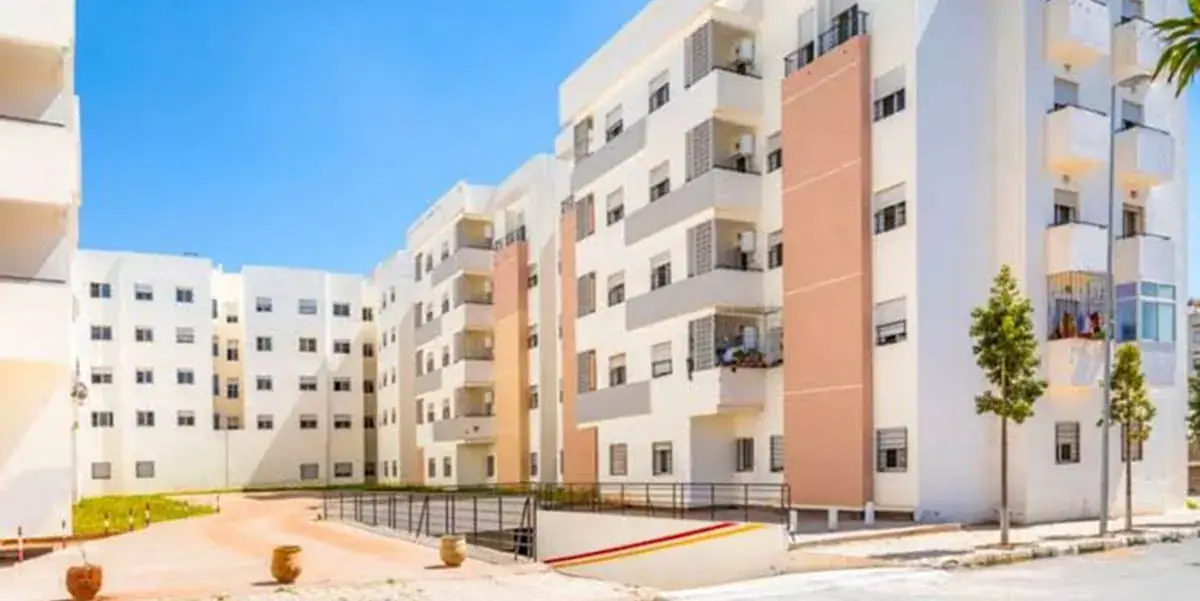
The Tunisian middle class is finding it increasingly difficult to access home ownership. The combination of rising housing prices, decreased purchasing power, and difficulties in saving enough money has made it challenging for many households to finance the acquisition of a home. According to Hechmi Milyani, a representative of the Chambre syndicale des promoteurs immobiliers, the middle class is now largely excluded from the real estate market.
Milyani stated that the mechanisms proposed in the 2027 finance bill will not be sufficient to facilitate access to housing for a large category of Tunisians. He emphasized that the problem is not only related to housing prices or banking credit conditions but also the growing inability of households to save for a personal contribution. This difficulty particularly affects middle-income earners, whose debt capacity no longer keeps pace with the evolution of real estate prices.
The proposed lease-to-own system, which allows households to occupy a home by paying rent before gradually becoming owners, could help expand access to property. However, Milyani noted that the 20- or 25-year repayment terms pose a constraint for sector professionals. The Chambre des promoteurs immobiliers has expressed its willingness to participate in this system, provided that certain conditions, such as payment terms and duration, are revised.
To address the challenges faced by the middle class, Milyani proposed several measures. He advocated for the construction of homes under the Fonds de promotion du logement pour les salariés (FOPROLOS) formula in secure residential areas with necessary equipment. He also called for a review of the tax applicable to the acquisition of homes priced over 400,000 dinars, particularly the 19% value-added tax (VAT).
Milyani suggested facilitating access to mortgage credits through FOPROLOS with an interest rate capped at 3%. This measure would reduce financing costs and restore middle-income earners' purchasing power. According to him, adopting concrete measures could also accelerate the production of social housing, potentially increasing the current annual rate of around 1,000 homes.
The issue of housing access affects not only individuals but also the broader economy. With the Tunisian middle class struggling to access home ownership, there is a risk of decreased economic growth and social stability. The government and stakeholders, including the Chambre des promoteurs immobiliers, will need to work together to find sustainable solutions to this pressing issue.
The proposed solutions aim to address the root causes of the problem and provide relief to middle-income earners. By revising the tax system, facilitating access to credits, and accelerating social housing production, the government can help restore access to home ownership for the Tunisian middle class. The outcome of these efforts will be closely watched by stakeholders and citizens alike.
Key points
- The Tunisian middle class faces significant challenges in accessing home ownership due to rising housing prices and decreased purchasing power.