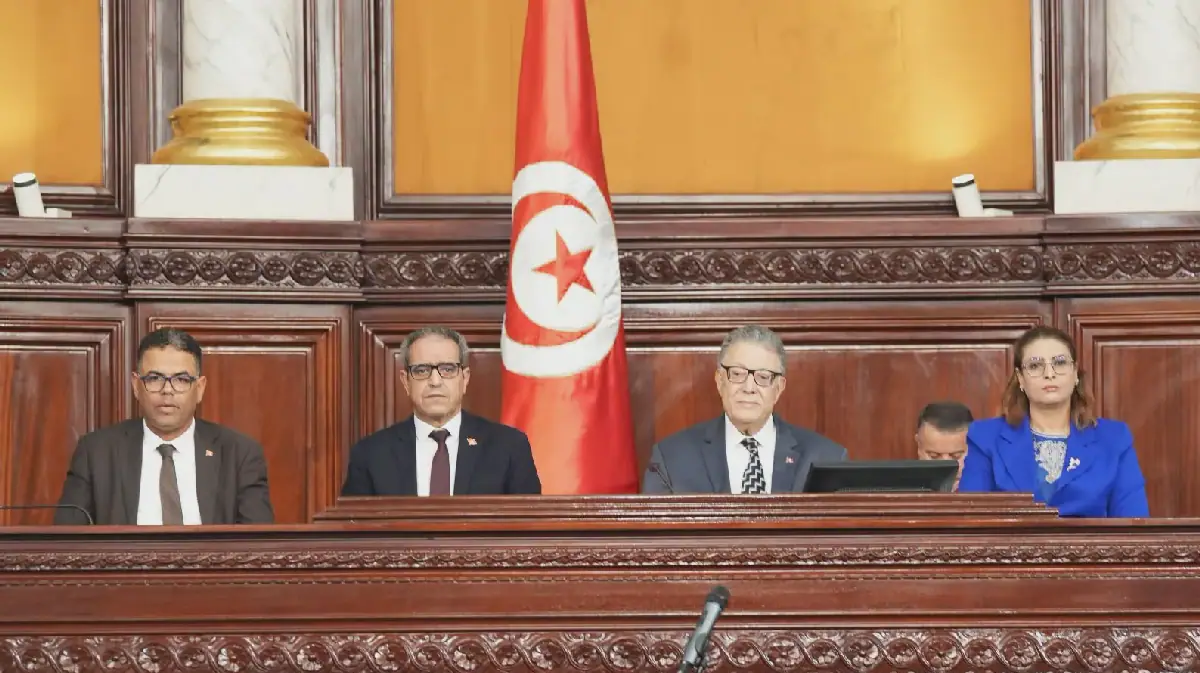
The Tunisian interim judicial council has identified reducing case processing times and digitalization as top priorities for modernizing the country's judiciary. According to Samira Keiza, First Deputy President of the council, these efforts aim to enhance confidence in the judicial system and improve the business climate. The council's plans were discussed during a joint session of the Assembly of People's Representatives and the National Council of Regions and Districts.
Keiza acknowledged that lengthy case processing times and slow judgments are significant challenges facing litigants and weighing heavily on judges. She noted that the accumulation of cases over several years diminishes the practical value of judicial decisions and negatively impacts the business climate, investment, and citizens' trust in the justice system. To address these issues, the council plans to develop working methods within courts, modernize administrative and judicial management, and provide necessary logistical and material resources.
The council aims to continue rolling out its information system, develop digital infrastructure, and connect various judicial bodies. It also plans to leverage artificial intelligence applications in legal research, conflict classification, and access to judicial precedent. These strategic choices are expected to reduce case processing times and improve the quality of judicial work. Keiza reported that work is ongoing in the Administrative Court and Court of Accounts to reduce case backlogs despite limited resources.
The Administrative Court has launched a strategic plan extending to 2030, aiming to establish a digital and citizen-centric judiciary. This plan is being implemented in parallel with comprehensive legislative reform, including the introduction of a conciliation mechanism in administrative matters. Keiza also mentioned that a draft administrative judiciary code has been prepared, which includes several reform-oriented provisions, such as revising case processing times, simplifying investigation procedures, and introducing a conciliation mechanism.
In 2026, the Administrative Court began gradually implementing a digital system called "Slim" for its advisory function, achieving 100% digitization and adopting a "zero paper" policy. The court has also digitalized requests for execution stays, regional and primary circuits, and launched an application called "Search in the Administrative Court" to facilitate access to information and judicial services.
Keiza emphasized that failure to execute judicial decisions undermines the state's authority and credibility. She explained that the court is responsible for notifying decisions to the state's representative in disputes and continuously monitors their execution through an office established for this purpose. However, she noted that the lack of effective deterrents to ensure execution requires legislative intervention to strengthen mechanisms for enforcing judicial decisions.
The council is also focusing on training and improving working conditions, with Keiza highlighting the importance of investing in human resources and providing a sufficient number of judges and administrative staff. The Administrative Court has organized training sessions for judges and staff, covering topics such as digital case management, improved reception, and quality of services. Additionally, the court has obtained a quality mark in reception, awarded by the National Institute of Standards and Industrial Property, becoming the first Tunisian judicial institution to receive this mark.
Key points
- Reducing case processing times and digitalization are top priorities for modernizing Tunisia's judiciary.
- The interim judicial council aims to enhance confidence in the judicial system and improve the business climate.
- The council's plans include developing digital infrastructure, leveraging artificial intelligence, and introducing a conciliation mechanism in administrative matters.
Reporting sources
- Établissement de la Radiodiffusion-Télévision Tunisienne · Établissement de la Radiodiffusion-Télévision Tunisienne