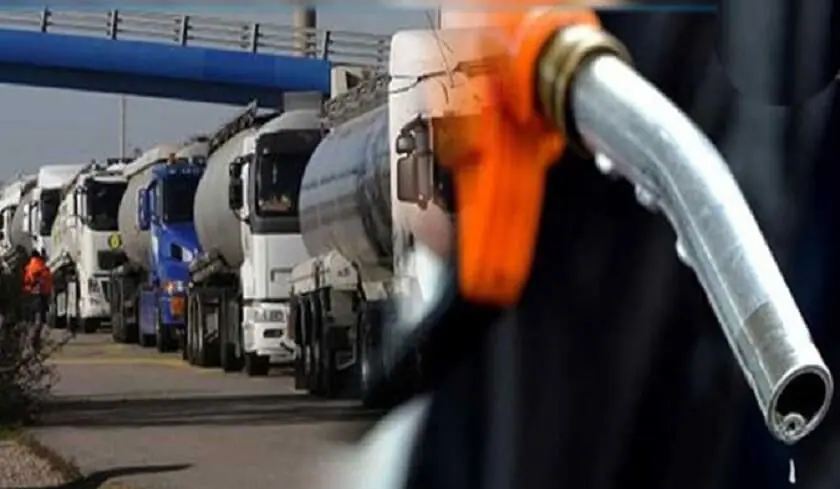
The majority of Tunisian truck drivers transporting hydrocarbons will not participate in a strike scheduled for September 23-24, according to Fethi Zouari, president of the National Chamber of Hazardous Materials Transport. Zouari stated that transport companies had not received formal notice of the strike, as required by law. He argued that financial difficulties faced by two companies, which led to delayed payments to the National Social Security Fund (CNSS), did not justify a strike that could impact market supply.
The CNSS situation for the two companies in question has been regularized several weeks ago, Zouari added. He disputed the demand to apply the minutes of a May 2, 2019 meeting, saying that this agreement had been abandoned and canceled years ago due to non-compliance by drivers and union organizations. Zouari called for securing routes used by hydrocarbon transporters to ensure the supply of service stations during the planned strike.
The Tunisian General Labor Union's (UGTT) private sector department had sent a strike notice for the hydrocarbon transport sector on September 23-24. The UGTT cited non-compliance with previous agreements, particularly those related to social coverage with the CNSS and the implementation of the May 2, 2019 agreement. The strike is expected to proceed as planned, despite Zouari's claims that most drivers will not participate.
Fethi Zouari urged authorities to take measures to secure the routes used by hydrocarbon transporters. This would help ensure a steady supply of fuel to service stations during the strike. The UGTT's strike notice was sent in response to what it sees as a failure to implement previous agreements.
The CNSS payment delays were attributed to financial difficulties faced by only two companies. Zouari emphasized that these issues had been resolved, and the companies were now up to date with their payments. The strike, however, is set to go ahead, with the UGTT pushing for better working conditions and adherence to previous agreements.
The impact of the strike on fuel supplies remains to be seen. With most drivers not participating, the effect may be limited. However, the walkout could still cause disruptions, particularly if other sectors or industries are affected. The situation is being closely watched by authorities and industry stakeholders.
The strike highlights ongoing tensions between labor unions and employers in Tunisia's hydrocarbon transport sector. The UGTT's demands for better working conditions and adherence to previous agreements reflect broader concerns about workers' rights and social protections in the country. The outcome of the strike and any subsequent negotiations will be closely watched by observers.
Key points
- Most Tunisian hydrocarbon truck drivers won't join a strike planned for September 23-24.
- The strike is motivated by demands for better working conditions and adherence to previous agreements.
- The impact of the strike on fuel supplies remains to be seen.