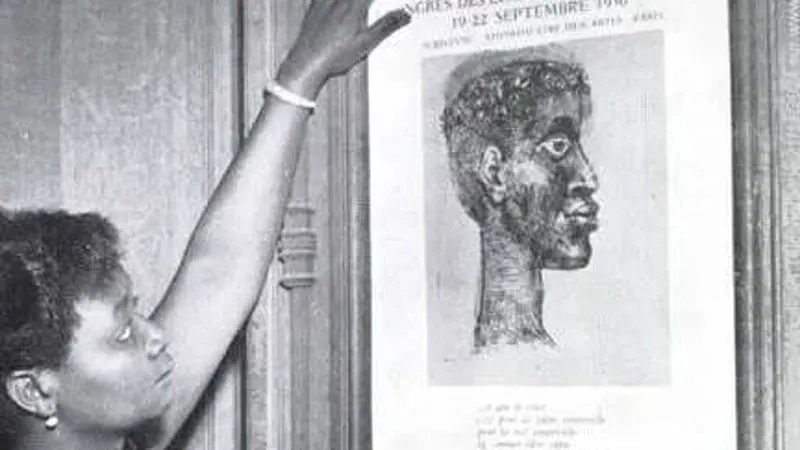
The Congress of Black Writers and Artists, held from 19 to 22 September 1956, was a landmark event that brought together prominent intellectuals from around the world. Organized by Alioune Diop, a Senegalese writer and politician, the congress aimed to highlight the significant contributions of Africa and its diaspora communities to human heritage. The event was attended by notable figures such as Cheikh Anta Diop, Léopold Sédar Senghor, Aimé Césaire, and Richard Wright.
The congress was meticulously prepared over 18 months by Diop and the editorial team of Présence Africaine, a literary journal and publishing house founded by Diop. The organizing committee included major literary figures such as Jean-Paul Sartre, André Gide, and Marcel Griaule. The event's poster was designed by Pablo Picasso, a friend of Diop's. The congress drew large crowds to the Sorbonne's Descartes lecture hall, with representatives from 25 African and American countries in attendance.
The four-day congress featured 42 scheduled papers, but only 27 were delivered due to the packed schedule. The papers covered three main themes: an inventory of African cultural riches, its prospects, and the crisis facing black cultures under racism and colonialism. The event sparked intense debates, with Senghor's speech on "the spirit of civilization or the laws of Black African culture" generating significant discussion.
Senghor's essentialist stance on Negro-African civilization, which emphasized sensuality and intuition, raised questions about abstract analysis of cultural issues. Some listeners argued for a more historical understanding of culture, proposing that it be approached as a sum of evolving identities linked to diverse circumstances. This debate highlighted the complexities of defining black identity and culture.
Another significant divide emerged during Aimé Césaire's talk on "culture and colonization." Césaire's assertion that African Americans faced similar hardships as colonized people sparked controversy, with American writers rejecting the comparison. The debate became heated, but Diop's diplomatic efforts secured a compromise, allowing the final resolution to affirm solidarity among the oppressed.
The congress left a lasting impact, according to Senegalese novelist and historian Elgas. The event asserted the presence and importance of black cultures, marking a significant moment in the pan-African movement. Elara Bertho, a literary historian, noted that the congress demonstrated the unity of the black world, despite differing opinions on the concept.
The 70th anniversary of the Paris Congress of Black Writers and Artists serves as a reminder of the event's enduring legacy. The congress's emphasis on dialogue between cultures and solidarity among the oppressed continues to resonate today. As the world reflects on the event's significance, it is clear that the Paris Congress played a pivotal role in shaping pan-African thought and continues to inspire new generations.
Key points
- The 1956 Paris Congress of Black Writers and Artists was a pivotal event in shaping pan-African thought, bringing together prominent intellectuals to discuss African culture and identity.