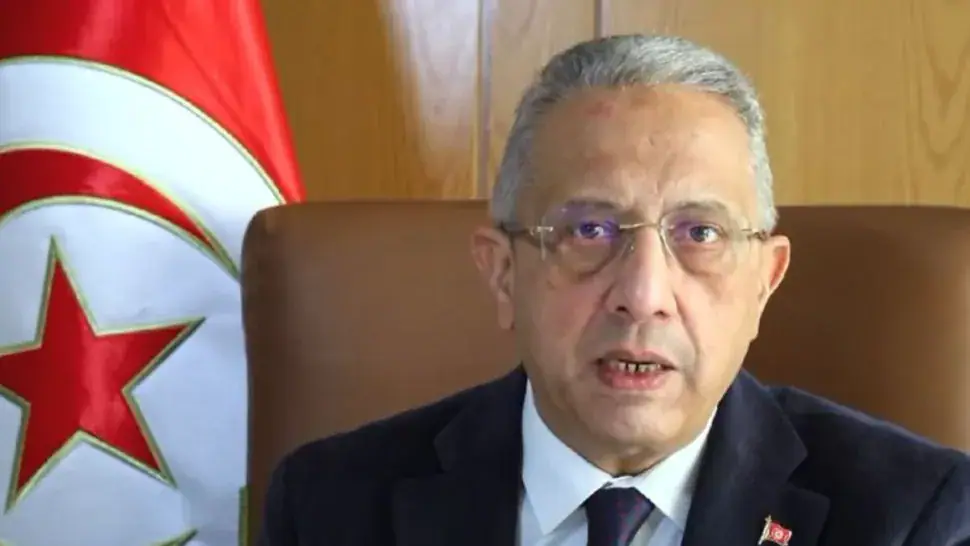
Tunisian Health Minister Mustafa Al-Ferjani has emphasized the importance of the healthcare sector, which is directly linked to citizens' right to treatment and a dignified life. He stressed the need to continue reforming the healthcare system with a comprehensive approach based on justice, fairness, and development of care, prevention, governance, and digitization. The minister's priorities include bringing healthcare services closer to citizens, improving access to medicines, maintaining medical equipment, and supporting medical and paramedical staff.
Minister Al-Ferjani reviewed the achievements recorded during 2026, including bringing healthcare services closer to citizens and developing the infrastructure of healthcare institutions. This was achieved by supporting frontline health services, redesigning the health map, and prioritizing internal regions. Several projects were completed, including the opening of a hospital in Sbeitla in June 2026, a cardiology department in Tataouine, and a center for obstetrics, gynecology, and pediatrics in Banzart in September 2026.
The minister highlighted the development of healthcare services, including the creation of 36 new university departments in regional hospitals, the completion of resuscitation and emergency departments, and the equipment of these departments. Additionally, two blood purification units were opened in Tabarka and Ain Draham, and work continued on other centers in Sidi Bouzid and Gafsa. The minister also mentioned the introduction of prefabricated health units, with 34 units to be built in the first half of 2027.
In the area of primary healthcare, Minister Al-Ferjani confirmed the creation of nine basic health clusters and the strengthening of primary care teams, particularly in family medicine, psychiatry, and addiction treatment. He also mentioned the performance of 2400 cataract removal operations across the country. Furthermore, six basic health centers and four local hospitals obtained accreditation as part of efforts to improve the quality of healthcare services.
The minister emphasized the importance of maintenance and development of healthcare institutions, with a focus on providing advanced medical equipment. A program to update medical equipment worth 239 million dinars was implemented, including the acquisition of 13 cardiac catheterization machines. Additionally, two magnetic resonance imaging machines were purchased and installed, and 144 blood purification machines were set up in various healthcare institutions.
Minister Al-Ferjani highlighted the efforts to accelerate digital transformation and develop healthcare services, including the continued development of the digital hospital project. He mentioned the availability of remote medical imaging services for 30 hospitals and the reading of 162,000 remote scanner operations. The minister also emphasized the importance of cybersecurity and the protection of health data.
The minister concluded by emphasizing the ministry's commitment to ensuring the right to healthcare for all citizens, including mental health. He mentioned the establishment of 29 addiction clinics and sections specialized in dealing with health complications arising from addiction. The minister also highlighted the implementation of a national plan to prevent the consequences of heatwaves, with updated protocols for patient care.
Key points
- The Tunisian government has allocated 62 million dinars for healthcare institution maintenance programs in 2026 and 2027.
- The ministry aims to provide a cardiac catheterization room and a magnetic resonance imaging machine in each governorate by 2027.
- A program to support specialty medicine in priority areas has been launched with a budget of 14 million dinars.
Reporting sources
- وزير الصحة يكشف أولويات الوزارة وبرامجها · Assabah News