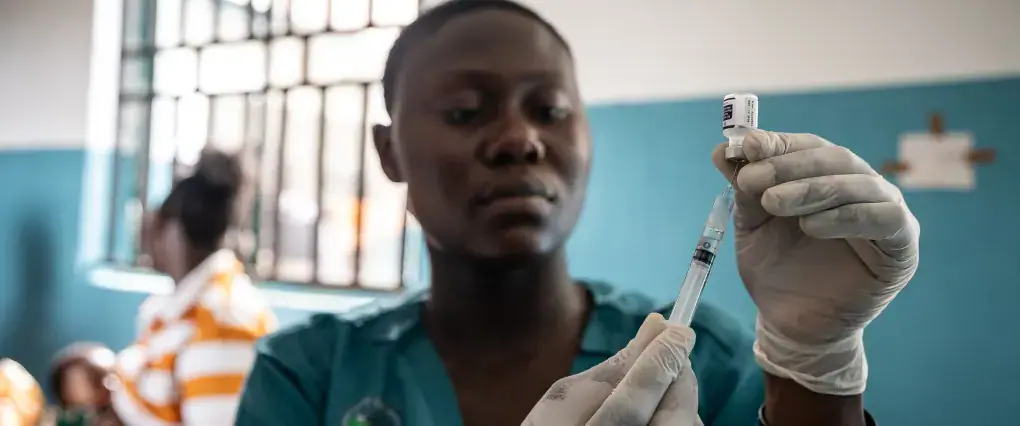
Two years after introducing the first malaria vaccines in Nigeria, local communities in the southern part of the country have reported progress in the fight against the disease. In Bayelsa State, the number of children under five years old contracting malaria has decreased by 18%, according to the non-governmental organization PATH. Additionally, several villages have reported no infant deaths related to malaria.
The malaria vaccination campaign, launched in late 2024, is an additional prevention tool against a parasitic disease transmitted by mosquitoes, particularly dangerous for young children. According to data reported by AFP, approximately 250,000 children have been vaccinated over two years. In multiple localities in Bayelsa State, located in the Niger Delta, healthcare professionals have observed an improvement in the health situation.
In Oruma, a locality in the southern part of the country, medical teams administer a vaccination schedule consisting of four injections over the first 15 months of a child's life. For families, this campaign represents a possibility of reducing health risks and expenses related to treating the disease. The vaccination schedule is being implemented in four of Nigeria's 36 states.
According to PATH, which accompanies local health authorities in deploying the vaccination, the rate of children under five years old contracting malaria has decreased by 18% in Bayelsa State. This development occurs while the distribution of mosquito nets and preventive medications has experienced delays in this region over several years.
Local health authorities report an improvement in infant mortality in certain areas covered by the campaign. "Since the introduction of the vaccine, we have not recorded any child deaths," says Elizabeth Ogisi, director of primary healthcare for the region. However, these results are only local observations and do not allow for an evaluation of the national impact of vaccination on its own.
Malaria remains one of the leading causes of infant mortality in Africa. According to the World Health Organization (WHO), children under five years old account for more than 75% of deaths related to the disease on the continent. In 2024, malaria caused nearly 600,000 deaths worldwide, including around 200,000 in Nigeria.
Despite the results observed in covered areas, the deployment of vaccination remains relatively slow at the national level. The campaign's limited rollout to four states raises concerns about the ability to curb the spread of malaria in the country, which has the highest population in Africa and accounts for a significant share of global malaria-related mortality.
Key points
- The malaria vaccination campaign has resulted in an 18% decrease in malaria infections among children under five years old in Bayelsa State.
- The vaccination campaign has been limited to four of Nigeria's 36 states, despite the country's significant burden of malaria-related mortality.
- The WHO reports that children under five years old account for more than 75% of malaria-related deaths in Africa.