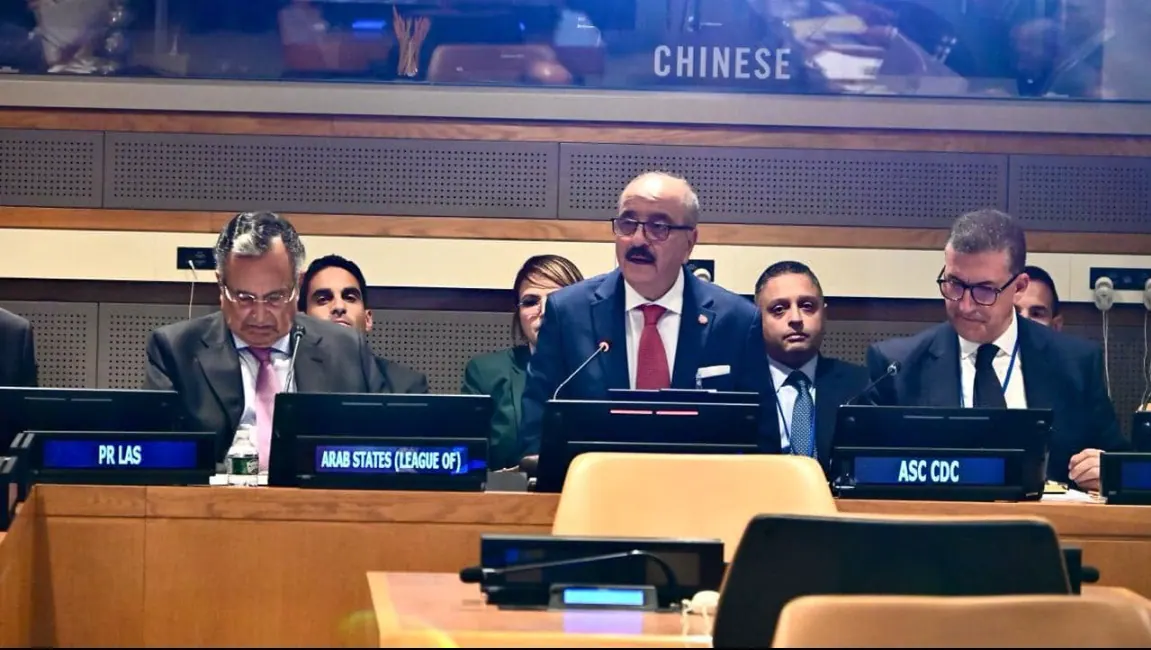
Tunisian Foreign Minister Mohamed Ali Nafti has urged Arab states to regain their initiative spirit and work towards finding peaceful and lasting solutions to regional and international issues. Speaking at the annual coordination meeting of Arab foreign ministers in New York, Nafti emphasized the importance of consultation and coordination among Arab states on emerging issues, particularly the Palestinian question. He stressed the need for collective engagement in implementing Arab decisions, strategies, and initiatives.
Nafti highlighted Tunisia's commitment to supporting the legitimate and inalienable rights of the Palestinian people, including the establishment of an independent state with full sovereignty over its national territory, with Jerusalem as its capital. He also reaffirmed Tunisia's adherence to international law, the UN Charter, and the Arab League Charter, and rejected any aggression against Arab states or threats to their security and resources. The minister called for a rational and wise approach to resolving conflicts and disputes through dialogue and diplomacy.
The meeting, held under the auspices of Tunisia's chairmanship of the Arab League Council, was attended by Arab foreign ministers and focused on key regional and international issues. Nafti's speech emphasized the importance of developing mechanisms for transforming Arab decisions into concrete programs and projects, enabling the Arab group to address pressing issues effectively and responsibly. He also stressed the need for unity and collective action among Arab states to defend their interests and security.
Prior to the meeting, Nafti held a consultative meeting with Arab League Secretary-General Nabil Fahmy, during which they reviewed the outcomes of the 166th session of the Arab League Council at the ministerial level, held under Tunisia's chairmanship on September 7, 2026. The two officials discussed key Arab issues, including the Palestinian question, and ways to enhance cooperation and coordination between Arab states and the Arab League Secretariat.
Fahmy praised the success of the second edition of the AI Summit 2026, organized by the Arab Organization for Communication and Information Technologies in collaboration with the Tunisian Ministry of Communication Technologies. The summit, held on September 9, 2026, brought together experts and stakeholders to discuss the future of artificial intelligence and its implications for the Arab region.
Nafti and Fahmy also discussed regional and international issues, including ways to promote security and stability in the Arab region and address the challenges posed by current developments. The Tunisian foreign minister emphasized the importance of enhancing the role of the United Nations as a guarantor of international legitimacy, human rights, and respect for state sovereignty.
The Arab League Council meeting concluded with a call for Arab states to work together to address common challenges and promote collective action. The council also reaffirmed its commitment to supporting the Palestinian people and defending Arab interests and security. Tunisia's chairmanship of the Arab League Council has focused on promoting unity and cooperation among Arab states, and the country's foreign minister has played a key role in shaping the council's agenda and priorities.
Key points
- Tunisian Foreign Minister Mohamed Ali Nafti urges Arab states to regain initiative spirit and unify positions on regional and international issues.