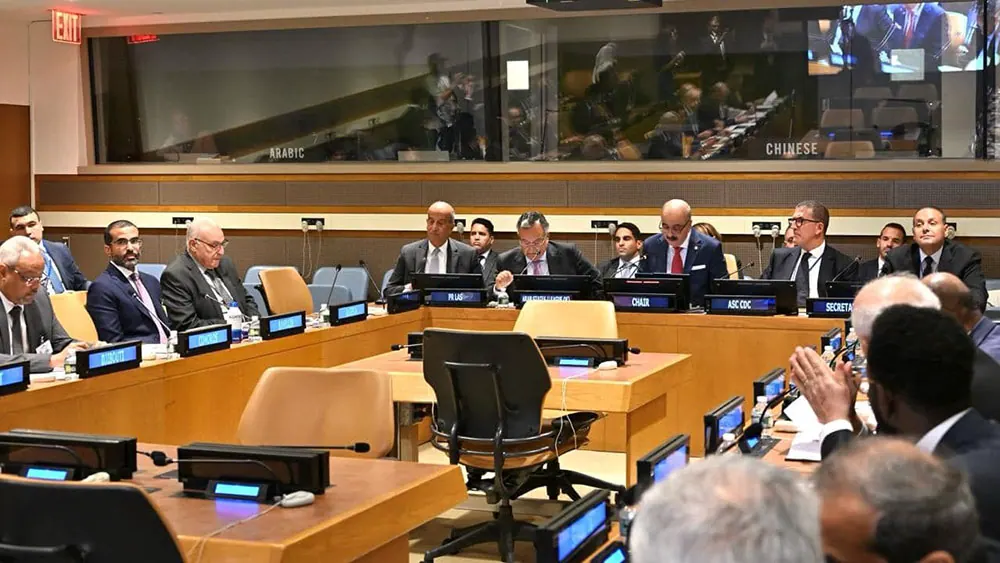
Tunisian Foreign Minister Mohamed Ali Nafti recently participated in the Informal Meeting of Global Economic Leaders and Decision-Makers (IGWEL) on September 21, held on the sidelines of the 81st session of the UN General Assembly. The meeting, convened by the World Economic Forum's President, focused on discussing the prospects of international cooperation in the face of accelerating global transformations and challenges. According to a statement by the Tunisian Ministry of Foreign Affairs, Nafti emphasized that addressing these challenges requires a multilateral approach that is more credible, inclusive, balanced, and effective.
During his address, Nafti highlighted the need to rebuild trust in multilateral diplomacy, which he considered a prerequisite for developing international cooperation programs. He stressed the importance of respecting states' sovereignty and international law, including the UN Charter. The minister also called for the reform of multilateral institutions, enhancing the representation of Southern countries, and amplifying their voices in shaping international decisions and rules. This approach aims to ensure that the interests of all nations are taken into account.
Nafti also underscored the significance of translating international commitments into tangible results, particularly through the provision of necessary financing, technology transfer, and capacity building. He emphasized the priority of reforming the international financial architecture and developing innovative financing mechanisms for developing countries. The minister's statements reflect Tunisia's commitment to promoting a more equitable and effective international system.
The Tunisian Foreign Minister highlighted the importance of preserving practical cooperation areas despite geopolitical divisions, especially in areas such as climate change, food and energy security, health, migration, and artificial intelligence governance. He emphasized the need to involve developing countries in shaping technological governance rules. Nafti's participation in the IGWEL meeting demonstrates Tunisia's active engagement in international efforts to address pressing global challenges.
In his address, Nafti called for the enhancement of Africa's and Southern countries' roles as partners in shaping the future of the international system. He emphasized the centrality of dialogue, prevention, and peaceful conflict resolution, as well as respect for international law, including the Palestinian people's right to self-determination and the establishment of an independent state with full sovereignty. This call reflects Tunisia's commitment to promoting a more inclusive and equitable international order.
The IGWEL meeting provided a platform for leaders to discuss ways to strengthen international cooperation and address global challenges. Nafti's participation in the meeting demonstrates Tunisia's commitment to engaging in international efforts to promote peace, stability, and development. The Tunisian Foreign Minister's statements reflect the country's vision for a more equitable and effective international system.
The 81st session of the UN General Assembly provides a critical opportunity for world leaders to address pressing global challenges and promote international cooperation. Tunisia's active engagement in the session, led by Foreign Minister Nafti, reflects the country's commitment to playing a constructive role in international efforts to promote peace, stability, and development.
Key points
- Tunisian Foreign Minister Mohamed Ali Nafti calls for the enhancement of Africa's and Southern countries' roles in shaping the future of the international system.