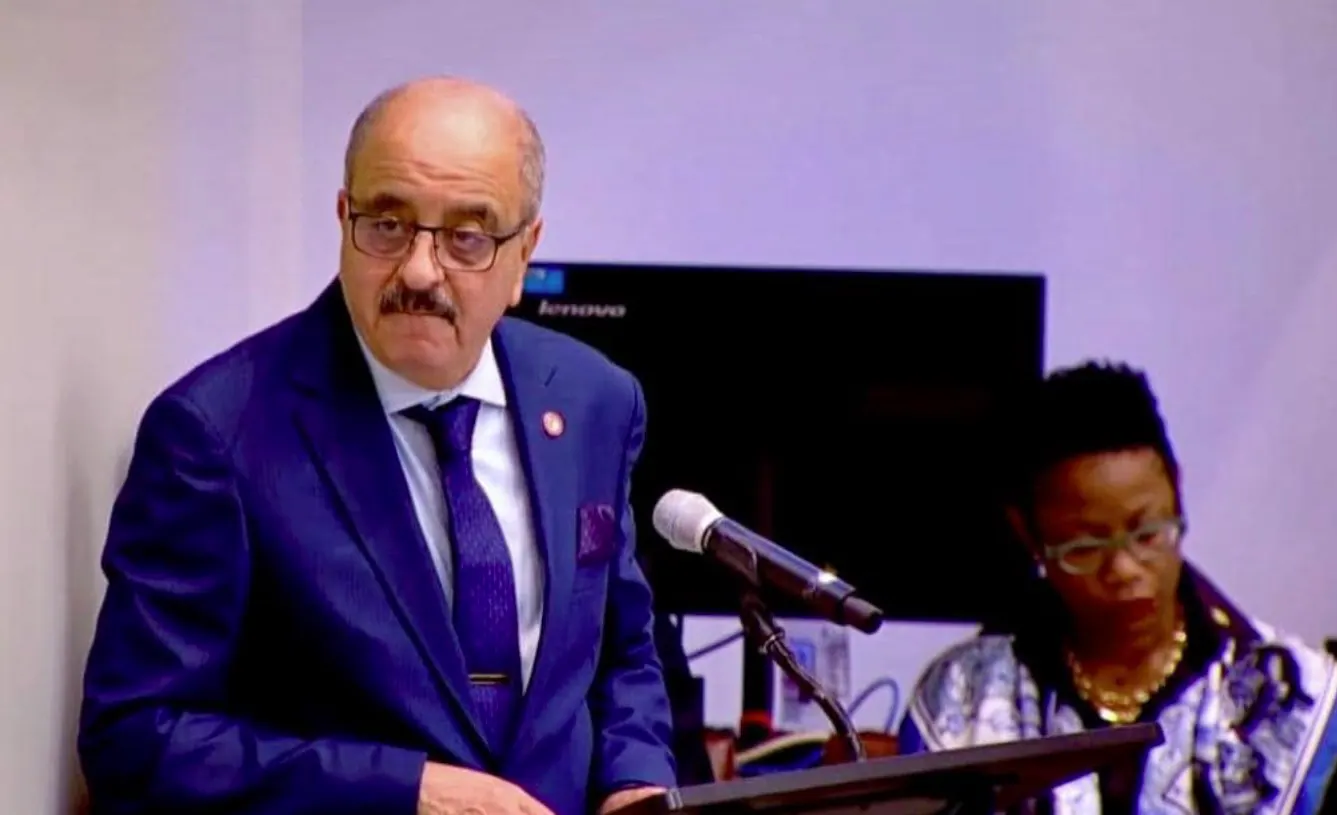
Tunisian Foreign Minister Mohamed Ali Nafti participated in a high-level meeting on "Prevention, Preparedness, and Response to Pandemics" on the sidelines of the 81st session of the UN General Assembly in New York. The meeting was held on September 25, 2026. During his speech, Nafti emphasized the crucial role of multilateral diplomacy in establishing an effective global health system. He highlighted the importance of learning from the COVID-19 pandemic and addressing the economic and social conditions of all countries.
Nafti stressed the significance that Tunisia attaches to the World Health Organization's (WHO) pandemic agreement, which is considered a cornerstone for international cooperation in addressing future health challenges. He noted that Tunisia, under the leadership of President Kais Saied, was at the forefront of efforts to establish an international treaty on pandemics. In April 2020, President Saied was the first to call for such a treaty, and in March 2021, he launched an appeal with 26 other global leaders to conclude this treaty.
The WHO accorded the President of Tunisia, Kais Saied, a special recognition for his efforts in this field on July 10, 2026. Tunisia played a key role as a proponent and initiator during the negotiations that lasted over three years and culminated in the adoption of the WHO pandemic agreement text on May 20, 2025. The agreement is pending the completion of a specific annex on benefit sharing.
Nafti also emphasized the need to adopt the principle of fairness as the basis for this process, which should be inclusive of all parties involved in this field. He highlighted the importance of strengthening vaccine manufacturing capacities, diversifying production worldwide, and exchanging technology and knowledge while monitoring supply chains and developing emergency programs.
The Tunisian Foreign Minister also discussed ways to finance international cooperation in pandemic control, taking into account the financial balances, priorities, and commitments of countries. This discussion is crucial in ensuring that countries can effectively respond to pandemics while maintaining their financial stability.
The high-level meeting on pandemic prevention and response is part of the UN General Assembly's efforts to address global health challenges. The meeting brought together world leaders and health experts to discuss ways to strengthen international cooperation in pandemic prevention, preparedness, and response.
Tunisia's participation in this meeting reflects its commitment to global health issues and its efforts to contribute to international cooperation in this field. The country's experience in addressing the COVID-19 pandemic and its role in promoting the WHO pandemic agreement demonstrate its dedication to ensuring that the world is better prepared to face future health challenges.
Key points
- Tunisian Foreign Minister Mohamed Ali Nafti attends high-level meeting on pandemic prevention and response at the UN General Assembly
- Tunisia emphasizes the importance of the WHO pandemic agreement in addressing future health challenges
- President Kais Saied recognized by WHO for his efforts in promoting the pandemic agreement